What archaeology says
Orvieto is widely identified with Etruscan Velzna (Roman Volsinii), a leading religious and political centre of the Etruscan world until Rome destroyed it in 264 BC. The earliest underground works are Etruscan: rectangular-section water shafts sunk vertically through the rock for tens of metres, with pedarole — small climbing niches — cut into opposite walls so workers could brace their way up and down without ladders. These shafts, together with cuniculi drainage galleries and cellars, secured the acropolis's water supply against siege, a constant preoccupation on a plateau with no springs.
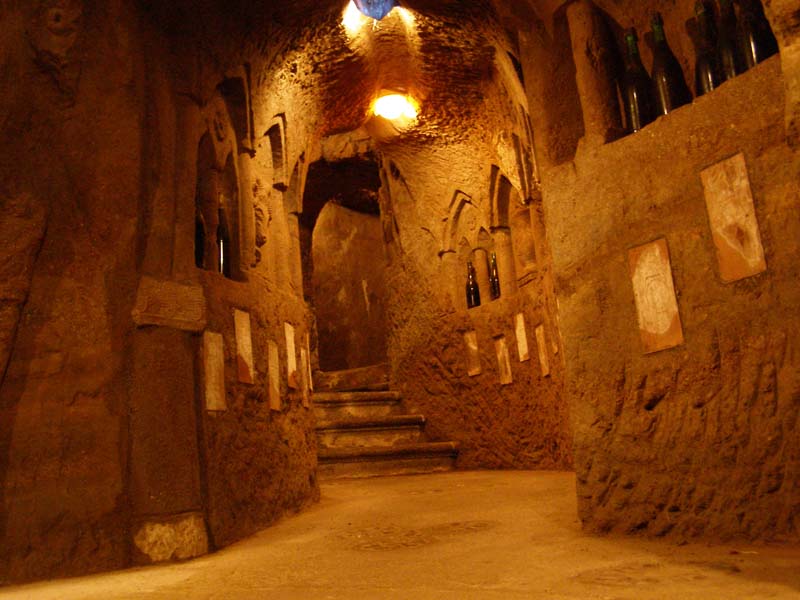
Digging never stopped. Medieval and Renaissance householders quarried pozzolana for mortar, cut cisterns, cool cellars for wine and oil, dovecotes whose thousands of niches supplied pigeon meat, and workshops with olive presses kept at constant temperature. The masterpiece of the tradition is the Pozzo di San Patrizio, sunk in 1527–37 by Antonio da Sangallo the Younger for Pope Clement VII: a 54-metre well encircled by two independent helical staircases so that pack mules could descend and ascend without meeting. In the Second World War the caves served the town again as air-raid shelters.
Systematic speleological survey from the 1970s onward, coordinated with the municipality, has mapped around 1,200 cavities, almost all reached from private houses above. Archaeologists emphasise that the network is not a single planned undercity but an accretion: two and a half millennia of practical, datable, well-understood domestic engineering.
- Around 1,200 cavities catalogued since the 1970s survey, nearly all with clear domestic or industrial functions
- Etruscan water shafts with pedarole climbing niches match 6th–5th century BC finds and tool marks
- Rome's destruction of Volsinii in 264 BC is historically recorded, anchoring the Etruscan chronology
- The Pozzo di San Patrizio (1527–37) is fully documented Renaissance engineering by Antonio da Sangallo the Younger
- 2021 ancient-DNA research indicates the Etruscans were of predominantly local Italian origin
- Stratified finds in the caves run continuously from Etruscan to modern periods, showing accretion rather than a single ancient project