Ancient Engineering · Visoko, Bosnia and Herzegovina

Bosnian 'Pyramid of the Sun' (Visočica Hill)

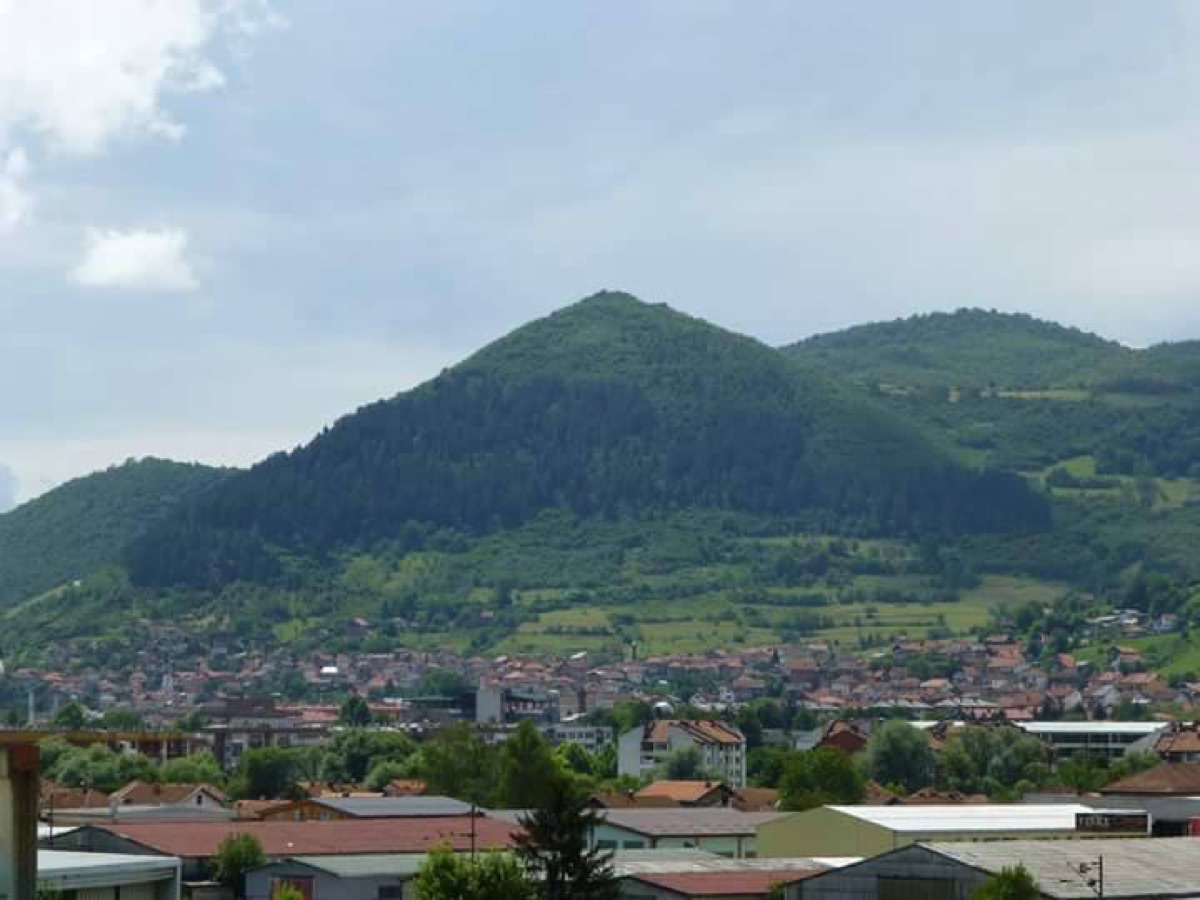
A strikingly pyramid-shaped hill that one man calls the largest and oldest pyramid on Earth — and virtually every geologist calls a hill.

Mainstream: Natural hill (Miocene sediments); medieval town of Visoki on summit, 14th century ADAlternative: c. 10,000–30,000+ BC as an artificial pyramid (Osmanagić)43.98°, 18.18°

At a glance

Bosnian 'Pyramid of the Sun' (Visočica Hill)
Photo: TheBIHLover · CC BY-SA 4.0

Visočica is a 213-metre hill looming over the town of Visoko in central Bosnia, with two remarkably flat, triangular faces that give it a pyramid-like silhouette from certain angles. Since 2005, Bosnian-American businessman Semir Osmanagić has promoted it as the 'Bosnian Pyramid of the Sun' — by his account the largest and oldest pyramid in the world, part of a complex including 'Pyramids of the Moon, Dragon and Love' and a network of tunnels at nearby Ravne. The claim has been overwhelmingly rejected by geologists and archaeologists, yet the site draws hundreds of thousands of visitors and has transformed the local economy.

See it on the globe →
The mainstream view

What archaeology says

Geologists who have studied Visočica — including Bosnian and international teams — identify it as a natural landform: a 'flatiron', formed when layered Miocene lake sediments (alternating sandstone, conglomerate and clay) were tectonically tilted and then eroded, producing smooth angled faces. The regularly fractured sandstone slabs Osmanagić's diggers expose as 'paving' are natural jointed bedrock; identical formations occur on neighbouring hills. Egyptian geologist Aly Barakat and, notably, even Sphinx-redater Robert Schoch visited and concluded the 'pyramid' is natural, with Schoch reporting that excavation was creating, not revealing, the appearance of walls and terraces.

What genuinely is on Visočica is archaeology of a different kind: the summit holds the remains of Visoki, a fortified medieval town that served as a seat of the Bosnian kings in the 14th century, and the area contains Neolithic, Illyrian, Roman and medieval remains. Professional archaeologists' central complaint is that pseudo-archaeological digging endangers these real heritage layers. In 2006, the European Association of Archaeologists issued an open declaration signed by leading archaeologists calling the pyramid project 'a cruel hoax on an unsuspecting public' with 'no place in the world of genuine science', and urged Bosnian authorities to withdraw support.

Radiocarbon and stratigraphic claims from the project have not been published in mainstream peer-reviewed venues, and no artefacts demonstrating Ice Age monumental construction have been produced.

Key evidence cited
  • Geological mapping showing tilted, eroded Miocene lakebed strata (a natural flatiron)
  • Identical jointed sandstone 'slabs' on neighbouring hills nobody claims are pyramids
  • Independent geologists (including Robert Schoch and Aly Barakat) finding no artificial structure
  • The 2006 EAA declaration by leading archaeologists calling the project a hoax
  • Real, documented heritage on the hill: the medieval royal town of Visoki
The alternative view

What the skeptics propose

Semir Osmanagić — who holds a doctorate in sociology from the University of Sarajevo and a background in Houston-based metalworking businesses — argues that Visočica's geometry is too regular to be natural: he cites its roughly triangular faces, claimed orientation to cosmic north with high precision, and slopes of about 45 degrees. His foundation's excavations, he says, have revealed man-made concrete-like conglomerate blocks superior to modern concrete, paved causeways, and construction layers. Organic material found in the Ravne tunnel complex and above alleged structural layers has, he claims, yielded radiocarbon dates suggesting construction more than 12,000 — and in some statements over 30,000 — years ago, which would predate all known civilisation.

Osmanagić further claims the pyramid emits an 'energy beam' of electromagnetic radiation around 28 kHz from its apex, that the Ravne tunnels concentrate negative ions with healing properties, and that the complex was built by an advanced prehistoric culture, possibly linked in his earlier books to Atlantis and even extraterrestrial visitors. The project frames academic rejection as establishment gatekeeping, and has attracted celebrity support — most famously tennis champion Novak Djokovic, who visited in 2020 and praised the site's 'energy'.

Critics have tested the key claims: the 'concrete' matches natural conglomerate cemented by carbonate; the hill's orientation and angles are not uniform once surveyed fully; the energy-beam measurements have never been independently replicated or published in a physics venue; and dated organic material in natural sediments does not date construction. Mainstream observers do concede two things: the flatiron really is unusually photogenic and pyramid-like, and the project — hoax or not — has been a genuine boon to Visoko's tourism economy.

Key evidence cited
  • The hill's strikingly regular triangular faces and claimed cardinal orientation
  • 'Concrete-like' conglomerate blocks Osmanagić says exceed modern concrete in hardness
  • Radiocarbon dates from organic material the project links to construction layers
  • The Ravne tunnel network, presented as an artificial prehistoric labyrinth
  • Claimed 28 kHz 'energy beam' measured above the summit

Genuinely open questions

  1. Who cut the older sections of the Ravne tunnels, and when — natural cavities, medieval or later mining, or something else?
  2. How should Bosnia balance protecting the genuine medieval heritage of Visoko against a pyramid industry that funds and popularises the area?
  3. Why do flatiron formations so convincingly mimic artificial geometry to the human eye?

Worth knowing

Even Robert Schoch — the geologist famous for arguing the Sphinx is thousands of years older than Egyptology allows — visited Visoko and concluded the Bosnian 'pyramid' is a natural hill, showing the alternative-history community is far from united on it.