Catastrophe & Climate · Chiemgau, Upper Bavaria, Germany

The Chiemgau 'Impact' & Lake Tüttensee

Did a comet blitz Bronze-to-Iron Age Bavaria with eighty craters — or did amateur enthusiasm mistake glacial kettle holes and factory slag for a cataclysm?

Mainstream: No impact — Tüttensee and its neighbours are glacial kettle holes formed as the Chiemsee glacier melted c. 12,500+ years agoAlternative: c. 900–400 BC — a fragmenting comet allegedly strewed some 80 craters across Bavaria in the Celtic era (CIRT)47.85°, 12.57°

At a glance

The Chiemgau 'Impact' & Lake Tüttensee
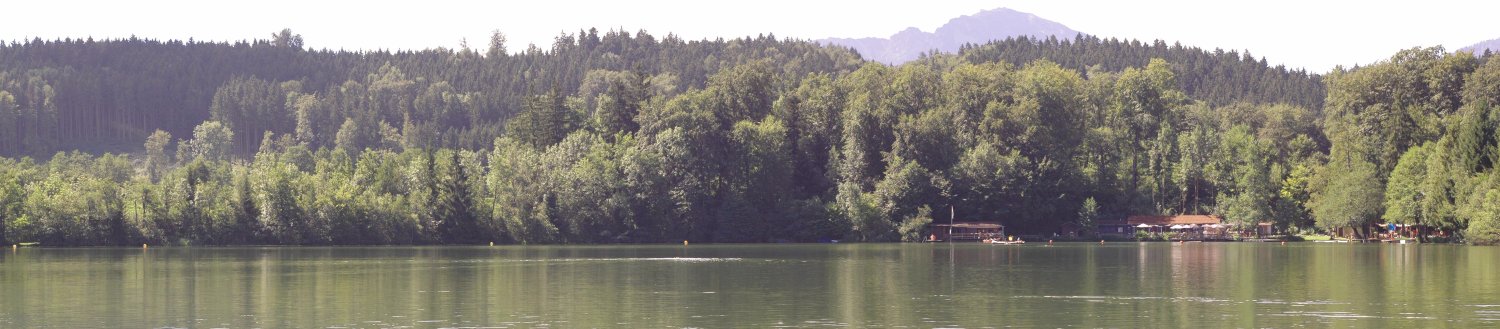
Photo: Hans Lauterbach (Furchenstein) · CC BY 3.0

Around 2000, hobby archaeologists hunting Celtic artefacts in south-east Bavaria began turning up odd metallic nuggets — iron silicides containing minerals like gupeiite and xifengite — alongside dozens of enigmatic round hollows in the landscape. The self-organised Chiemgau Impact Research Team (CIRT), whose most prominent scientific voice is geophysicist Kord Ernstson, concluded that a fragmenting comet had bombarded a 60-by-30-kilometre ellipse between Altötting and Lake Chiemsee in the first millennium BC, blasting roughly 80 craters — the largest being the 400-metre-wide basin now holding Lake Tüttensee — and perhaps seeding the Greek myth of Phaethon's fiery fall. German academic geology has examined the claims and rejected them comprehensively: the 'craters' are ice-age kettle holes and human diggings, and the 'cosmic' metal is industrial. The dispute has simmered for two decades, a vivid case study in how impact claims are tested — and how they persist.

See it on the globe →
The mainstream view

What archaeology says

For the Bavarian State Office for the Environment and virtually all professional geologists who have studied the region, the Chiemgau landscape needs no comet. The alpine foreland is textbook glacial terrain: when the Chiemsee ice lobe melted at the end of the last glaciation, stranded blocks of dead ice left kettle holes by the hundred, of which Tüttensee is simply one of the larger examples. Gerhard Doppler and Erwin Geiss of the state geological survey published detailed rebuttals in 2005-2007, and the decisive evidence came from Tüttensee itself: cores through the surrounding mire show continuous, undisturbed peat and lake sediment accumulating since the late glacial period, more than 12,500 years — impossible if the basin had been excavated by an explosion around 2,500 years ago. Radiocarbon dates on the peat straddle the alleged impact era without any disturbance horizon.

The other evidence fares no better under mainstream scrutiny. The iron silicides, initially exciting, occur widely as by-products of smelting, fireworks and industrial abrasives, and their distribution follows human activity rather than a cosmic strewn ellipse; analyses found accompanying phases inconsistent with meteoritic material. The claimed 'shock effects' in local cobbles have been attributed to ordinary weathering, soil pressure and agricultural burning, and the smaller 'craters' to marl pits, bomb craters and other diggings. The Earth Impact Database does not list Chiemgau, and a 2010 Antiquity paper by CIRT linking the event to the Phaethon myth drew sharp published criticism from geologists and archaeologists alike. German academic commentary has not minced words, with critics — including impact researchers otherwise keen to identify new craters — describing the affair as pseudoscience sustained by local enthusiasm and media appetite.

Key evidence cited
  • Undisturbed peat and lake sediments around Tüttensee accumulating continuously for over 12,500 years
  • Textbook dead-ice kettle-hole morphology shared with numerous undisputed lakes of the alpine foreland
  • Iron silicides identified as industrial by-products, distributed along patterns of human activity
  • Rebuttals by Doppler, Geiss and Kroemer of the Bavarian geological survey attributing 'craters' to pits and natural hollows
  • No listing in the Earth Impact Database and no independently confirmed shock metamorphism
The alternative view

What the skeptics propose

The CIRT — including Kord Ernstson (University of Würzburg), historian of astronomy Michael Rappenglück, historian Barbara Rappenglück and colleagues — has produced a large, persistent body of work arguing the sceptics have never engaged its strongest evidence. They report gupeiite and xifengite iron silicides, accompanied by exotic carbides such as moissanite, scattered in a coherent ellipse across the region; carbonaceous spherules; and what they identify as diagnostic shock metamorphism — planar deformation features and diaplectic glass — in cobbles from the Tüttensee rim and elsewhere, features that in standard impact science cannot form in kilns or by frost. Around Tüttensee they describe a rampart of smashed, partly vitrified stones mixed with splintered animal bone and Bronze-to-Iron Age artefacts, which they read as ejecta from the blast, and they cite ground-penetrating radar surveys (with Jens Possekel) of other basins as showing crater-like structure beneath.

CIRT dates the event between roughly 900 and 400 BC from archaeological material within and beneath the claimed ejecta, and Barbara and Michael Rappenglück have argued in Antiquity and elsewhere that the myth of Phaethon — the sun-child whose crashing chariot scorched the earth — preserves Celtic-era memory of a comet breaking up over Bavaria. They answer the peat-core objection by disputing where the cores were taken and what the basal dates mean, and accuse the state survey of dismissing rather than re-examining their samples. To its credit, the team publishes prolifically and invites inspection of its material; the difficulty, critics respond, is that none of its diagnostic claims has been confirmed by an independent impact laboratory. The Chiemgau case thus offers the site's visitors a rare live spectacle: a full-dress impact controversy where anyone can walk the 'crater' rim — around a peaceful Bavarian swimming lake.

Key evidence cited
  • Claimed planar deformation features and diaplectic glass in cobbles — textbook shock indicators if genuine (Ernstson et al.)
  • Gupeiite and xifengite iron silicides, minerals also known from meteorites, reported across a coherent ellipse
  • A rampart of shattered, partly melted stones with crushed bone and artefacts around Tüttensee, read as ejecta
  • Ground-penetrating radar profiles interpreted as buried crater structures beneath other Chiemgau basins
  • The Phaethon myth and regional Celtic-era cultural discontinuities offered as historical echoes of the event

Genuinely open questions

  1. Would independent laboratory analysis of CIRT's claimed shocked cobbles confirm or refute planar deformation features?
  2. What is the true source of the region's unusual iron silicide nuggets?
  3. Why does a claim so thoroughly rejected by professional geology continue to attract publications and public belief?

Worth knowing

Lake Tüttensee, cast by the CIRT as ground zero of a comet strike, is today a designated bathing lake — swimmers do their laps inside what enthusiasts call Germany's youngest impact crater and geologists call a hole left by melting ice.