Lost Worlds · Gulf of Pozzuoli, Campania, Italy

Baiae

Rome's most decadent resort, slowly swallowed by a restless volcanic coast

Mainstream: c. 2nd century BC - 8th century AD (submergence from late antiquity)Alternative: A 'Roman Atlantis' — the party town the gods punished, per popular retellings40.82°, 14.07°

At a glance

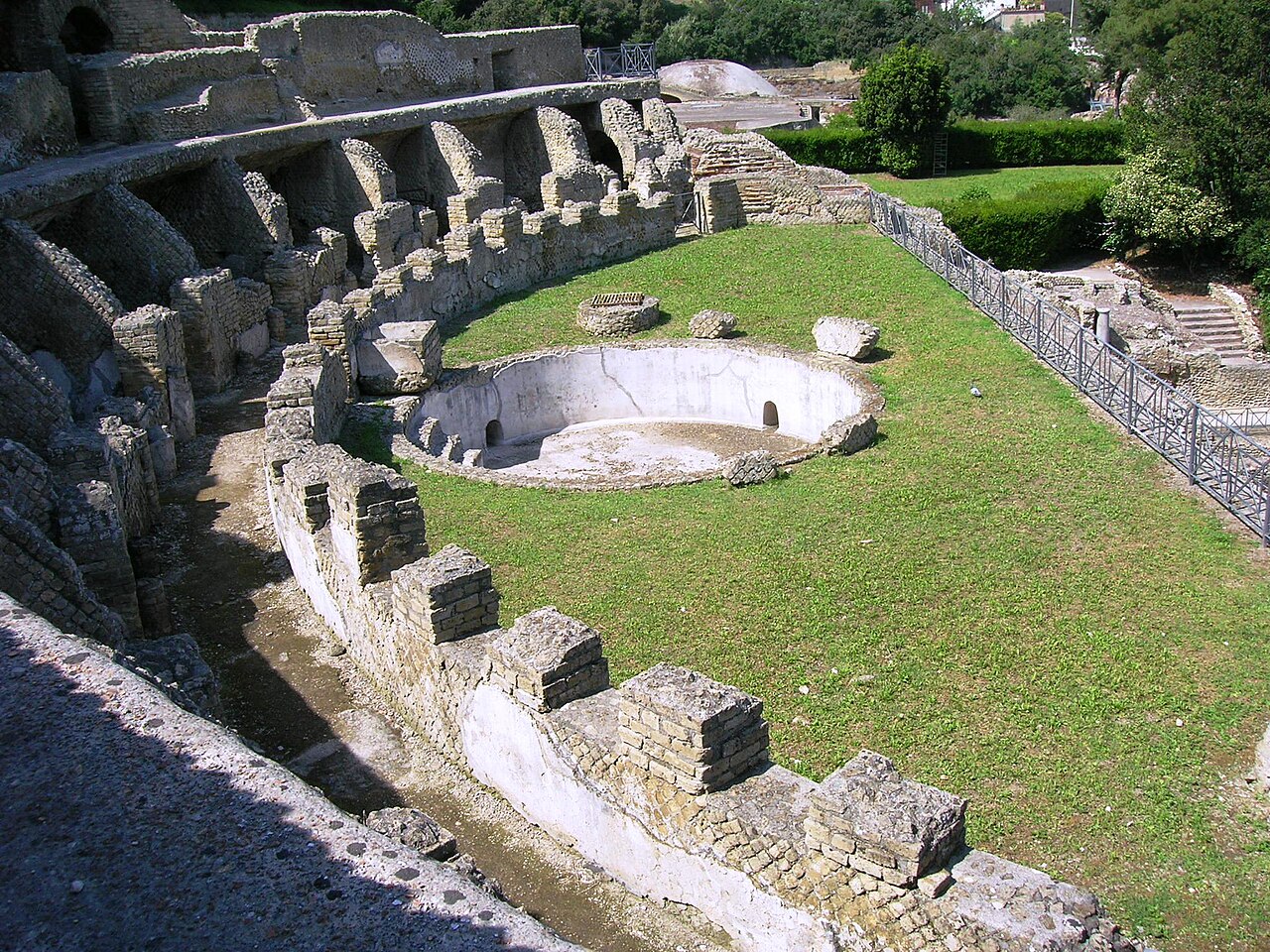
Baiae
Photo: Mentnafunangann · CC BY-SA 3.0

Baiae was the pleasure capital of the Roman elite — a spa town on the Gulf of Pozzuoli where emperors from Nero to Hadrian kept villas, and where Seneca complained the shore echoed with drunken boat parties. It sat on the Campi Flegrei, a vast volcanic caldera whose ground rises and falls over centuries in a process called bradyseism. That slow breathing of the earth eventually lowered the lower town some four to six metres beneath the sea. Today its mosaics, statues and villa walls lie in shallow water inside the Parco Sommerso di Baia, one of the world's few underwater archaeological parks, where visitors snorkel over Roman floors.

See it on the globe →
The mainstream view

What archaeology says

Archaeologists and volcanologists agree on the mechanism: Baiae was not destroyed by a single catastrophe but lowered gradually by bradyseism, the slow vertical movement of the Campi Flegrei caldera as magma and hydrothermal fluids shift beneath it. The coastline subsided progressively through late antiquity and the early medieval period, drowning the maritime quarter of the town, the imperial palace complex and the nearby military harbour of Portus Julius.

Systematic underwater investigation began after fishermen and pilots reported walls beneath the bay; excavations from the 1940s onward, and especially since the marine protected area was established in 2002, have mapped villas, thermal complexes, fish ponds and streets. The showpiece is the nymphaeum of Punta Epitaffio, a banqueting grotto of the emperor Claudius whose statue group — including Ulysses offering wine to the Cyclops — was recovered and is now displayed in the Castello Aragonese museum at Baia.

For researchers, Baiae is also a living laboratory: the same ground that sank is now rising again, and monitoring of the caldera's uplift is a matter of civil protection for the modern towns around Pozzuoli. The submerged park is studied as a test case for conserving ancient remains in situ under the sea.

Key evidence cited
  • Extensive Roman literary record: Cicero, Seneca, Horace and others describe Baiae as the resort of the elite, matching the luxury architecture found underwater
  • Bradyseism at Campi Flegrei is directly measurable today, with the ground at Pozzuoli rising by metres in the 1970s-80s and again in the 2020s unrest
  • Borings by marine molluscs on the columns of the nearby 'Temple of Serapis' macellum at Pozzuoli record past episodes of submergence and uplift
  • Underwater excavation of the Punta Epitaffio nymphaeum recovered a Claudian statue programme, securely dating the complex to the mid 1st century AD
  • Mapped remains — Villa dei Pisoni, the Villa a Protiro, mosaics, lead water pipes stamped with owners' names — lie in shallow water consistent with 4-6 m of subsidence
  • The Parco Sommerso di Baia, established in 2002, protects and continues to document the site through ongoing survey and conservation
The alternative view

What the skeptics propose

Baiae is genuinely uncontested — no serious researcher doubts what it is or how it sank — but it has become a touchstone in the sunken-cities debate for exactly that reason. Popular writers frame it as a 'Roman Atlantis', a city of luxury and vice claimed by the sea, and some enjoy the moral symmetry with Plato's tale of a proud civilisation drowned for its hubris. Early Christian writers had already cast Baiae as a den of sin, which makes the Atlantis framing feel almost inevitable.

Alternative-history authors point to Baiae to make a broader argument: if a documented Roman city can slip metres underwater through slow crustal movement, then coastlines elsewhere in the Mediterranean could conceal far older drowned settlements, and legends of lands lost to the sea may encode real geological memory. Graham Hancock and others have used well-attested submerged sites like Baiae and Pavlopetri as supporting context for the idea that Ice Age coastal settlements now lie on continental shelves.

Sceptics respond that Baiae actually demonstrates the opposite of a lost-civilisation scenario: its submergence is shallow, local, geologically explicable and richly documented, and nothing about it requires rewriting history. Either way, it is the clearest place on Earth to watch the sea take a city in slow motion — and to see how much survives when it does.

Key evidence cited
  • The 'Roman Atlantis' label is a staple of documentaries and travel writing, framing Baiae as a morality tale of decadence punished by the sea
  • Ancient authors themselves moralised about Baiae's vice, giving the drowned city an almost mythic reputation long before it sank
  • Alternative writers cite Baiae as proof that real cities do drown, lending plausibility to flood legends and lost-land traditions elsewhere
  • The eerie in-situ statues (modern casts now replace originals) and mosaics visible to snorkellers feed the popular image of a ghost city frozen underwater
  • Some speculative accounts connect the region's volcanic underworld — Lake Avernus, the 'Cave of the Sibyl' — to older myths of entrances to Hades, deepening the site's legendary aura

Genuinely open questions

  1. How much of the submerged town remains unmapped, particularly the deeper harbour works of Portus Julius?
  2. Can the precise chronology of subsidence episodes be reconstructed from the archaeology, refining models of Campi Flegrei's long-term behaviour?
  3. How should in-situ underwater conservation balance visitor access against biological erosion of mosaics and masonry?
  4. Will the current uplift phase of the caldera eventually expose parts of the sunken town again — or precede a more dangerous volcanic event?

Worth knowing

The emperor Hadrian died at Baiae in AD 138 — and the banqueting grotto of Claudius, complete with its statue of Ulysses, was found under just a few metres of water where diners once reclined beside an artificial waterfall.