What archaeology says
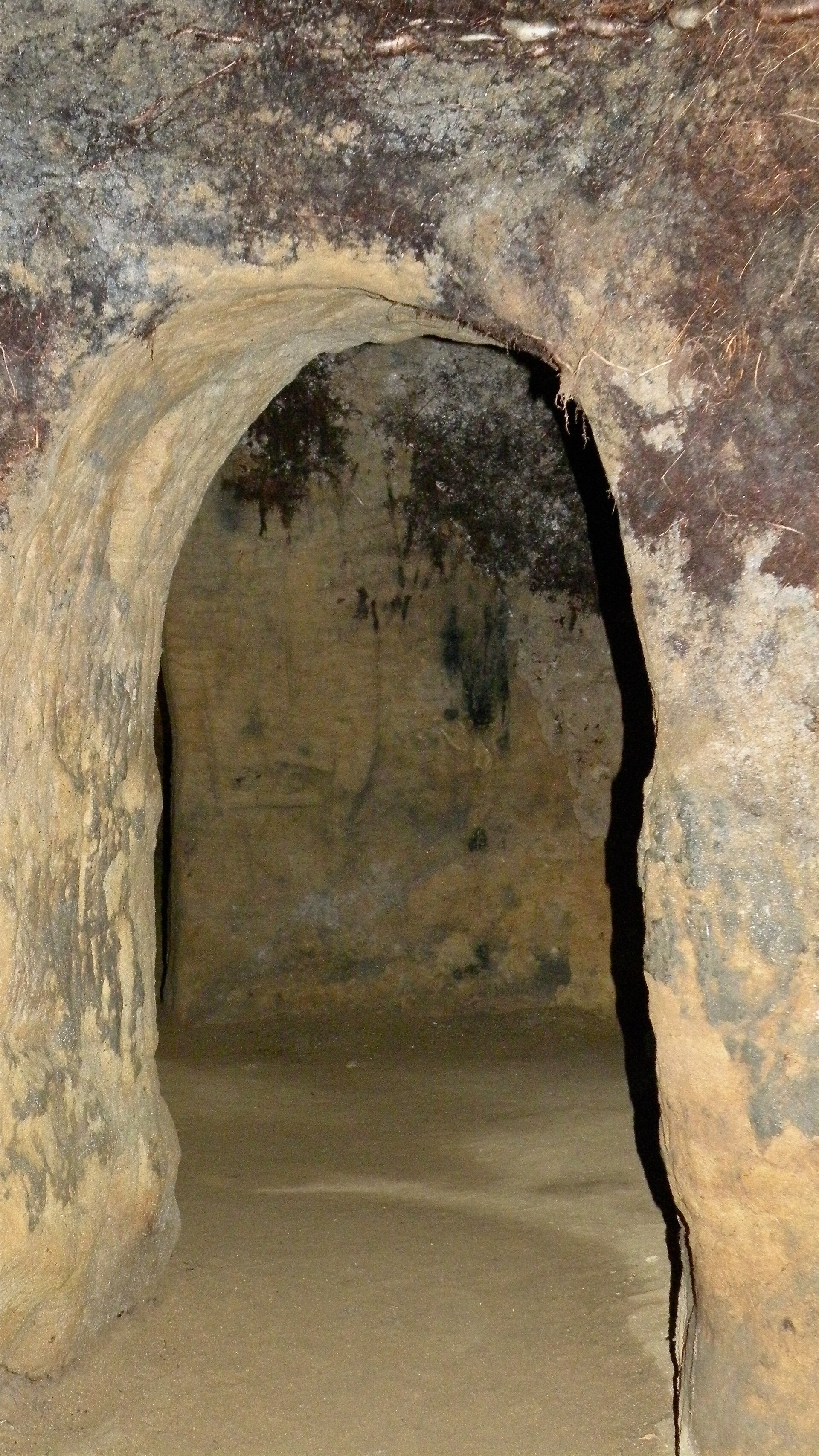
Systematic study is led by the Arbeitskreis für Erdstallforschung (Working Group for Erdstall Research), founded in 1973 in Roding, Bavaria, by Karl Schwarzfischer, which publishes the journal Der Erdstall. The dating question is now essentially settled: radiocarbon determinations on charcoal from tunnel floors and wall niches across multiple sites cluster consistently between the tenth and thirteenth centuries AD, with several samples between 950 and 1100. Erdstalls are High Medieval structures, contemporary with the villages above them.
Purpose is where mainstream researchers openly disagree. The refuge school, championed by Upper Austrian archivist Josef Weichenberger, sees them as short-term hiding places for villagers during the raids and feuds of the tenth to twelfth centuries — Hungarian incursions especially. Weichenberger famously tested the idea by spending 48 hours inside an erdstall; it is survivable, and the squeeze-holes would stop an armoured pursuer. Critics reply that a single-entrance tunnel is a death trap against smoke, that many erdstalls sit awkwardly far from dwellings, and that refuges elsewhere (like Kent's deneholes) show occupation debris that erdstalls lack.
The ritual school, associated with researchers in the Arbeitskreis such as Dieter Ahlborn, argues the deliberate narrowness, dead ends and sterility mark them as spiritual spaces — perhaps linked to folk beliefs about souls awaiting judgement, half-remembered pre-Christian ideas carried into the medieval countryside. It explains the cleanliness and the impractical design, but rests on no direct evidence at all. The storage hypothesis — cool larders — founders on damp, poor access and the total absence of food residues. The honest mainstream summary, offered by the Arbeitskreis itself: the tunnels are medieval, and their purpose is unknown.
- Radiocarbon dates on charcoal from multiple erdstalls clustering between the tenth and thirteenth centuries AD
- Iron-pick tool marks consistent with High Medieval mining technique
- Distribution tracking medieval villages, churches and farmsteads rather than prehistoric sites
- Lamp niches, benches and squeeze-hole design indicating purposeful medieval construction
- Fifty years of systematic documentation by the Arbeitskreis für Erdstallforschung (founded 1973)