Ancient Knowledge · Staro Nagoricane, near Kumanovo, North Macedonia

Kokino

A Balkan mountaintop sanctuary that became famous as 'NASA's fourth-oldest observatory'

Mainstream: c. 1900-1600 BC (Bronze Age sanctuary)Alternative: c. 1800 BC — a fully fledged megalithic observatory ranked by NASA42.26°, 21.95°

At a glance

Kokino
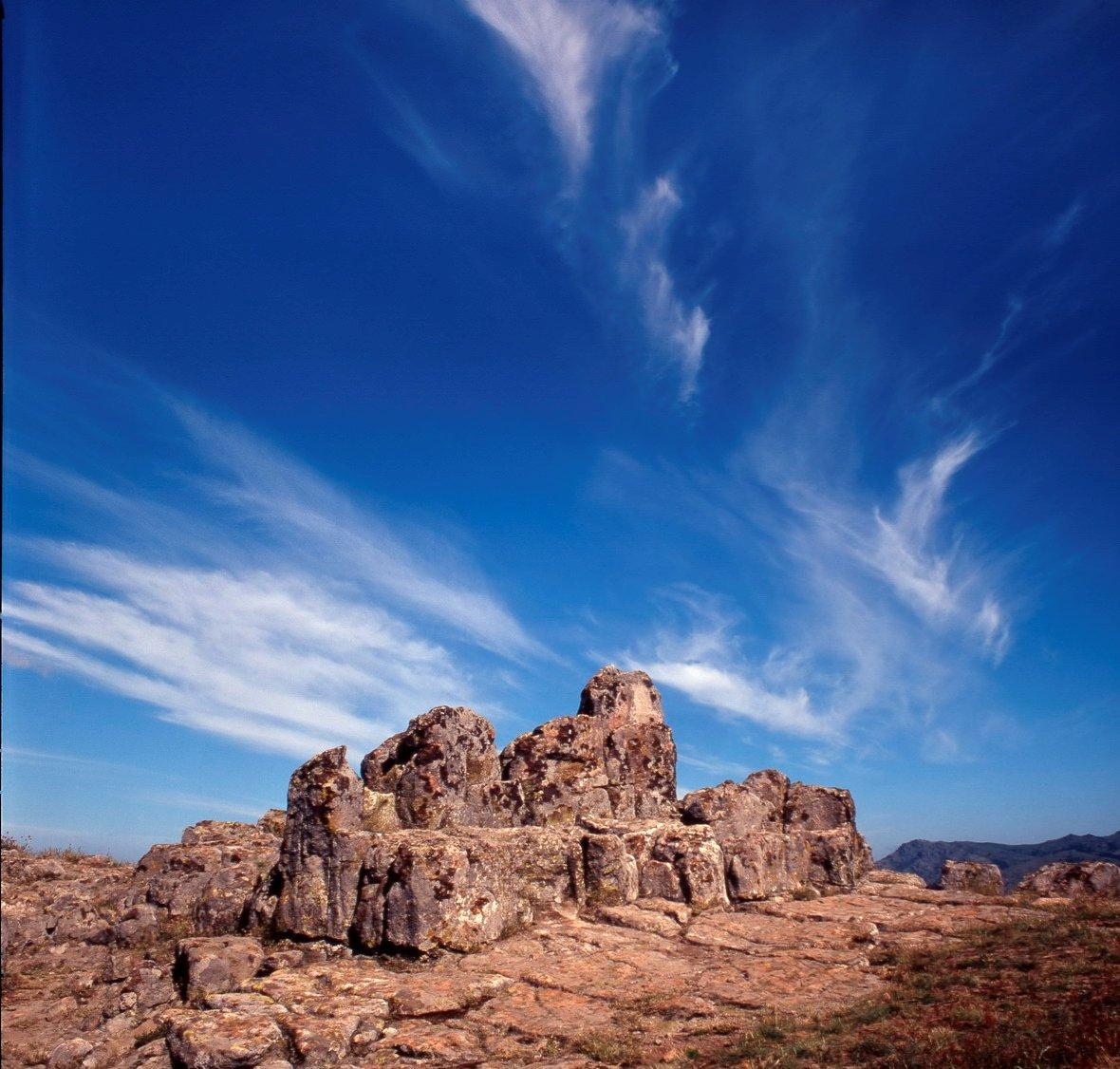
Photo: US Government · Public domain

On the twin volcanic crags of Tatikev Kamen, 1,013 metres above sea level in North Macedonia, Bronze Age people cut seats, platforms and notches into the andesite rock and left behind pottery, moulds and offerings spanning roughly 1900 to 700 BC. Discovered by archaeologist Jovica Stankovski in 2001, the site was interpreted with physicist and astronomer Gjore Cenev as a megalithic observatory whose rock-cut markers tracked the sun and moon on the eastern horizon. Kokino shot to fame when it was reported in 2005 to have been listed by NASA among the world's oldest observatories — a claim that has itself become part of the controversy.

See it on the globe →
The mainstream view

What archaeology says

There is no doubt Kokino was an important Bronze Age mountain sanctuary. Excavations by Stankovski recovered thousands of pottery fragments, stone axes, casting moulds and vessels deposited in rock crevices, evidence of ritual gatherings over more than a millennium. Four carved stone seats or 'thrones' face the eastern horizon, and the site clearly held ceremonial meaning for surrounding communities, with deposits peaking in the Late Bronze Age.

The observatory interpretation rests on Cenev's identification of seven rock markers which, viewed from a central observing position, are said to mark the rising points of the sun at the solstices and equinoxes and the extreme rising positions of the moon, from which he argues a 19-year lunisolar calendar was maintained. Many regional scholars accept at least the solstice markers as plausible.

International archaeoastronomers are far more cautious. Juan Antonio Belmonte and others note that the proposed sight-lines have never been independently tested to modern standards, that the natural ruggedness of the outcrop offers countless candidate notches, and that the site lacks any historical or ethnographic context for precise lunar observation. UNESCO placed Kokino on its Tentative List in 2009 but has not inscribed it, with evaluations noting the alignments could be coincidental.

Key evidence cited
  • Excavated pottery and metalwork moulds date ritual activity from about 1900 BC into the Iron Age
  • Vessels and offerings deliberately wedged into rock crevices show the crag was a sanctuary, whatever else it was
  • The four carved 'thrones' and processional access indicate organised ceremony focused on the eastern skyline
  • Regional parallels exist for Bronze Age hilltop sanctuaries with solar symbolism across the central Balkans
  • UNESCO's Tentative List entry acknowledges the sanctuary's authenticity while leaving the observatory question open
The alternative view

What the skeptics propose

For its champions, Kokino is nothing less than the fourth-oldest observatory on Earth. The claim traces to 2005 reports that NASA had included Kokino in a list of ancient observatories — usually said to place it fourth, after Abu Simbel, Stonehenge and Angkor Wat. The story was repeated by government ministers, tourism campaigns and world media, and Kokino became a national icon, appearing on coins and stamps.

Cenev's published analyses go well beyond solstice-marking: he argues the markers record the major and minor lunar standstills, that a special stone seat was reserved for a ruler ritually united with the sun at midsummer, and that the community ran a sophisticated calendar correcting lunar months against the solar year — placing Bronze Age Balkan astronomy on a par with contemporary Mesopotamia.

Critics respond that the famous NASA listing was, at most, a brief mention on an educational webpage rather than any scientific ranking, and that no NASA astronomer ever studied the site; the 'fourth-oldest' framing appears to have originated in Macedonian media. Belmonte's verdict — that the precision claims were never appropriately proven — is frequently cited, and the affair is now studied as much as a case of archaeoastronomy entangled with national identity as an astronomical question.

Key evidence cited
  • Cenev's surveys identify seven horizon markers matching solstice, equinox and lunar standstill rising points from a defined observing platform
  • The blocks and notches show tool-working, argued to be artificial refinement of natural features into sight-lines
  • A 19-year lunisolar calendar reconstruction fits the number and spacing of the lunar markers, according to Cenev
  • The 2005 NASA listing, however it originated, put Kokino alongside Stonehenge and Abu Simbel in global media
  • Supporters argue a millennium of continuous ritual use is best explained by the site's reliable calendrical function

Genuinely open questions

  1. Would an independent, blind survey of the horizon markers confirm any of the proposed alignments?
  2. What did NASA actually publish about Kokino in 2005, and how did it become a 'ranking'?
  3. Were the rock-cut seats astronomical stations, thrones of authority, or both?
  4. Why did activity at the sanctuary end around the seventh century BC?

Worth knowing

Kokino appears on North Macedonia's five-denar coin and postage stamps, and each summer solstice hundreds of visitors climb Tatikev Kamen to watch the sunrise from the ancient stone thrones.