What archaeology says
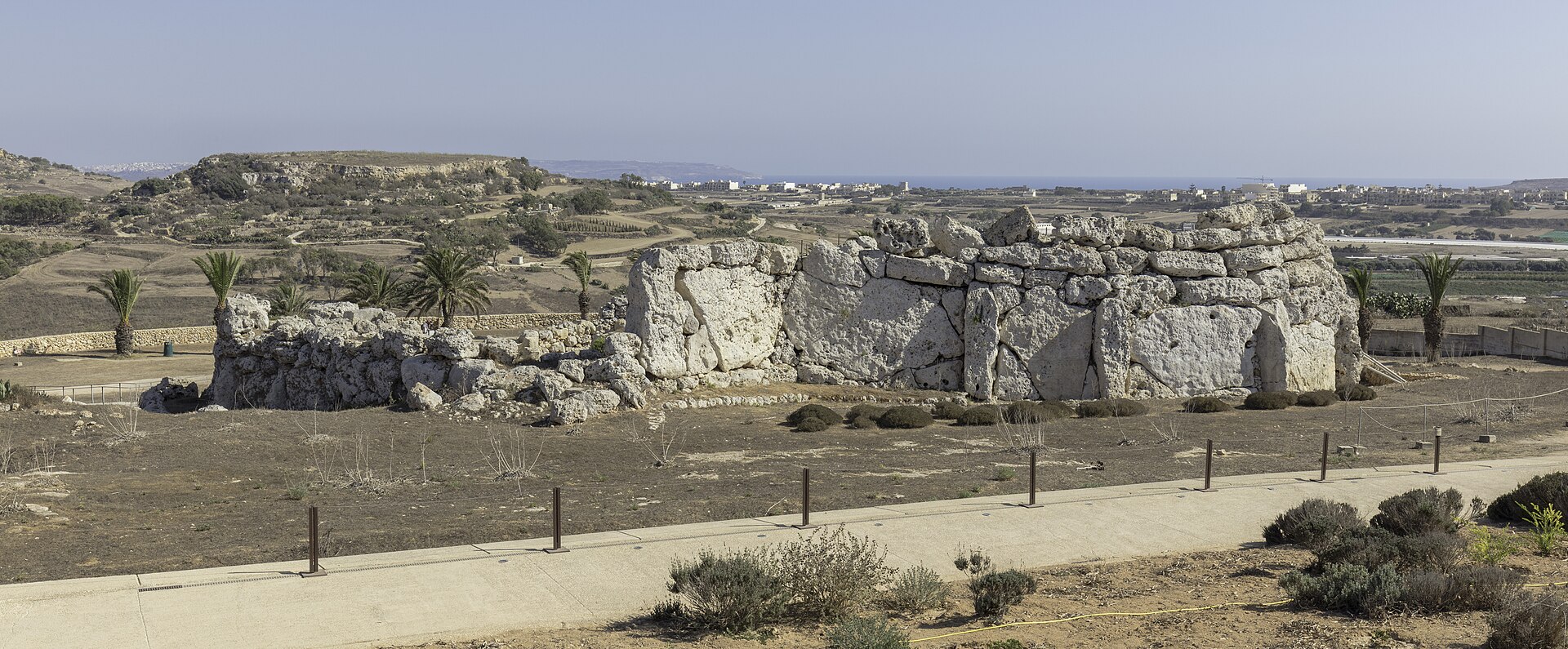
Ġgantija was cleared as early as 1827 under Col. John Otto Bayer — sadly with little recording — and studied through the 20th century by the Museums Department and archaeologists such as Themistocles Zammit, David Trump and, most recently, the Cambridge-led FRAGSUS project under Caroline Malone. The dating now rests on multiple independent methods: radiocarbon dates on plant and animal remains from the temple deposits (c. 3600–3050 BC) and optically stimulated luminescence dates from the stratigraphy (c. 3600–3080 BC for the lower levels), which agree closely. That makes the southern temple older than Stonehenge's sarsens and Egypt's pyramids, and the temple culture as a whole a purely local achievement of Neolithic farmers whose ancestors reached Malta from Sicily around 5900 BC.
The construction problem is real but tractable: the builders used the harder coralline limestone for walls and softer globigerina for interiors, and left clues to their methods — including stone spheres found at temple sites interpreted by many as ball-bearing-like rollers for moving megaliths, and nearby cart-rut-scored terrain. Temple interiors held libation holes, animal-bone deposits and altars suggesting sacrifice and feasting; associated art includes the corpulent 'fat lady' figurines often linked to a fertility cult, though their sex and meaning are debated. The FRAGSUS project also charted the environmental strain — deforestation, soil erosion, drought — that likely contributed to the temple culture's collapse around 2500 BC, after which Bronze Age newcomers reused the ruins.
For mainstream archaeology, Ġgantija's significance is precisely that an isolated island community of a few thousand farmers, without metal, writing or the wheel, independently invented monumental architecture centuries before the more famous civilisations of Egypt and Mesopotamia.
- Agreeing radiocarbon (c. 3600–3050 BC) and OSL (c. 3600–3080 BC) dates from Ġgantija's deposits and stratigraphy
- A continuous, excavated cultural sequence from Sicilian-derived farmers (c. 5900 BC) through the temple period
- Stone spheres and local quarry sources indicating practical megalith-moving methods
- FRAGSUS project evidence of environmental stress explaining the temple culture's collapse c. 2500 BC
- Absence of any verified Palaeolithic artefacts or securely dated pre-Neolithic human remains on Malta