Myth & Memory · Douarnenez Bay, Brittany, France

Ys, the Drowned City of Brittany

Brittany's own Atlantis — a city of sin drowned in a single night, remembered in a bay that really does hide Roman ruins beneath its tides.

Mainstream: Legend first recorded 15th century AD; real submerged remains in the bay are Gallo-Roman (1st–3rd century AD)Alternative: Proposed folk memory of post-glacial coastal drowning, potentially reaching back to c. 8000–3000 BC48.09°, -4.33°

At a glance

Ys, the Drowned City of Brittany
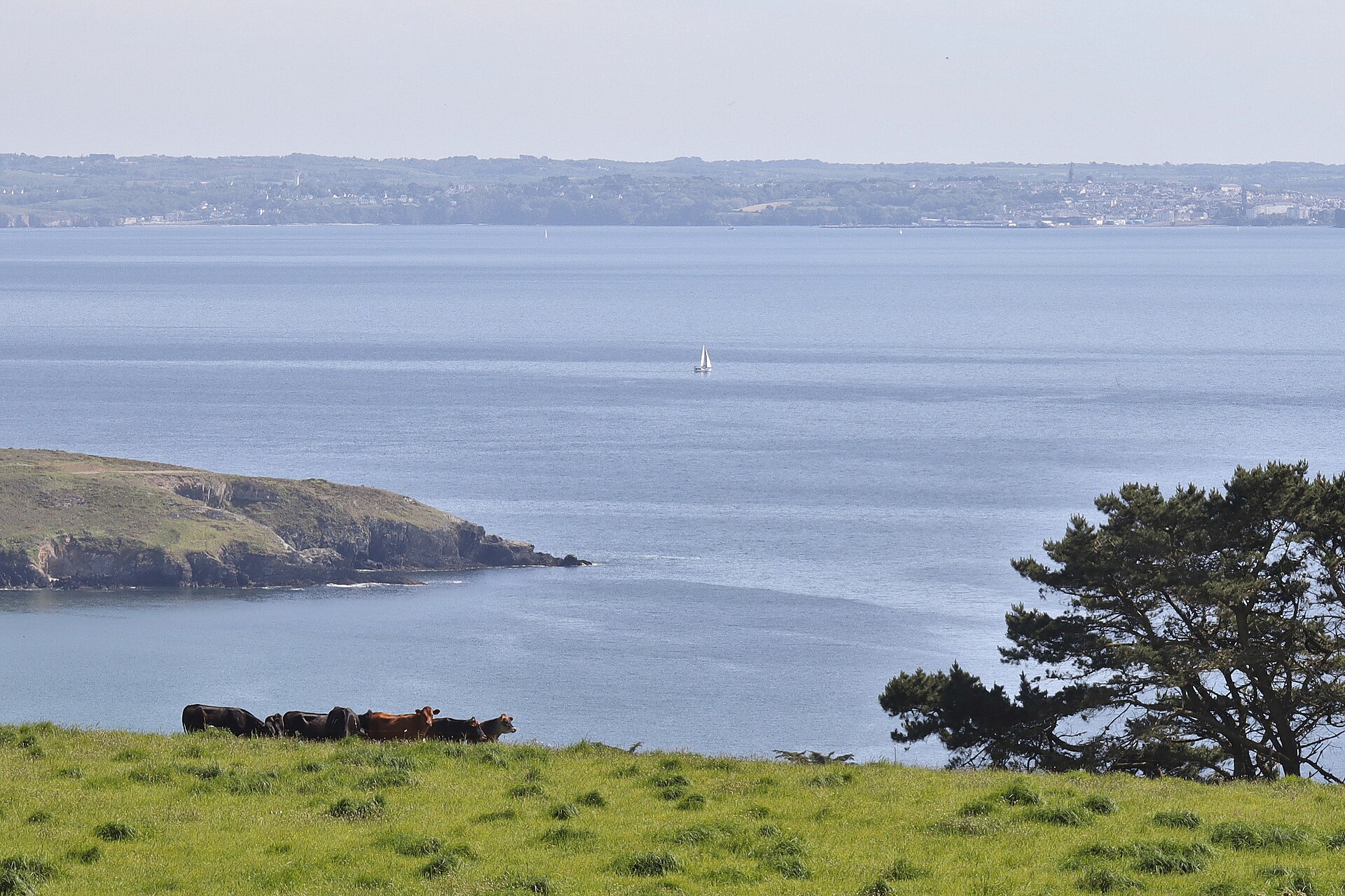
Photo: Chapelauran · CC BY-SA 4.0

The legend of Ys (Ker-Is in Breton) tells of a magnificent city built below sea level on land reclaimed from the Atlantic, protected by dikes and bronze sluice gates whose single key hung from the neck of King Gradlon. His daughter Dahut — depending on the version, a devil-tempted sinner or a defiant pagan princess — opened the gates at high tide, and the sea took the city in one night. Gradlon escaped on his horse Morvarc'h, forced by Saint Winwaloe (Guenole) to cast Dahut into the waves. Most tellings place Ys in the Bay of Douarnenez in western Brittany, a sweeping bay whose shores genuinely conceal submerged and half-submerged ancient remains, and where fisherfolk long claimed to hear the city's church bells tolling beneath the water. Like Cantre'r Gwaelod in Wales — covered elsewhere on this site — Ys sits at the intersection of medieval storytelling and a real, physically drowned coastline.

See it on the globe →
The mainstream view

What archaeology says

Historians of Breton literature trace the written legend no earlier than the 15th century, when Pierre Le Baud's chronicle of Brittany mentioned the drowned town, with the full moral drama of Gradlon, Dahut and the saints elaborated by the hagiographer Albert Le Grand in 1636 and swept into Romantic celebrity by Theodore Hersart de La Villemarque's Barzaz Breiz ballad collection of 1839. Read as literature, Ys is a Christian morality tale — a Sodom of the sea whose destruction dramatises the victory of the new faith (personified by Saints Winwaloe and Corentin) over pagan indulgence — grafted onto much older Celtic motifs of drowned otherworld kingdoms shared with Wales and Ireland.

The archaeology of Douarnenez Bay is real but Roman rather than regal. At Plomarc'h Pella on the bay's southern shore stand the remains of the largest known garum (fermented fish sauce) factory in the Roman world outside the Mediterranean: ranks of masonry salting vats up to four metres deep, built around the early 2nd century AD to process the bay's sardine shoals. Further tanks, walls and quays lie in the intertidal zone and just offshore, and coastal researchers led by Marie-Yvane Daire of the CNRS centre CReAAH in Rennes have documented dozens of eroding and partly submerged Iron Age and Gallo-Roman sites along the Breton shore. Mainstream scholars argue that generations of locals seeing worked masonry emerge from the sands at low spring tides is exactly the seedbed a drowned-city legend needs — no lost metropolis required.

Key evidence cited
  • No written trace of Ys before the 15th century; the story's moral architecture is medieval and Christian
  • The Plomarc'h Gallo-Roman garum factory — the largest known in Roman Europe — explains masonry in and around the bay
  • Intertidal fish-salting tanks, walls and quays visible at low tide provide a natural seed for the legend
  • CReAAH coastal surveys (Marie-Yvane Daire) document eroding Iron Age and Roman sites, not a drowned city
  • Close literary parallels with Cantre'r Gwaelod and Irish drowned-kingdom tales suggest a shared story-type, not a shared event
The alternative view

What the skeptics propose

The geomythological case takes the legend more seriously as memory. Geographer Patrick Nunn of the University of the Sunshine Coast, whose book Worlds in Shadow (2021) surveys drowned-land traditions worldwide, has visited the Breton sites and argues that stories like Ys plausibly preserve genuine recollections of post-glacial sea-level rise, transmitted orally for thousands of years. The physical basis is not in doubt: since the end of the last Ice Age the sea has risen some 120 metres, and Brittany demonstrably lost inhabited land — the Er Lannic stone circles in the Gulf of Morbihan now stand half-drowned, and submerged Neolithic menhirs and field systems are known off several Breton beaches. On this reading, Dahut's opened gates are a narrative dressed over a real, slow catastrophe that coastal families watched claim their ancestors' land.

A more literal school holds that Ys was an actual city. Nineteenth-century antiquarians claimed to trace paved causeways ('Roman roads') running under the sea in Douarnenez Bay, and popular writers have periodically announced walls or ruins offshore — most recently in widely shared 2025 reports of submerged structures near the Ile de Sein, which remain unverified and are treated with caution by professional archaeologists. Believers also point to the persistence and specificity of the tradition: the bay's fishermen named exact spots for the city's gates and palace, and the famous Breton prophecy insists the city still waits intact beneath the waves, to rise again when Paris falls.

Key evidence cited
  • Post-glacial sea-level rise genuinely drowned inhabited Breton land — submerged megaliths at Er Lannic and elsewhere prove it
  • Patrick Nunn's geomythology research argues coastal oral traditions can persist for millennia
  • The tradition is anchored to one specific bay, with named underwater locations, rather than floating freely
  • Reported paved causeways and structures under Douarnenez Bay, including unverified 2025 claims near the Ile de Sein
  • The legend's core — an engineered coastal city undone by the sea — matches how low-lying reclaimed land actually fails

Genuinely open questions

  1. Can any of the claimed man-made features on the floor of Douarnenez Bay be dated and mapped systematically?
  2. How far back can Breton oral tradition realistically preserve a memory of coastal loss — centuries or millennia?
  3. Did a genuine early medieval settlement in the bay area vanish to erosion, giving the legend a historical kernel between the Roman tanks and the first texts?

Worth knowing

A Breton proverb promises that when Paris is swallowed by the sea, Ys will rise again — a pun on 'Par-Is', 'like Ys'. Debussy turned the legend into music in his 1910 piano prelude The Sunken Cathedral.