Myth & Memory · Traditional location: Land's End–Scilly, England

Lyonesse, the Drowned Land of Cornwall

Tristan's lost homeland between Land's End and Scilly — the rare legend where the drowned country turns out, in part, to be really there.

Mainstream: Literary tradition 12th–15th centuries AD (Tristan romances to Malory); Scilly's real submergence spans c. 7000 BC to the medieval periodAlternative: Proposed folk memory of the drowning of a single great Scilly island, originating more than 4,000 years ago49.95°, -6.15°

At a glance

Lyonesse, the Drowned Land of Cornwall
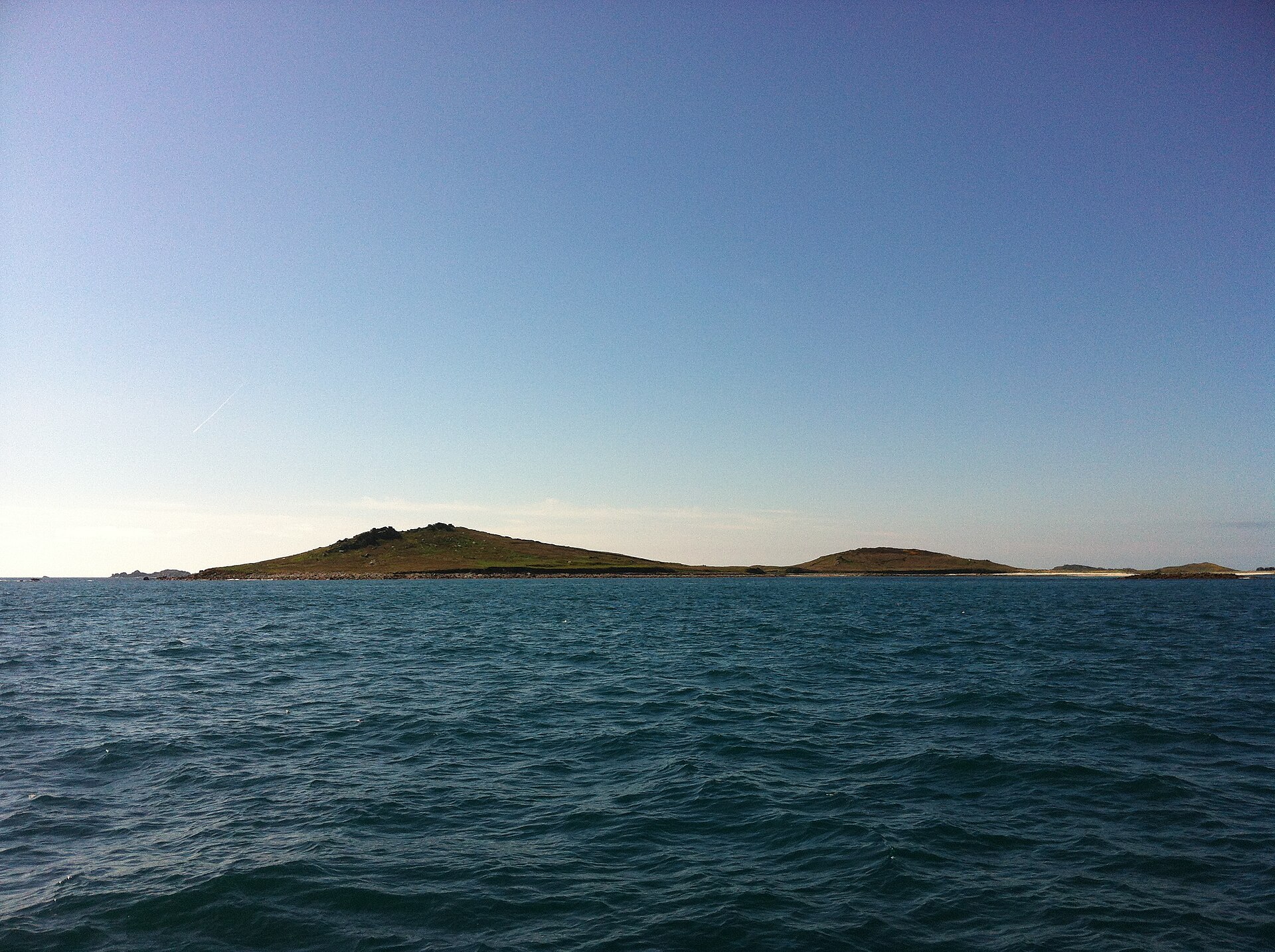
Photo: Andrew Abbott · CC BY-SA 2.0

Lyonesse is the drowned land of Arthurian romance: the homeland of Tristan, said to have stretched from Land's End to the Isles of Scilly before the sea overwhelmed it in a single night, taking a hundred and forty churches. Cornish tradition named the Seven Stones reef, halfway to Scilly, as the site of its chief city, and told of a lone survivor named Trevelyan who outgalloped the flood on a white horse. What lifts Lyonesse above most lost-land tales is the seabed itself: the Isles of Scilly genuinely were one large island within human memory of the archipelago's settlement, and prehistoric field walls, hut circles and cists can still be seen running down into the sea and across the flats between the modern islands at the lowest tides. The site's Welsh cousin, Cantre'r Gwaelod, is covered elsewhere on this site.

See it on the globe →
The mainstream view

What archaeology says

As literature, Lyonesse grew out of the medieval Tristan romances, where the hero's homeland appears as Leonois — a name many scholars think originally meant Lothian in Scotland or Leon in Brittany — before Thomas Malory fixed 'Lyonesse' in English in Le Morte Darthur (1485) and later writers moored it off Cornwall. The Cornish localisation is first documented around 1480, when the antiquary William Worcester recorded traditions of woods, fields and parishes drowned between Mount's Bay and Scilly, and Richard Carew's Survey of Cornwall (1602) gave the classic account of the lost land of Lethowsow with its 140 churches.

The real drowned landscape was reconstructed by the Lyonesse Project (2009–2013), commissioned by English Heritage and led by Charles Johns of Cornwall Council's Historic Environment Projects with Professor Dan Charman of the University of Exeter, Kevin Camidge of the Cornwall and Isles of Scilly Maritime Archaeology Society (CISMAS) and colleagues. Using 78 new radiocarbon dates and 15 luminescence ages from cores and intertidal peats, the team showed that around 7000 BC Scilly was effectively a single large island; the sea then bit into its low central plain fastest between about 3000 and 1000 BC — exactly when Bronze Age farmers were building the boulder field walls now visible between the islands at low water — with the final separation of the main islands not complete until early medieval or even medieval times. Crucially, the loss was gradual, a generational retreat rather than one catastrophic night: mainstream archaeology accepts a drowned land, but not a drowned kingdom.

Key evidence cited
  • Lyonesse Project (Johns, Charman, Camidge and colleagues) radiocarbon and luminescence chronology of Scilly's submergence
  • Bronze Age field walls, hut circles and cists physically traceable between the islands at low spring tides
  • Around 7000 BC Scilly was one large island; the central plain flooded progressively, fastest c. 3000–1000 BC
  • The name Leonois in early Tristan romances points to Lothian or Brittany, not a land off Cornwall
  • No verified archaeological finds from the deep seabed between Land's End and the Seven Stones
The alternative view

What the skeptics propose

The boldest serious claim about Lyonesse is not that a city lies under the Seven Stones, but that the story itself is astonishingly old. In a 2024 paper in the journal Folk Life, geographer Patrick Nunn and ancient historian Rita Compatangelo-Soussignan argued that the Lyonesse tradition plausibly originated more than 4,000 years ago as an eyewitness memory of the division of Scilly's single great island — Ennor, 'the great land' in Cornish — handed down orally through Cornish-speaking generations before being captured and re-dressed by medieval romancers. On this reading the 140 churches and the galloping Trevelyan are late embroidery on a genuinely ancient core, and Lyonesse joins Cantre'r Gwaelod and Australian Aboriginal sea-level traditions as evidence that oral cultures can carry coastal memories across millennia.

Older and more romantic strands go further. Victorian and early 20th-century writers collected fishermen's tales of trawling up window frames, door hinges and worked masonry near the Seven Stones, and of hearing bells under the sea off Land's End; some treated Lyonesse as a literal post-Roman country whose destruction was pinned by later chroniclers to dates such as AD 1099. A few fringe authors have linked Lyonesse to Atlantis or to the classical Cassiterides, the semi-legendary Tin Islands. Mainstream researchers counter that no archaeological material has ever been verified from the deep water between Land's End and Scilly — the drowned walls are all in the shallow inter-island flats — and that the land bridge to Cornwall itself was severed thousands of years before humans could have remembered a sudden flood there.

Key evidence cited
  • Nunn and Compatangelo-Soussignan's 2024 case that the legend preserves a 4,000-year-old memory of Ennor's division
  • The Cornish name Lethowsow and the Scillonian name Ennor embed the lost land in local language, not just imported romance
  • Recorded fishermen's traditions of masonry and bells near the Seven Stones reef
  • William Worcester (c. 1480) and Richard Carew (1602) document the drowned-land tradition before modern archaeology
  • Demonstrated multi-millennial oral transmission of sea-level memories in other cultures makes an ancient core plausible

Genuinely open questions

  1. Is the Lyonesse tradition really a survival from the Bronze Age drowning of Ennor, or a medieval literary import localised onto a suggestive seascape?
  2. What settlement remains survive on the flats and shallow seabed between the modern islands, and can more be dated?
  3. How did the tale of a one-night cataclysm arise from a submergence that actually took thousands of years?

Worth knowing

The arms of the old Cornish family of Trevelyan show a horse rising from the sea — commemorating, family tradition says, the ancestor who outrode the flood that drowned Lyonesse.