What archaeology says
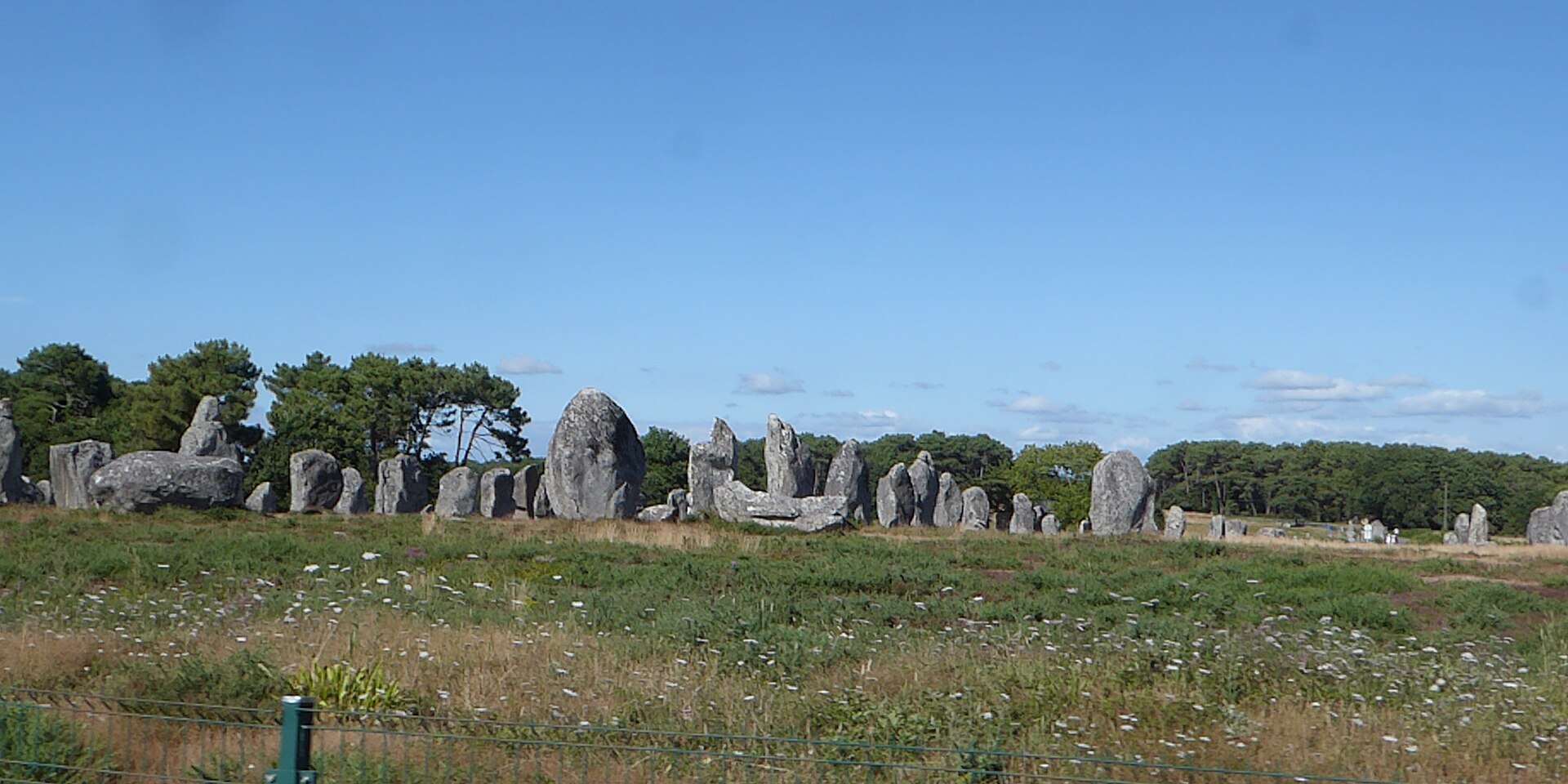
Dating standing stones is notoriously difficult — granite cannot be radiocarbon dated, and centuries of antiquarian digging destroyed much of the context. The breakthrough came from rescue excavations at Le Plasker in neighbouring Plouharnel and from the Franco-Swedish NEOSEA project led by Bettina Schulz Paulsson at the University of Gothenburg: nearly 50 radiocarbon dates from hearths, stone sockets and construction pits, modelled with Bayesian statistics, showed the alignments in the Bay of Morbihan were erected between about 4600 and 4300 BC — more than a millennium before Stonehenge, and among the oldest megalithic projects on Earth. The region had already produced the enormous Carnac mounds and the decorated menhirs of Locmariaquer, supporting the view, argued by Schulz Paulsson's earlier work, that European megalithism was born in north-west France and spread by sea.
What the rows were for remains genuinely open within archaeology. Leading interpretations see them as processional or ceremonial ways, territorial and ancestral markers raised over generations by communities competing in monumental display, or boundary works framing a sacred zone — with some rows referencing solstice directions without being precision instruments. Excavation shows the stones were socketed with care, sometimes over earlier hearths, and that the complex accumulated over centuries rather than following a single master plan.
Local folklore had its own explanation: the stones are a Roman legion turned to rock by Pope Cornelius (Saint Cornély), patron saint of Carnac — a legend still celebrated in the town. Archaeologists note wryly that the stones predate Rome by four millennia.
- Nearly 50 radiocarbon dates with Bayesian modelling (NEOSEA, published in Antiquity 2025) placing construction at c. 4600–4300 BC
- Excavated stone sockets, construction pits and hearths at Le Plasker showing how and when rows were erected
- Regional context of Carnac mounds and Locmariaquer menhirs supporting Brittany as a birthplace of European megalithism
- Evidence of piecemeal construction over centuries rather than a single engineered master plan
- UNESCO World Heritage inscription (July 2025) recognising over 550 monuments as a coherent Neolithic cultural landscape