What archaeology says
Historians locate the legend's kernel in real catastrophe. Batu Khan's invasion of north-eastern Rus in 1237–1238 was annihilating: Ryazan, Vladimir and dozens of towns were burned, and Grand Prince Yuri II — a historical figure — was killed at the Battle of the Sit River in March 1238. Maly Kitezh is generally identified with the real Volga town of Gorodets, sacked in the invasion. But the story of the vanishing city itself is first attested only centuries later: the Kitezh Chronicle (Kitezhsky Letopisets) was composed in the 1780s among the Old Believers, the schismatics who rejected the 17th-century reforms of the Russian Orthodox Church. For a persecuted community, an uncorrupted holy city — invisible to worldly power, accessible only through faith — was a perfect self-image, and scholars read Kitezh as a religious utopia projected back onto the Mongol trauma.
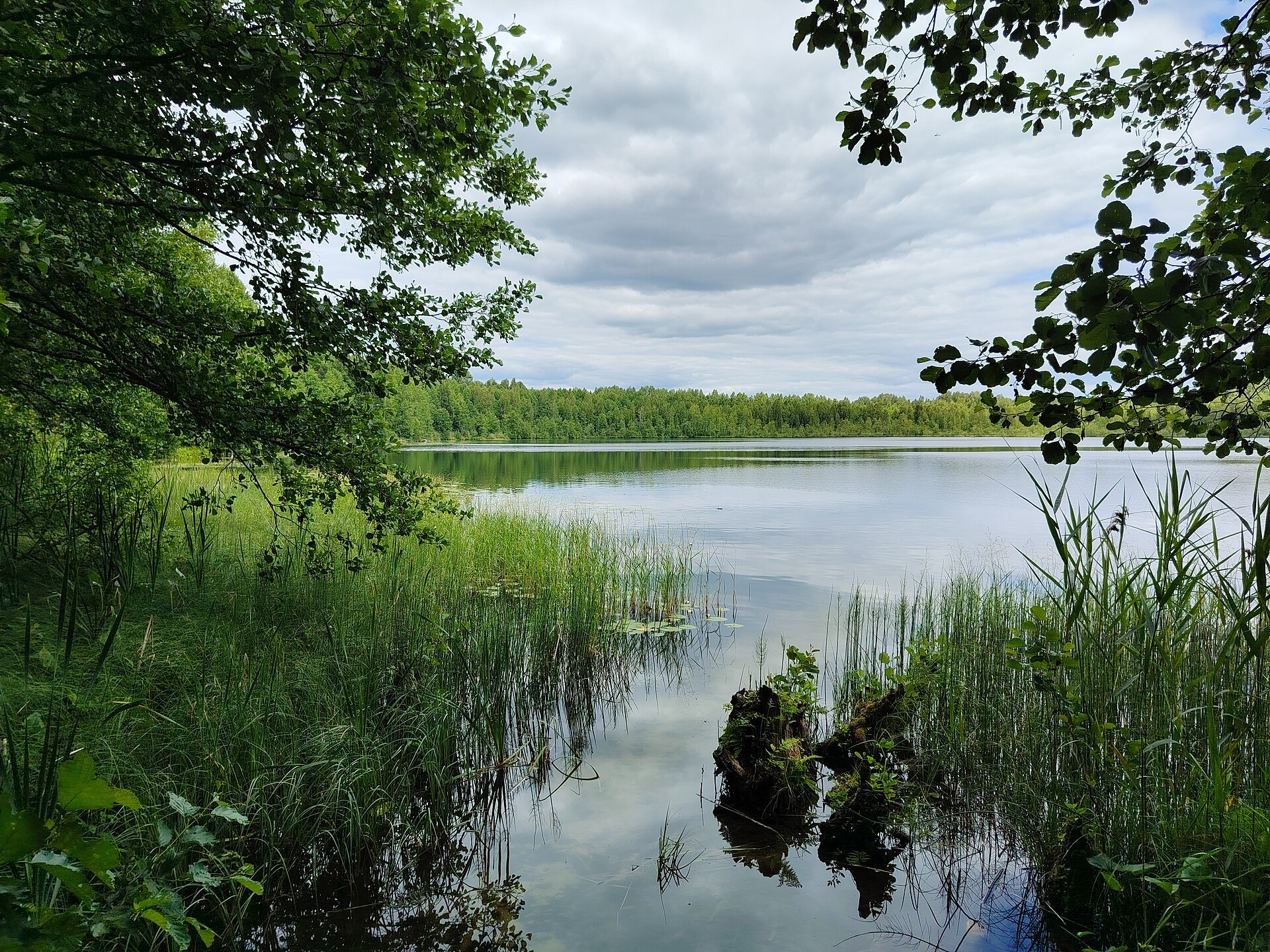
Investigation of the lake has found no city. The most serious effort, a 1968–69 expedition organised by the Literaturnaya Gazeta with archaeologists, geologists and divers, established that Svetloyar's banks descend under water in stepped terraces to some 30 metres' depth. Hydrologist Dmitry Kozlovsky argued the terraces mark episodes of gradual subsidence — intriguingly proposing that one submerged level could date to around the 13th century — and divers recovered waterlogged tree remains, but no masonry, no artefacts, no drowned streets. Geologists have variously attributed the unusually deep, transparent lake to karst collapse, neotectonic subsidence or even (in fringe versions) meteorite impact; recent work favours a stepwise tectonic-karst origin. Traces of a medieval settlement have been reported on a hill beside the lake — a normal village, not a wonder-city.
- The Kitezh Chronicle dates from the 1780s — five centuries after the events — and is an Old Believer religious text, not a medieval record
- The 1968–69 Literaturnaya Gazeta expedition found submerged terraces and tree remains but no trace of buildings or artefacts
- Geological studies explaining Svetloyar's depth and clarity by karst and tectonic subsidence in several phases
- Maly Kitezh identified with the real, historically documented town of Gorodets on the Volga
- The legend's themes match Old Believer theology: a pure city hidden from a corrupted world