Myth & Memory · Glastonbury, Somerset, England

Avalon & Glastonbury Tor

The monks who 'found' King Arthur's grave here in 1191 pulled off history's most successful heritage publicity stunt — on a hill with genuine Dark Age secrets.

Mainstream: Tor occupied 5th–7th centuries AD; Abbey fire 1184; 'grave of Arthur' announced 1191Alternative: Claimed as the Isle of Avalon of Arthurian legend (5th–6th century AD) and as a far older sacred landscape51.14°, -2.70°

At a glance

Avalon & Glastonbury Tor
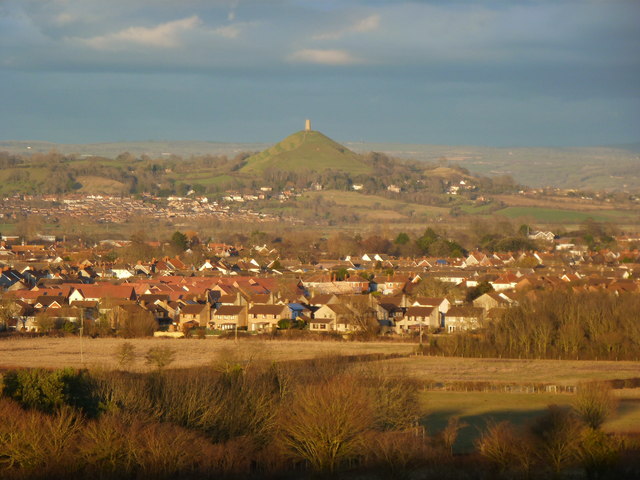
Photo: Ruth Sharville · CC BY-SA 2.0

Glastonbury Tor rises abruptly from the Somerset Levels, a conical hill crowned by a lone medieval church tower, once nearly islanded by winter floods — a plausible 'Isle of Avalon', the apple-isle where Geoffrey of Monmouth said Arthur's sword was forged and the dying king was carried after his last battle. At the hill's foot stood Glastonbury Abbey, among the richest monasteries in England, whose monks announced in 1191 that they had dug up Arthur and Guinevere themselves, complete with an inscribed leaden cross naming the king in the isle of Avalon. The claim made Glastonbury a medieval tourist magnet and has kept it one ever since: today the town is the centre of gravity for British ley-line, earth-mysteries and goddess spirituality, while the Tor's actual archaeology — a windswept 5th–7th century hilltop settlement — is stranger than either camp usually admits.

See it on the globe →
The mainstream view

What archaeology says

Historians treat the 1191 exhumation as a documented medieval publicity operation. The abbey had burnt down in 1184, its rebuilding fund needed pilgrims, and royal patronage under the Plantagenets favoured a safely dead Arthur (an insurgent Welsh hope extinguished). Gerald of Wales, who visited soon after, described the monks raising a hollowed oak trunk from deep in the old cemetery containing a giant man's bones and a woman's, with the convenient leaden cross declaring: here lies buried the renowned King Arthur in the isle of Avalon. No early source connects Glastonbury with Avalon before this; the identification and the discovery arrived as a package, and in 1278 the relics were ceremonially reburied before Edward I in a marble tomb that survived until the Dissolution.

Archaeology has tightened the sceptical case. Courtenay Arthur Ralegh Radford, excavating the abbey in the 1950s and early 1960s, announced he had relocated the very pit the monks emptied in 1191, dated by chips of Doulting stone. But Roberta Gilchrist of the University of Reading, leading the project that re-analysed all 36 seasons of unpublished abbey excavations (published 2015), concluded Radford had exaggerated: his 'grave of Arthur' is simply a pit in a monastic cemetery, datable only between the 11th and 15th centuries, and the Doulting-stone argument does not hold. On the Tor itself, Philip Rahtz's 1964–66 excavations found genuine 5th–7th century occupation — timber structures, metalworking hearths, Mediterranean amphora sherds and much meat-bone — read as either a chieftain's stronghold or an early hermitage, followed by a Saxon monastic site. Real Dark Age importance, then, but nothing naming Arthur, and Rahtz himself dismissed Arthur-hunting archaeology as 'historically misleading and trivial'.

Key evidence cited
  • The Avalon identification and Arthur's grave both first appear immediately after the abbey's ruinous 1184 fire
  • Gerald of Wales's near-contemporary account shows the abbey actively promoting the discovery to pilgrims and the Crown
  • Gilchrist's re-analysis of the abbey archive found Radford's 'Arthur pit' to be an ordinary, broadly datable cemetery pit
  • The leaden cross's wording conveniently answers exactly the questions 12th-century pilgrims would ask
  • Rahtz's Tor excavations found a 5th–7th century elite or monastic site with no Arthurian association whatsoever
The alternative view

What the skeptics propose

A minority of researchers have argued the monks embellished rather than invented. The burial's reported depth and the hollowed oak-trunk coffin fit early medieval rather than 12th-century practice, and the leaden cross — its lettering recorded by William Camden in 1607 before the object vanished — has struck some scholars as archaic in style, suggesting the monks found a genuinely ancient named burial even if the name had been 'improved'. Radford defended the exhumation's essential honesty to the end of his long life. If a west-country war leader of c. AD 500 existed, his burial at Britain's oldest continuously venerated Christian site is not, defenders argue, inherently absurd.

Modern alternative Glastonbury goes much further. Dion Fortune, who lived at the Tor's foot, cast the town in Avalon of the Heart (1934) as a permanent gateway between worlds; Katharine Maltwood proposed in 1929 that a ten-mile 'Glastonbury Zodiac' of landscape figures surrounds the town (critics note much of the area was under water or is shaped by post-medieval field boundaries); and John Michell's The View Over Atlantis (1969) made the Tor a node on the 'St Michael line' of aligned churches and mounds running across southern England — the founding text of the modern ley-line movement, though statisticians and archaeologists regard such alignments as products of chance among dense monument scatters. The Tor's stepped terraces are read by this school as a great processional labyrinth of Neolithic date, an idea championed by Geoffrey Ashe and Philip Rahtz considered at least testable, while mainstream landscape historians prefer medieval agricultural lynchets. Between the poles stands the enduring fact: people have treated this hill as holy, or at least uncanny, for a very long time.

Key evidence cited
  • A hollowed oak-trunk coffin at great depth fits early medieval burial practice better than a 12th-century forgery would need to
  • Camden's 1607 engraving shows lettering some epigraphers have judged older in style than 1191
  • The Tor genuinely was a high-status Dark Age centre, occupied at the right period for the legend
  • Radford, a serious excavator, maintained the monks had reopened a real ancient grave
  • The Tor's terraces, the St Michael alignment and the Glastonbury Zodiac are cited as traces of a designed sacred landscape

Genuinely open questions

  1. What was the 5th–7th century settlement on the Tor — princely stronghold, beacon site or Britain's earliest hermitage?
  2. What did the monks actually find in 1191, and where did the leaden cross go after the 18th century?
  3. Are the Tor's terraces agricultural lynchets, a medieval path, or a deliberately constructed labyrinth?

Worth knowing

When Arthur's supposed bones were reburied before King Edward I in 1278, the ceremony doubled as political theatre: Edward was then conquering Wales, and a verifiably dead Arthur meant the Welsh could stop waiting for their once and future king.