What archaeology says
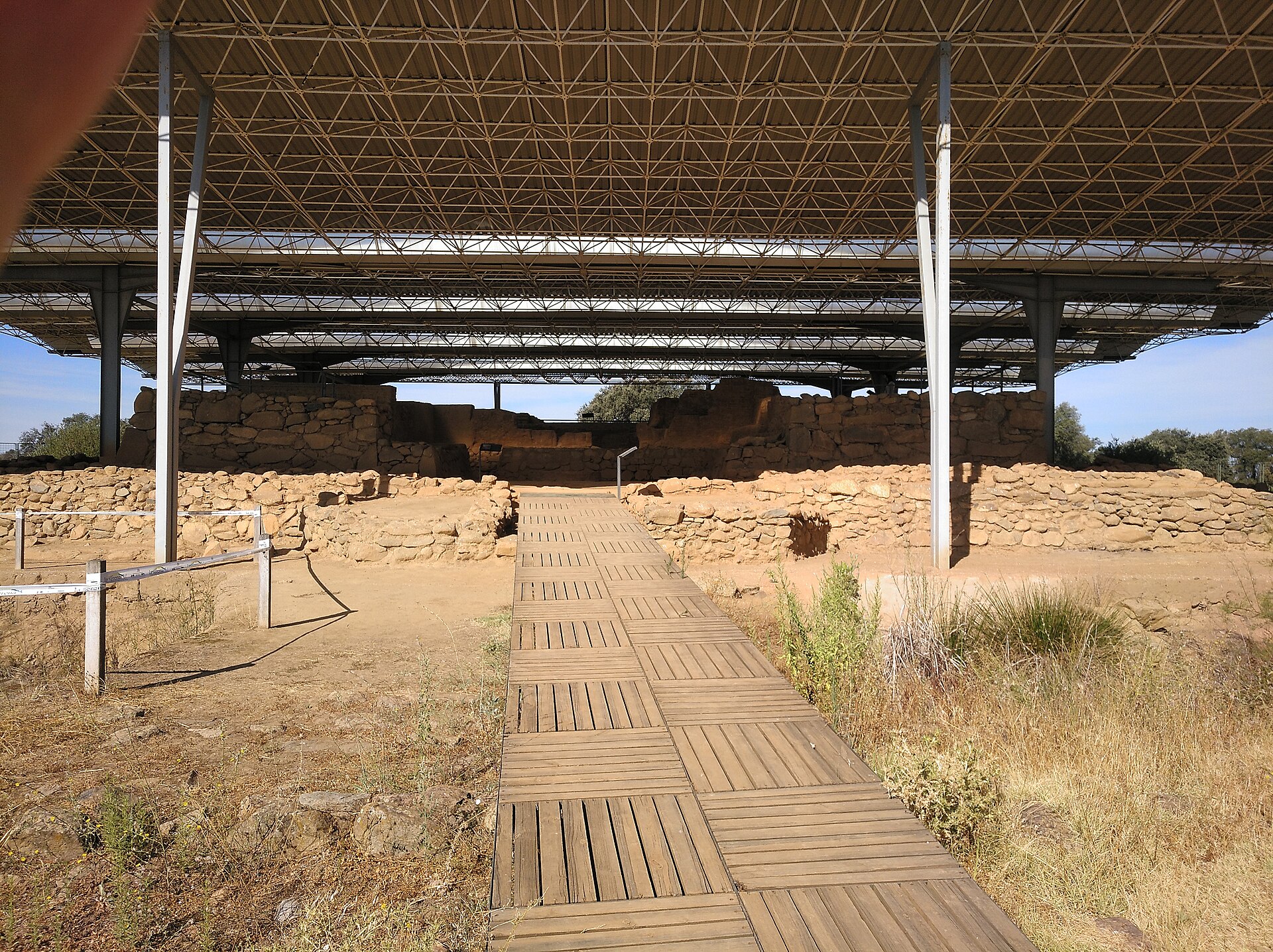
Mainstream archaeology treats Tartessos as an indigenous Iberian society transformed by contact with Phoenician colonists from the ninth century BC onward: local Bronze Age communities around Huelva, Seville and Cádiz grew wealthy on the Rio Tinto silver and copper trade, adopted eastern Mediterranean techniques and iconography, and produced treasures such as the gold hoard of El Carambolo. The most spectacular finds come from the culture's inland final phase in Extremadura. Cancho Roano, excavated from the 1970s, is a palace-sanctuary that was deliberately burned, filled in and sealed around 370 BC after ritual feasting. Casas del Turuñuelo, under excavation since 2015 by Sebastián Celestino and Esther Rodríguez of the CSIC, yielded a two-storey adobe building sealed the same way, a staircase unique in the western Mediterranean, and the mass sacrifice of more than fifty animals, mostly horses. In 2023 the site produced a sensation: five carved stone faces, the first known figurative human representations of Tartessian art, upending the culture's reputation as strictly aniconic.
The culture's end around the mid-fifth century BC — whether through the collapse of the silver trade after Phoenicia's crisis, internal upheaval, or environmental change including earthquakes and tsunamis recorded in Doñana's sediments — remains debated, as does the location of the capital the Greeks knew, which may lie beneath metres of Guadalquivir silt. What archaeologists reject is any link to Atlantis: when the Turuñuelo faces went viral in 2023 accompanied by Atlantis headlines, the excavators publicly repudiated the association, noting Tartessos is a documented Iron Age society a full nine millennia adrift of Plato's dramatic date.
- Tartessos is independently attested by Greek and Near Eastern texts and by a rich archaeological record — a real Iron Age culture, not a myth
- Cancho Roano and Casas del Turuñuelo: sealed palace-sanctuaries with datable ritual burning, feasting deposits and mass horse sacrifice (6th–4th centuries BC)
- The 2023 Turuñuelo carved faces — the first Tartessian figurative sculpture — fit Iron Age orientalising art, not any earlier horizon
- CSIC coring in the Marisma de Hinojos found estuary sediments and no urban remains matching the satellite-photo claims
- Tsunami deposits in Doñana explain later legends of drowned cities without requiring any Platonic metropolis