Catastrophe & Climate · Jordan Valley, Jordan (north-east of the Dead Sea)

Tall el-Hammam

The 'Sodom airburst' city — a spectacular destruction claim that ended in one of archaeology's most watched retractions.

Mainstream: c. 1650 BC — Middle Bronze Age city destroyed by conventional means (warfare, earthquake or fire)Alternative: c. 1650 BC — destroyed by a Tunguska-scale cosmic airburst, per a 2021 paper retracted in 2025; identified by its excavator as biblical Sodom31.84°, 35.67°

At a glance

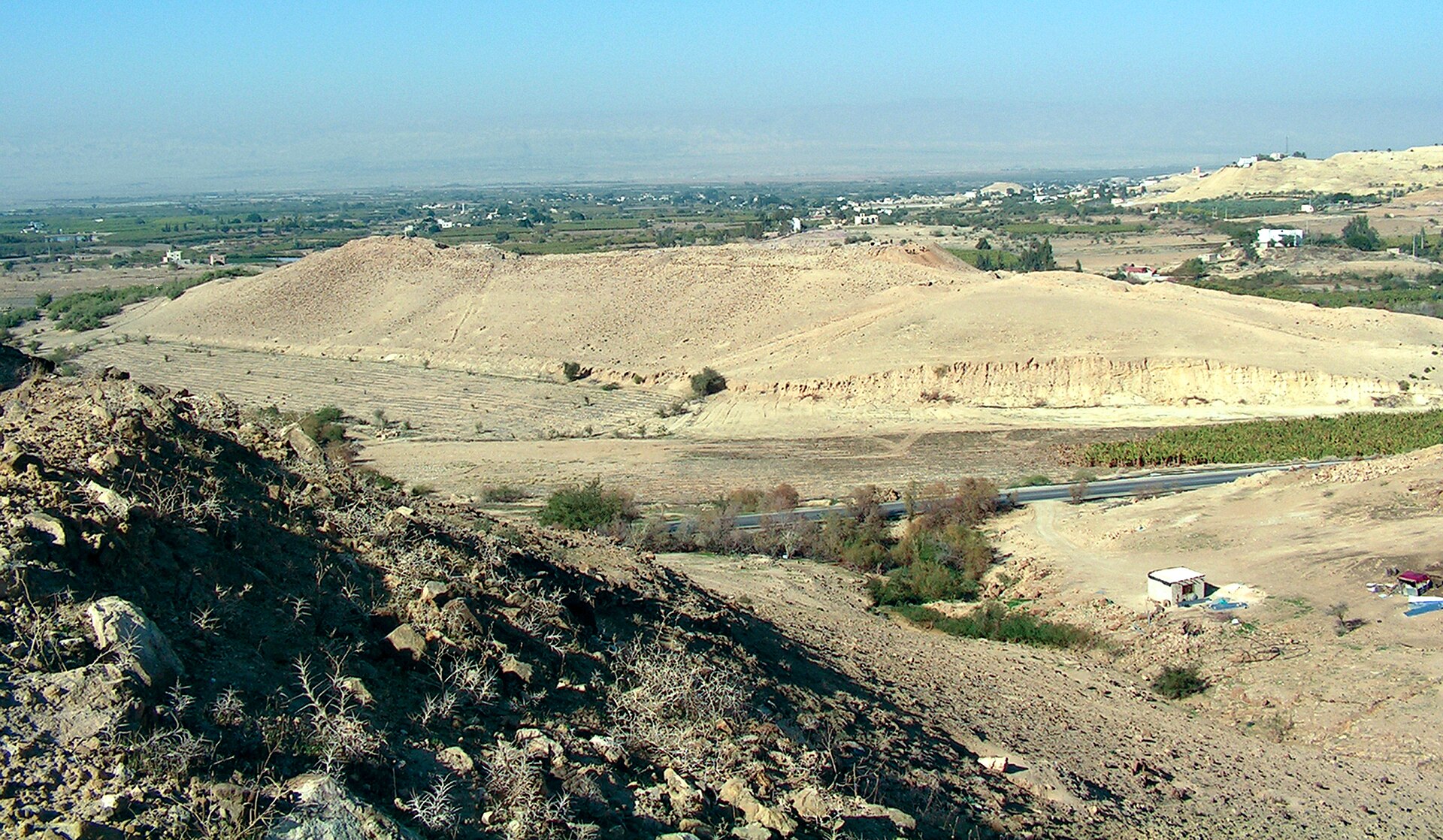
Tall el-Hammam
Photo: Deg777 · CC BY-SA 4.0

Tall el-Hammam is one of the largest Bronze Age city mounds in the southern Levant, commanding the well-watered plain north-east of the Dead Sea. Excavated from 2005 by Steven Collins of Trinity Southwest University — who argues it is the biblical Sodom — the city flourished through the Middle Bronze Age before being violently destroyed around 1650 BC and, its excavators claim, lying largely abandoned for centuries. In 2021 a Scientific Reports paper by Ted Bunch, Malcolm LeCompte, Allen West, Collins and 18 co-authors announced that the city had been annihilated by a cosmic airburst larger than Tunguska — melting pottery, shattering bones and salting the soil. The paper became one of the most-read scientific articles of the year, then the centre of a slow-burning integrity battle that ended with its retraction in April 2025.

See it on the globe →
The mainstream view

What archaeology says

Conventional archaeology sees Tall el-Hammam's end as dramatic but earthly. Middle Bronze Age cities across the Levant were destroyed in waves during the turbulent 17th-16th centuries BC — by siege warfare, conflagration and the earthquakes to which the Dead Sea Transform fault, running directly beneath the Jordan Valley, is notoriously prone. A destruction layer of ash, fallen mudbrick and burnt debris is exactly what such events leave; melted pottery surfaces can result from kiln accidents and intense urban fires, and 'high salt' is unremarkable soil chemistry a few kilometres from the Dead Sea. Critics also dispute the claimed centuries-long abandonment gap and note that most archaeologists reject the Sodom identification — the site's chronology does not fit biblical chronologies either, which is why even many conservative biblical scholars, such as those favouring sites south of the Dead Sea, dismiss it.

The airburst paper itself came under withering technical attack. Physicist Mark Boslough — a leading airburst modeller and, ironically, a critic of impact catastrophism generally — showed with Hilary Bruno that the paper's Tunguska comparisons rested on overestimated temperatures and wind speeds, while mineralogists Steven Jaret and R. Scott Harris found the claimed shocked quartz and melt evidence misidentified. Elisabeth Bik and others documented apparently manipulated or improperly processed images, aired at length on PubPeer and Science Integrity Digest. Scientific Reports attached an editor's note in 2022, upgraded it to an expression of concern in 2023, and finally retracted the paper on 24 April 2025, stating the airburst claims were not supported by the data. For mainstream observers, Tall el-Hammam became a case study in how extraordinary claims propagate faster than their corrections.

Key evidence cited
  • Boslough and Bruno's demonstration that the paper's Tunguska temperature and blast comparisons were overstated
  • Jaret and Harris's mineralogical rebuttal: no verifiable shocked quartz or impact-diagnostic phases
  • Documented image-integrity problems raised by Elisabeth Bik and on PubPeer, leading to the April 2025 retraction
  • The Dead Sea Transform fault and Middle Bronze Age warfare as well-attested destroyers of Jordan Valley cities
  • Widespread archaeological rejection of the Sodom identification on chronological and geographical grounds
The alternative view

What the skeptics propose

The 2021 paper assembled a genuinely striking dossier. Within a roughly 1.5-metre-thick destruction layer the authors reported pottery with outer surfaces melted into glass, melted mudbrick and plaster, 'diamonoid' carbon, magnetic and silica-rich spherules, remnants they interpreted as shocked quartz, platinum and iridium enrichment, and human skeletal remains showing extreme fragmentation and burning. They calculated that temperatures above 2,000 degrees Celsius and blast pressures far beyond any earthquake or normal fire were needed, and modelled a cosmic airburst of roughly Tunguska scale or larger detonating low over the city — with salt scattered by the blast possibly explaining why the lower Jordan Valley was abandoned for centuries afterwards. The paper suggested, cautiously but headline-grabbingly, that folk memory of such an event could underlie the story of Sodom's destruction by fire from heaven.

After the retraction, most authors publicly disagreed with the journal's decision; LeCompte, West and colleagues maintain the physical evidence stands and have continued publishing airburst analyses of the site in Airbursts and Cratering Impacts, a journal edited within their own research network. They argue the image issues were cosmetic corrections by a graphic artist to a handful of non-data photographs, fully disclosed, and that critics have conflated presentation flaws with the underlying measurements. Steven Collins continues to excavate and to defend both the destruction evidence and the Sodom identification. Supporters ask a fair question: if the sceptics are right that the material is mundane, what exactly melted the pottery across the site at temperatures normal fires struggle to reach? For them, the retraction reflects gatekeeping pressure on impact research rather than a failure of the evidence itself.

Key evidence cited
  • Pottery and mudbrick with surfaces melted to glass, implying temperatures near or above 2,000 degrees Celsius
  • Reported spherules, diamonoids and platinum-group enrichment concentrated in the destruction layer
  • Highly fragmented, charred human remains suggested to record a sudden catastrophic blast
  • Elevated salt in the destruction matrix, offered to explain centuries of regional abandonment
  • The authors' airburst modelling concluding no earthquake or conventional fire matches the assemblage

Genuinely open questions

  1. What actually produced the melted pottery and mudbrick — kiln debris, urban firestorm, or something more exotic?
  2. Was the lower Jordan Valley really abandoned for centuries after 1650 BC, and if so, why?
  3. Can any independent laboratory re-examine the site's destruction layer with neutral sampling protocols?

Worth knowing

The retracted airburst paper was Scientific Reports' most-viewed article of 2021, read hundreds of thousands of times — its 2025 retraction notice will never catch up with the headlines it generated.