Origins of Civilisation · Jericho, West Bank

Jericho (Tell es-Sultan)

The world's oldest walled town — with an 8,000-year head start on its own famous Bible story.

Mainstream: Settled c. 9500 BC; stone wall and tower c. 8300 BC (Pre-Pottery Neolithic A)Alternative: Prehistoric dates undisputed — the fight is over Bronze Age City IV: destroyed c. 1550 BC (Kenyon) or c. 1400 BC (Garstang and Wood, matching the biblical conquest)31.87°, 35.44°

At a glance

Jericho (Tell es-Sultan)
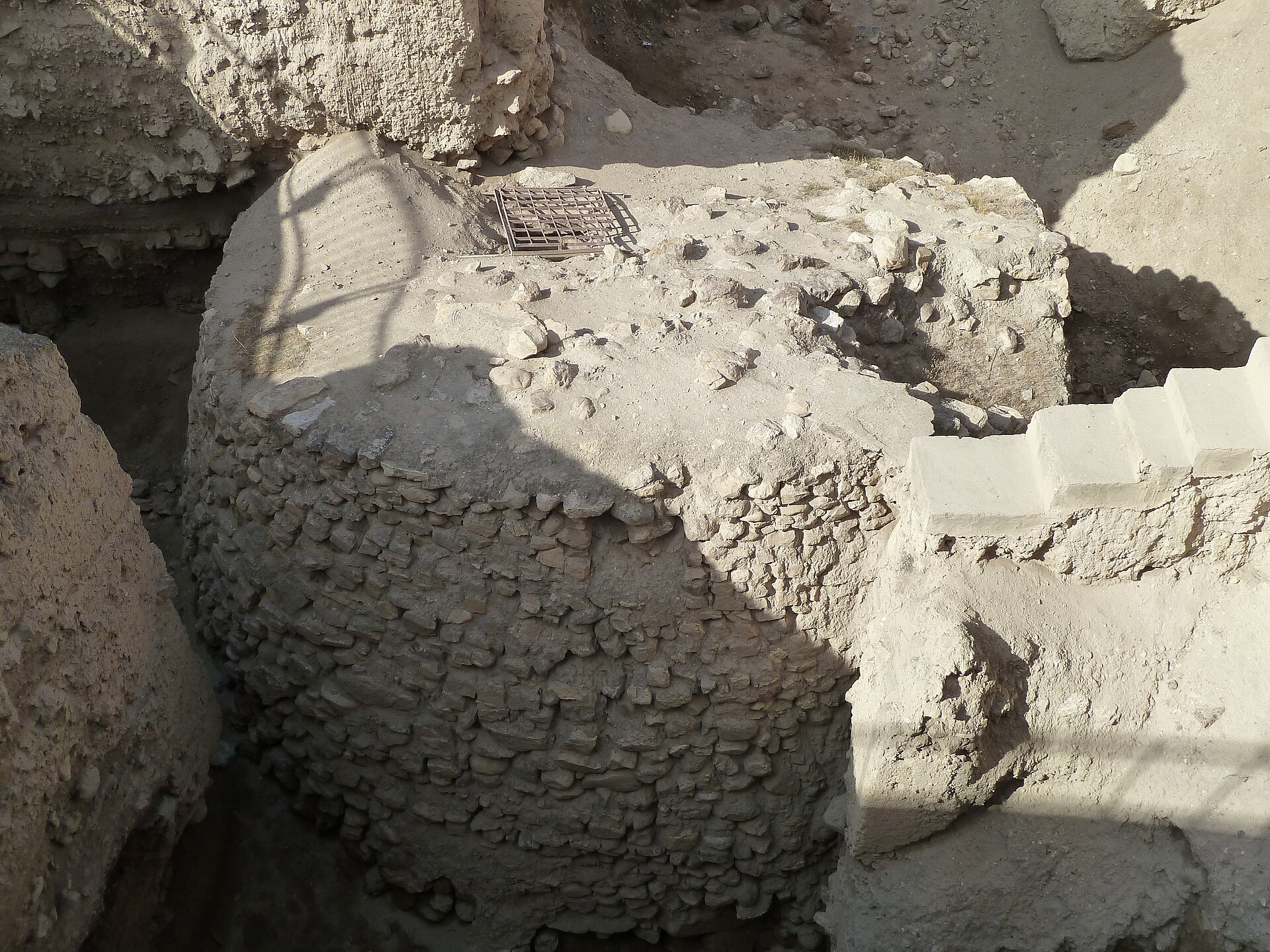
Photo: Deror avi · CC BY-SA 3.0

Tell es-Sultan, ancient Jericho, rises beside the perennial spring of Ain es-Sultan in the Jordan Valley, 250 metres below sea level — the lowest and arguably the oldest town on Earth. Hunter-gatherers of the Natufian culture camped here by 9500 BC, and by around 8300 BC the Pre-Pottery Neolithic inhabitants had surrounded their mud-brick settlement with a massive stone wall and built a solid stone tower 8.5 metres tall with an internal staircase of 22 steps — monumental architecture millennia before pottery, metal or writing. Layer upon layer of towns rose and fell on the mound for the next eight thousand years, including the Bronze Age city whose walls star in the biblical story of Joshua.

See it on the globe →
The mainstream view

What archaeology says

Kathleen Kenyon's excavations of 1952–58, using the then-new stratigraphic methods she pioneered, transformed Jericho into a type-site for the origins of settled life. She exposed the PPNA wall and tower and proved they belonged to the Stone Age, not the Bronze Age as her predecessor John Garstang had assumed. The tower — solid stone, conical, with the world's oldest known staircase inside — predates Egypt's pyramids by more than five millennia. Kenyon read the wall as defensive; later researchers led by Ofer Bar-Yosef argued it was flood protection against wadi torrents, while Ran Barkai and Roy Liran proposed in 2008–2011 that the tower was ideological: computer modelling shows it aligns with the summer-solstice sunset behind Mount Quruntul, its shadow falling across the town, suggesting a monument binding the community to the cosmos — or a display of power by an emerging elite.

The town's later history is equally rich: the famous plastered skulls of the PPNB period (c. 7000 BC), with faces modelled in lime plaster over ancestors' skulls and shells for eyes, are among the earliest known portraiture. In the Middle Bronze Age, Jericho became a substantial Canaanite city (City IV) with cyclopean ramparts and a plastered glacis.

On the biblical question, Kenyon concluded City IV was violently destroyed around 1550 BC — probably amid the upheavals accompanying the Egyptian expulsion of the Hyksos — and that in the late 13th century BC, the era most scholars assign to any historical conquest, Jericho was small, poor and unwalled. Radiocarbon dating of grain from the destruction layer by Hendrik Bruins and Johannes van der Plicht in 1995 supported her, centring on 1562 BC. Most archaeologists therefore treat the story of Joshua's trumpets as aetiology — a tale explaining ruins already ancient when the text was written.

Key evidence cited
  • Kenyon's stratigraphy placing the wall and tower in the Pre-Pottery Neolithic, c. 8300 BC
  • High-precision radiocarbon dates on charred City IV grain centring on c. 1562 BC (Bruins and van der Plicht)
  • Absence of imported Late Bronze pottery expected in a 1400 BC destruction
  • Little evidence of a walled city at Jericho in the late 13th century BC, the usual conquest era
  • Barkai and Liran's modelling of the tower's summer-solstice alignment with Mount Quruntul
The alternative view

What the skeptics propose

The great Jericho controversy is a rare case where the 'alternative' reading comes from within biblical archaeology. John Garstang, excavating in 1930–36, found City IV's fallen walls and burned ruins and dated the destruction to about 1400 BC — matching a literal biblical chronology for Joshua. Kenyon's redating to 1550 BC seemed to end the matter, but in 1990 Bryant Wood of Associates for Biblical Research reopened it. Wood argued Kenyon had reasoned from the absence of imported Cypriot pottery in a poor quarter of the town, while locally made pottery Garstang recovered actually runs to the end of the Late Bronze I period around 1400 BC. He added a continuous scarab series ending with Amenhotep III, a stratigraphic argument, and a single early radiocarbon date, and noted the excavated details echo the narrative: walls collapsed outward at the base of the slope (forming ramps an attacker could climb), jars full of spring-harvest grain burned rather than looted — a city taken suddenly, not starved out.

The rebuttal has been forceful. The 1995 high-precision radiocarbon series on charred grain from the destruction layer came out around 1562 BC, and Wood's pottery rereadings and the scarab evidence (heirloom scarabs are common) have been rejected by most specialists; his supporting radiocarbon date was later traced to a laboratory calibration error. Sceptics also note that even Wood's 1400 BC date requires a biblical chronology many historians do not accept.

Yet the exchange remains a model of how much interpretation rides on pottery typology and sampling. Both sides agree on the physical facts — fallen mud-brick walls, a city-wide burn layer, stores of untouched grain — and disagree, by 150 years, on when catastrophe struck. Italian-Palestinian excavations under Lorenzo Nigro since 1997 have continued to refine the sequence, siding with the earlier date.

Key evidence cited
  • Garstang's original 1400 BC dating of the City IV destruction layer
  • Wood's reanalysis of local pottery forms he argues continue to the end of Late Bronze I
  • A continuous scarab series from the cemetery running to Amenhotep III (c. 1400 BC)
  • Walls fallen outward into ramp-like heaps and jars of burned, unlooted grain matching the biblical account
  • Wood's argument that Kenyon dated by the absence of imports in a poor quarter unlikely to have any

Genuinely open questions

  1. Was the world's first tower built for defence, flood protection, timekeeping — or to cast a communal shadow at the solstice?
  2. What social organisation could mobilise the labour for monumental walls around 8300 BC?
  3. Who or what destroyed Middle Bronze Age City IV — Egyptians, earthquake, or someone else entirely?

Worth knowing

The staircase inside the Tower of Jericho has 22 steps and is the oldest stairway ever found — it was already 5,500 years old when the Great Pyramid was built.