What archaeology says
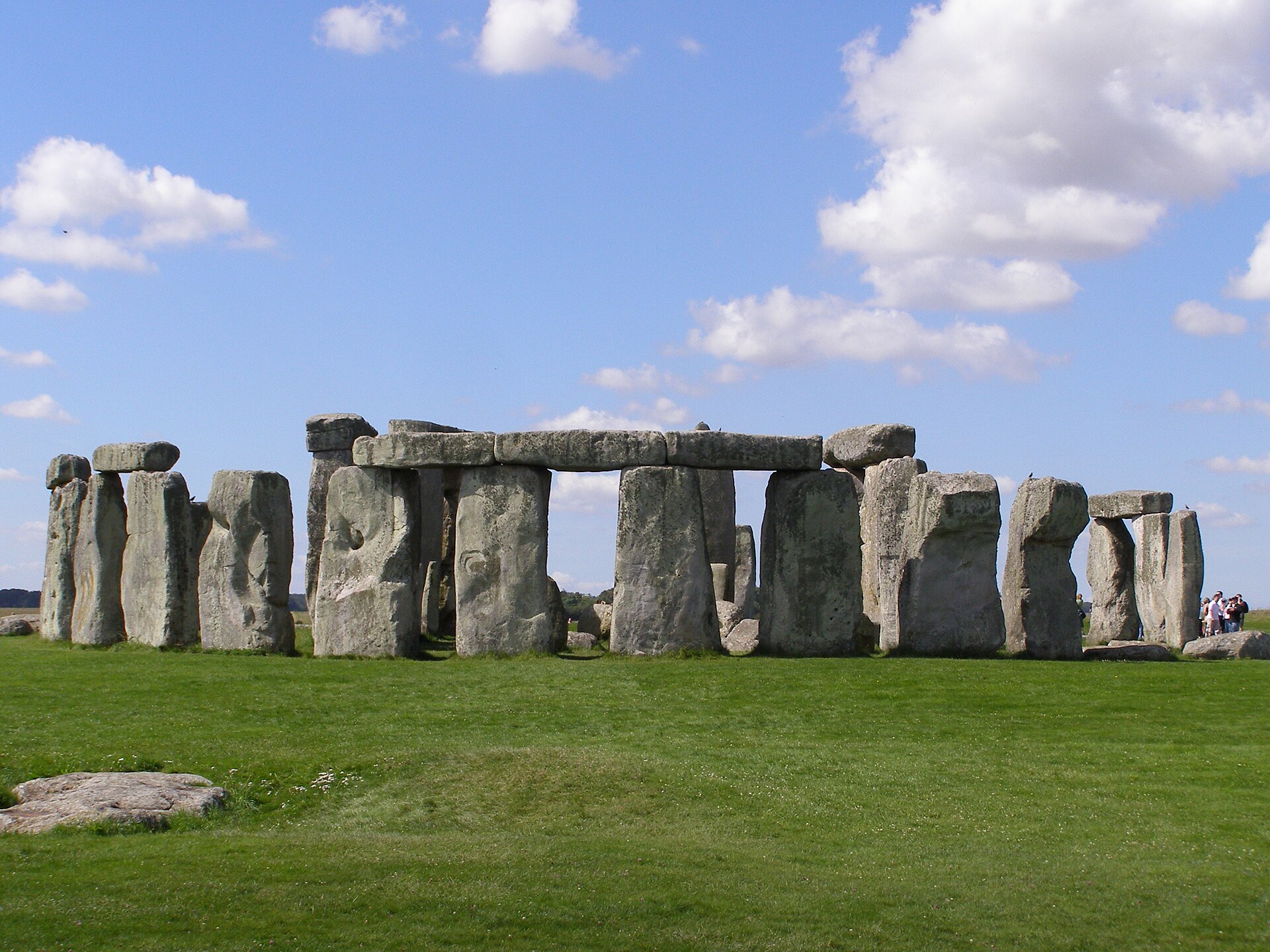
Modern excavation and dating — notably the Stonehenge Riverside Project led by Mike Parker Pearson — place the first circular ditch-and-bank, with its ring of 56 'Aubrey Holes', at about 3000 BC, when the monument served as Britain's largest cremation cemetery. The great sarsen circle and trilithons were erected around 2500 BC, contemporary with a vast builders' and feasting settlement at nearby Durrington Walls, where pig bones show midwinter gatherings drawing people and animals from across Britain. Isotope studies of cattle teeth and cremated bone confirm the monument drew participants from as far away as Wales and Scotland.
Geologists Richard Bevins and Rob Ixer have matched specific bluestones to outcrops at Craig Rhos-y-felin and Carn Goedog in the Preseli Hills, where Parker Pearson's team excavated what they interpret as Neolithic quarries with radiocarbon dates of 3400–2900 BC — evidence, they argue, that people deliberately quarried and hauled the stones to Wessex, perhaps via a dismantled first circle at Waun Mawn. In August 2024, a Nature paper by Anthony Clarke and colleagues at Curtin University stunned the field by fingerprinting the Altar Stone's zircon, apatite and rutile grains to the Old Red Sandstone of the Orcadian Basin in north-east Scotland — implying a sea or overland journey of 750 kilometres or more, and a level of long-distance coordination in Neolithic Britain far beyond what most researchers had assumed. Follow-up work in 2025 ruled out Orkney itself, pointing to the Moray Firth coastal zone.
Archaeologists now read Stonehenge as a monument of the ancestors and of unification — a place whose very stones materialised alliances between distant regions — while conceding that no single explanation of its purpose commands universal assent.
- Radiocarbon-dated sequence: ditch and cremation cemetery c. 3000 BC, sarsen settings c. 2500 BC
- Bluestones geochemically matched to Preseli outcrops, with excavated quarry evidence dated 3400–2900 BC
- 2024 Nature study tracing the Altar Stone to the Orcadian Basin of north-east Scotland (750+ km)
- Durrington Walls feasting settlement with isotope evidence of pigs and cattle brought from across Britain
- Absence of any glacial deposits or bluestone erratics on Salisbury Plain despite extensive survey