What archaeology says
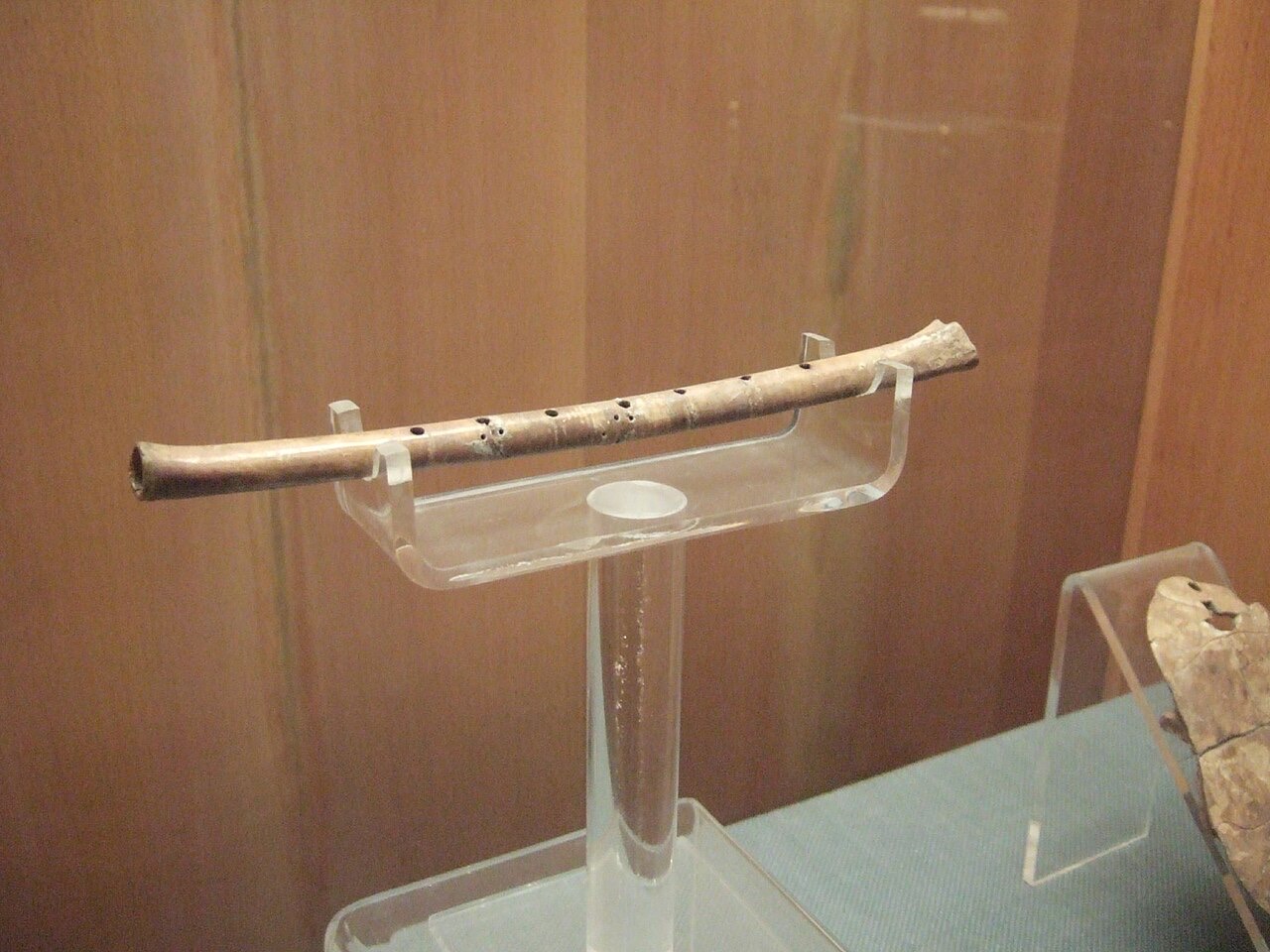
Mainstream archaeology values Jiahu as one of the richest windows on early Neolithic China. The site, about 5.5 hectares, contained house foundations, kilns, hundreds of burials and thousands of artefacts. Its rice remains are among the earliest evidence for rice cultivation this far north, and its bone flutes — radiocarbon dated to around 7000-5700 BC across three phases — are the oldest playable multi-note instruments known, published in Nature in 1999. The finest, with seven holes, produces a scale close to the modern do-re-mi; one flute even shows a tiny corrective hole drilled to fix a sour note, evidence of deliberate tuning.
Patrick McGovern of the University of Pennsylvania analysed residues from Jiahu jars and in 2004 reported a fermented drink of rice, honey and hawthorn fruit or grape — the earliest chemical evidence of alcohol anywhere, later recreated commercially as the beer Chateau Jiahu. Together with turquoise ornaments and elaborate burials, some containing tortoise-shell rattles filled with pebbles, the finds suggest ritual specialists, possibly shamans.
On the famous signs, the mainstream is respectful but firm. The 2003 Antiquity paper by Li Xueqin, Garman Harbottle and colleagues noted that a few Jiahu marks resemble much later oracle-bone characters, including forms like 'eye' and numerals. Most epigraphers, including the late David Keightley, cautioned that sixteen isolated signs separated from the Shang script by five thousand silent years cannot be called writing; they are best described as symbolic use of signs — meaningful, but not a script.
- Radiocarbon dates spanning c. 7000-5700 BC across three occupation phases
- Over 30 crane-bone flutes, the oldest playable instruments in the world, published in Nature
- Chemical residue analysis by Patrick McGovern identifying a rice-honey-fruit fermented drink c. 7000-6600 BC
- Early cultivated rice and possible pig domestication at the northern edge of the rice zone
- Hundreds of excavated burials showing ritual differentiation, including tortoise-shell rattles
- Sixteen or so incised signs on shell and bone, catalogued in the 2003 Antiquity study