What archaeology says
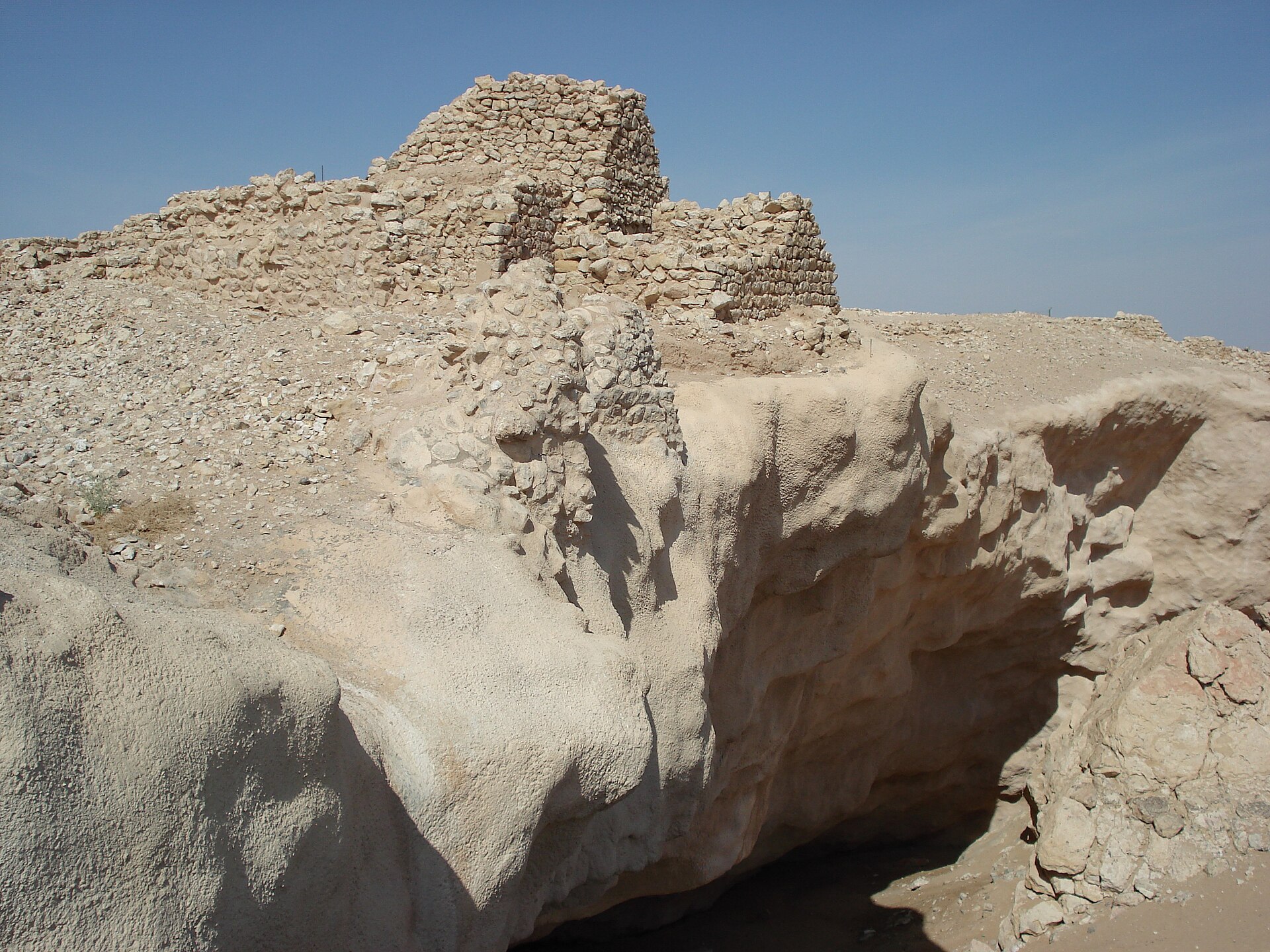
The site at Shisr is real and genuinely important. The expedition that excavated it in the early 1990s brought together the filmmaker and amateur archaeologist Nicholas Clapp, the explorer Ranulph Fiennes, the lawyer George Hedges, and the professional archaeologist Juris Zarins. Guided by old maps, classical references to a place Ptolemy called Omanum Emporium or 'Iobaritae', and NASA remote-sensing imagery (including Space Shuttle and Landsat data) that revealed ancient caravan tracks converging on the spot, they excavated an octagonal fortified structure with towers, much of which had dropped into a limestone sinkhole formed when the water cavern beneath it collapsed.
The excavated remains show Shisr was a fortified waterhole and trading post on the frankincense route, occupied over a long span from roughly the last centuries BC into the medieval period, with imported pottery indicating far-flung contacts. As a rare permanent water source at the desert's edge, it was a natural node in the incense trade that made southern Arabia wealthy. Zarins himself came to describe it less as a fabulous lost metropolis than as a consecrated caravan station — a real place that fed the legend rather than the literal city of the tales.
- An excavated octagonal fort with towers at Shisr, partly collapsed into a limestone sinkhole
- NASA satellite and Shuttle imagery revealing ancient caravan tracks converging on the site
- A long occupation span and imported pottery marking Shisr as a trading post on the frankincense route
- Its status as a rare permanent water source, a natural node in the wealthy incense trade
- Classical references (Ptolemy's Omanum Emporium / Iobaritae) pointing to a real place in this region