Lost Worlds · Ma'rib, Yemen

Ma'rib & the Kingdom of Sheba

A desert kingdom of frankincense and one of the ancient world's greatest dams — was this the realm of the Queen of Sheba?

Mainstream: c. 8th century BC – AD 575 (Sabaean kingdom; final dam breach)Alternative: 10th century BC (the age of Solomon and his visiting queen)15.38°, 45.23°

At a glance

Ma'rib & the Kingdom of Sheba
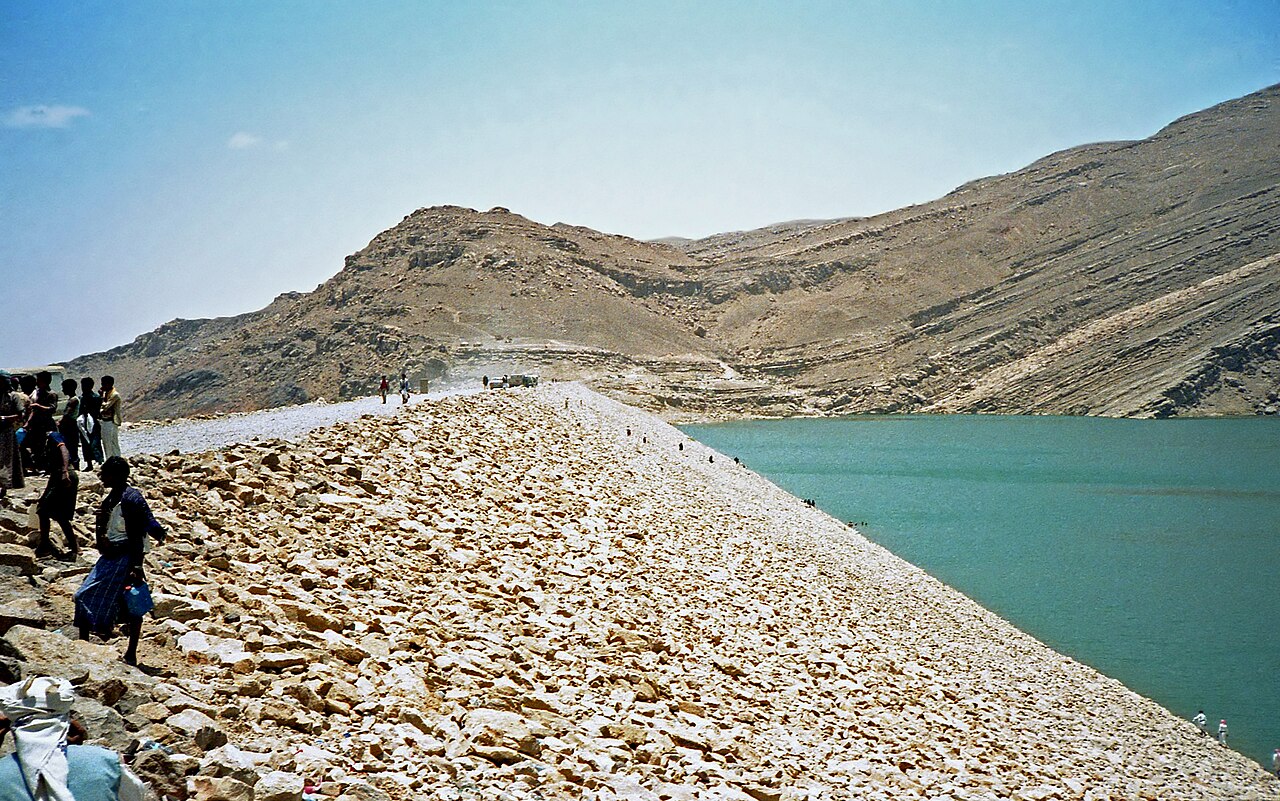
Photo: Bernard Gagnon · CC BY-SA 3.0

On the edge of Yemen's Ramlat al-Sab'atayn desert stand the ruins of Ma'rib, capital of the kingdom of Saba — the Sheba of the Bible and the Saba of the Quran. Its engineers built the Great Dam of Ma'rib, a marvel of packed earth and masonry sluices that watered gardens in the desert for over a millennium before its final, catastrophic breach around AD 570 — an event so momentous it is remembered in the Quran. Three great traditions — Hebrew, Islamic and Ethiopian — tell of a queen of this land who travelled north to test King Solomon with hard questions. Whether such a queen ever reigned at Ma'rib is one of archaeology's most tantalising open files.

See it on the globe →
The mainstream view

What archaeology says

Historians agree that Saba was a real and formidable kingdom. Sabaean inscriptions, monumental temples such as the Awam sanctuary (Mahram Bilqis) and the Bar'an temple, and the engineering of the Great Dam attest to a wealthy state that grew rich on the incense route, exporting frankincense and myrrh towards the Mediterranean. Excavations by Wendell Phillips's American Foundation for the Study of Man in 1951-52, and later work led by William Glanzman and German teams, have documented occupation at Ma'rib from at least the early first millennium BC.

The difficulty is chronological. The developed Sabaean state that archaeology reveals flourishes mainly from the eighth century BC onwards — roughly two centuries after the traditional date of Solomon, around 950 BC. Sabaean records mention early rulers (mukarribs) such as Yitha'amar and Karib'il, names that plausibly lie behind Assyrian references to Sabaean tribute, but no queen of Saba appears in the South Arabian record for the relevant period, although Assyrian texts do attest queens among the North Arabian tribes.

Most scholars therefore read the Queen of Sheba story as a literary tradition that encodes something real — early trade contact between South Arabia and the Levant along the incense route — personified in a single dramatic royal visit. The Ethiopian Kebra Nagast, which makes the queen (Makeda) the mother of Menelik I and ancestress of the Solomonic dynasty, is viewed as a 14th-century AD national epic built on the older tale rather than an independent historical source.

Key evidence cited
  • Sabaean inscriptions, coinage and monumental architecture at Ma'rib confirm a powerful historical kingdom of Saba from at least the 8th century BC.
  • The Great Dam of Ma'rib is archaeologically attested, with construction phases spanning centuries and repair inscriptions by later Himyarite kings, including Abraha in the 6th century AD.
  • Assyrian records of the 8th-7th centuries BC mention Sabaean rulers and tribute, anchoring Saba in datable Near Eastern history.
  • No South Arabian inscription names a queen of Saba, and the developed kingdom postdates the traditional era of Solomon by roughly two centuries.
  • The Quran (Surah Saba) remembers the dam's breach — the Flood of al-Arim — matching the final collapse around AD 570 attested archaeologically.
  • The Kebra Nagast is a medieval Ethiopian composition, far too late to serve as an independent witness to 10th-century BC events.
The alternative view

What the skeptics propose

Literalist readers across three faiths hold that the queen was an actual monarch. In Islamic tradition she is Bilqis, ruler of Saba, and Yemenis have long attached her name to the Awam temple — Mahram Bilqis, the sanctuary of Bilqis — arguing that folk memory preserved a genuine association. Advocates of this view note that South Arabian epigraphy is still radically incomplete: only a fraction of Ma'rib has been excavated, the deepest levels of the Awam temple remain unexplored, and absence of a tenth-century queen from a patchy record is hardly proof she never reigned.

Ethiopian tradition stakes a rival claim: the Kebra Nagast places the queen's seat at Aksum, and defenders of that tradition point to the genuinely ancient Ethio-Sabaean culture of the Horn of Africa — sites such as Yeha, with its 7th-century BC Sabaean-style temple — as evidence that the queen's realm straddled both sides of the Red Sea, exactly as the legend would require.

More radical rereadings exist. Immanuel Velikovsky argued in Ages in Chaos (1952) that the Queen of Sheba was none other than Pharaoh Hatshepsut of Egypt, her voyage to Punt being the same journey the Bible remembers as the visit to Solomon — a claim tied to his sweeping revision of ancient chronology. Others, following the lead of scholars sceptical of a Palestinian setting, such as Kamal Salibi, have relocated Solomon's kingdom itself to Arabia, making the queen's journey a short one. Mainstream scholarship rejects both, but they remain popular in alternative-history circles.

Key evidence cited
  • Local tradition has attached the name of Bilqis to the Awam temple (Mahram Bilqis) for centuries, suggesting a persistent folk memory of a queen.
  • Only a small portion of Ma'rib and the Awam sanctuary has been excavated; the epigraphic record for the 10th century BC is nearly blank, leaving room for unrecorded rulers.
  • Assyrian texts do record ruling queens among Arabian tribes (such as Samsi and Zabibe), proving female sovereigns were a genuine Arabian phenomenon.
  • Ethio-Sabaean sites such as Yeha show South Arabian culture established in the Horn of Africa remarkably early, consistent with a realm spanning the Red Sea as Ethiopian tradition claims.
  • Three independent scriptural traditions — Hebrew, Islamic and Ethiopian — preserve the same core story, which literalists argue is unlikely for pure invention.
  • Velikovsky's identification of the queen with Hatshepsut, whatever its faults, highlights genuine parallels between the Punt reliefs at Deir el-Bahri and the biblical gift-laden royal voyage.

Genuinely open questions

  1. Did a historical queen rule Saba, or any Arabian polity, in the 10th century BC?
  2. How early did organised trade along the incense route connect South Arabia with the Levant?
  3. What lies in the unexcavated levels of the Awam temple, and can renewed fieldwork resume despite Yemen's conflict?
  4. Is the Ethiopian claim to the queen a late appropriation, or does it preserve a genuine trans-Red Sea dimension of the Sabaean world?

Worth knowing

When the Great Dam of Ma'rib finally failed around AD 570, the disaster was remembered in the Quran and in Arab tradition as the event that scattered the tribes of Arabia — some genealogists traced entire tribal migrations, including the ancestors of Medina's inhabitants, to the bursting of one dam.