Lost Worlds · Aboukir Bay, off Alexandria, Egypt

Thonis-Heracleion

Egypt's lost gateway to the Mediterranean — a city dismissed as half-legend until it was found, intact, seven kilometres out to sea.

Mainstream: Founded by c. 8th century BC; flourished 6th–4th century BC; finally submerged by the 8th century ADAlternative: Dating undisputed — cited by alternative writers as proof that 'legendary' drowned cities can turn out to be real31.31°, 30.13°

At a glance

Thonis-Heracleion
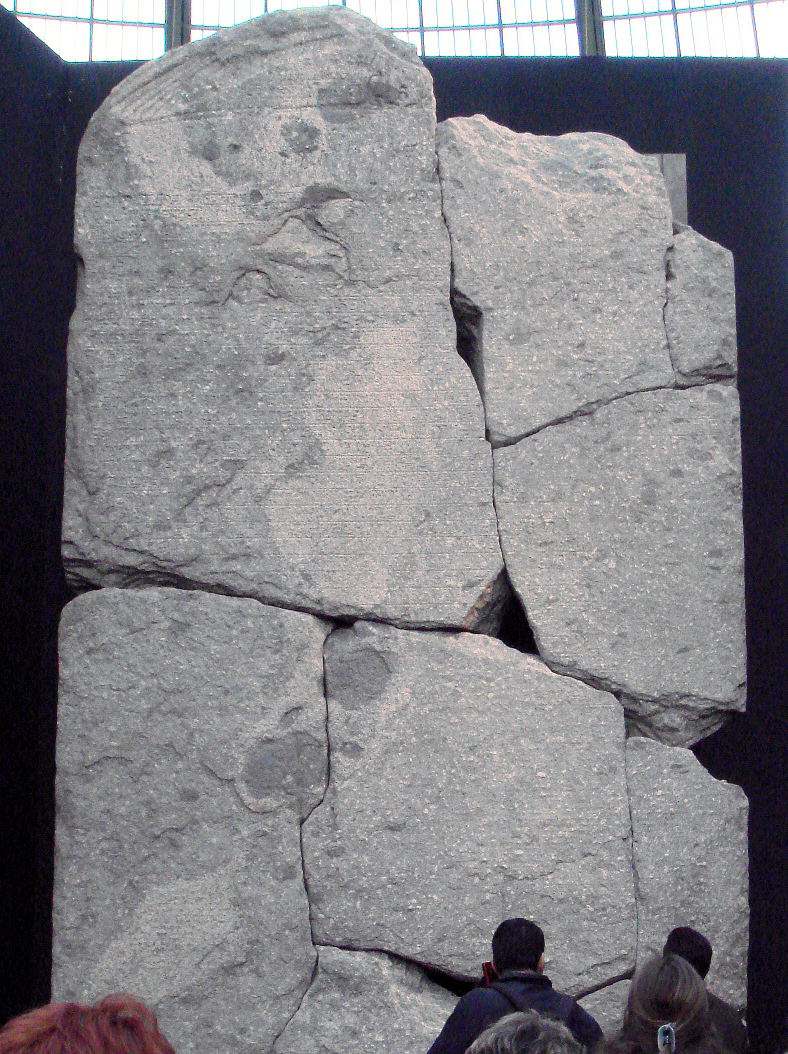
Photo: World Imaging · Public domain

Thonis-Heracleion was the obligatory port of entry into Egypt for all Greek shipping before Alexandria was founded in 331 BC. Herodotus mentioned it, and legend claimed Helen and Paris stopped there on their flight to Troy — yet for centuries no one could say where it lay, or even whether Egyptian 'Thonis' and Greek 'Heracleion' were one city or two. In 2000, after a five-year survey of Aboukir Bay, French underwater archaeologist Franck Goddio and his European Institute for Underwater Archaeology (IEASM) found it about seven kilometres offshore, buried under metres of sediment in roughly ten metres of water. Colossal statues, a great temple of Amun-Gereb, more than 70 shipwrecks and some 700 anchors have since emerged from the silt, with only an estimated five per cent of the site excavated.

See it on the globe →
The mainstream view

What archaeology says

Marine archaeologists regard Thonis-Heracleion as one of the great discoveries of the modern era, and one of its best-documented. Goddio's team located the city with nuclear magnetic resonance magnetometry, side-scan sonar and sub-bottom profiling, then confirmed its identity with a single spectacular find: an intact black granodiorite stele of Pharaoh Nectanebo I (the 'Decree of Sais', c. 380 BC), ordering that a share of customs duties collected at 'Thonis' be given to the temple — proving on the spot that Thonis and Heracleion were the same city. The temple of Amun-Gereb, a five-metre red granite colossus of the Nile flood god Hapy, and a bilingual stele of Ptolemy VIII anchor the city firmly in the historical record.

The reason it sank is equally well understood. The city was built on unconsolidated Nile delta clays and sands laced with water channels. Under the load of massive stone temples, and shaken by earthquakes and storm surges, the saturated ground underwent liquefaction — solid clay behaving suddenly as a liquid — and whole blocks of the city slumped. A major collapse around the late 2nd century BC brought down the central temple island; continued subsidence and slowly rising sea levels finished the job, with the last occupation traces disappearing beneath the waves by the 8th century AD.

Recent seasons have been remarkably rich. In 2019 the wreck known as Ship 17 was shown to be a 'baris' — a Nile cargo vessel matching Herodotus' puzzling description almost plank for plank. In 2021 the team found a Ptolemaic galley pinned under fallen temple blocks and a Greek funerary tumulus with wicker baskets still holding grape seeds and doum-palm fruit after 2,400 years. Excavations in 2023–2025 uncovered a sanctuary of Aphrodite, weapons of Greek mercenaries, the temple treasury with silver ritual instruments and gold jewellery, and timber-framed underground structures preserved beneath the temple of Amun.

Key evidence cited
  • The Decree of Sais stele naming 'Thonis', found in situ, proving the city's identity in 2000
  • Temple of Amun-Gereb with colossal statues of Hapy, a pharaoh and a queen, matching textual descriptions
  • More than 70 shipwrecks and c. 700 anchors confirming its role as Egypt's great entry port
  • Ship 17, a 'baris' Nile vessel matching Herodotus' 5th-century BC description in detail
  • Sediment and structural evidence of liquefaction-driven collapse of the delta clays under temple loads
The alternative view

What the skeptics propose

Thonis-Heracleion carries little fringe controversy of its own — its significance in the alternative-history debate is as a precedent. For roughly two millennia the city existed only in texts: Herodotus' account of the temple of Herakles, the romance of Helen and Paris sheltering there, scattered mentions in decrees. Sceptical scholarship long treated such references with caution, and some doubted the place would ever be found. Writers such as Graham Hancock argue that Heracleion is exactly the lesson mainstream archaeology should take to heart: traditions of drowned cities can preserve accurate memories, and the sea is very good at hiding them. If Heracleion could vanish so completely that its very existence became debatable, they ask, what else lies under coastal sediments worldwide?

Catastrophist authors also point to the mechanism of its destruction. Liquefaction events collapsed substantial districts within hours — residents of the temple island would have experienced something close to the Atlantis story's 'in a single day and night of misfortune'. Combined with post-glacial sea-level rise that drowned millions of square kilometres of coastal plain worldwide, they argue that human memory of such losses, filtered through myth, deserves more respect than it usually receives.

The mainstream rejoinder is that Heracleion actually demonstrates the opposite of a lost prehistoric civilisation: it was a historical city of the 1st millennium BC, amply attested in datable texts, that sank for well-understood local geological reasons — delta subsidence and liquefaction — not in a global cataclysm. Its rediscovery was a triumph of systematic survey guided by sober reading of ancient sources, and every object raised so far fits comfortably within known Egyptian and Greek history. On that much, both camps can agree: the legends pointed to something real, and patient science found it.

Key evidence cited
  • A city known mainly from legend and stray texts proved to be entirely real, exactly where sources placed it
  • Catastrophic liquefaction collapses destroyed districts suddenly — echoing sunken-city myths of instant loss
  • Burial under metres of marine sediment shows how completely coastal sites can vanish from view
  • Only c. 5 per cent excavated after 25 years — an index of how much submerged archaeology remains unknown
  • Cited by Hancock and others as a model for taking flood and submergence traditions seriously

Genuinely open questions

  1. How far back does the city's occupation actually go — do earlier levels lie beneath the reachable strata?
  2. What remains in the 95 per cent of the site still unexcavated, including the unexplored harbour basins?
  3. Can the precise sequence and dates of the liquefaction collapses be reconstructed from the sediments?

Worth knowing

For centuries scholars debated the locations of two different lost cities — Egyptian Thonis and Greek Heracleion. One stele, read on the seabed where it was planted 2,400 years ago, revealed they had been the same place all along.