What archaeology says
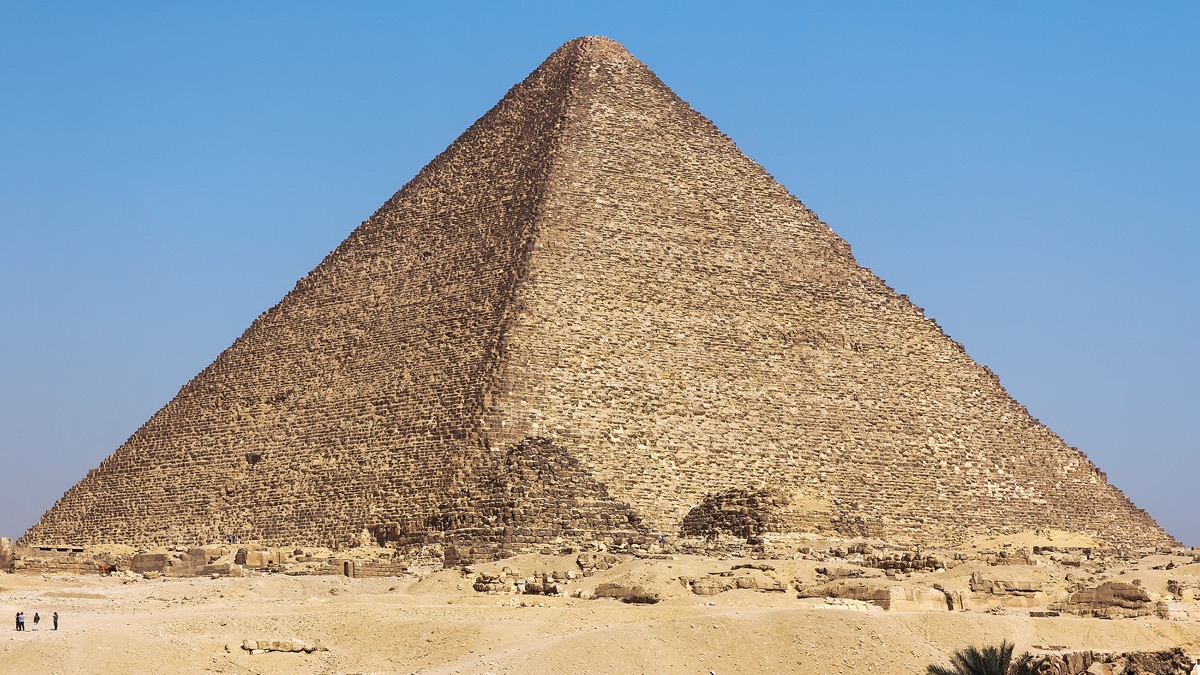
Egyptologists attribute the Great Pyramid to Pharaoh Khufu of the 4th Dynasty, built as his tomb over roughly two decades around 2560 BC. The evidence base is unusually rich. Workers' graffiti naming Khufu's work gangs (such as 'Friends of Khufu') was found in the sealed relieving chambers above the King's Chamber, where no modern forger could plausibly have placed it. In 2013, archaeologists at Wadi al-Jarf on the Red Sea recovered the 'Diary of Merer' — the oldest inscribed papyri ever found — a logbook kept by an official whose boat crews ferried Tura limestone to Giza in the 27th year of Khufu's reign.
Excavations led by Mark Lehner and Zahi Hawass uncovered the workers' town of Heit el-Ghurab south of the plateau, complete with bakeries, breweries, dormitories and cemeteries, showing the builders were paid, well-fed Egyptian labourers rather than slaves or a mystery people. Quarries for the core limestone sit a few hundred metres from the pyramid, and a 2022 study of sediment cores confirmed a now-vanished branch of the Nile (the 'Khufu branch') ran close to the plateau, explaining how stone barges reached the site. Radiocarbon dating of organic material in the mortar (campaigns in 1984 and 1995) brackets construction to the Old Kingdom, though intriguingly some samples ran a century or more older than the historical dates — attributed to the Egyptians burning old wood.
The Sphinx is dated to the reign of Khafre (c. 2500 BC) on the basis of its position within Khafre's causeway-and-temple complex, the stratigraphy of its quarry, and stylistic parallels — though it carries no original inscription naming its builder.
- Workers' gang graffiti naming Khufu inside sealed relieving chambers
- The Diary of Merer papyri (c. 2560 BC) logging limestone deliveries to Giza
- Excavated workers' town (Heit el-Ghurab) with bakeries, dorms and cemeteries
- Radiocarbon dates from mortar consistently in the Old Kingdom range
- 2022 sediment-core evidence of a lost Nile branch serving the construction site