What archaeology says
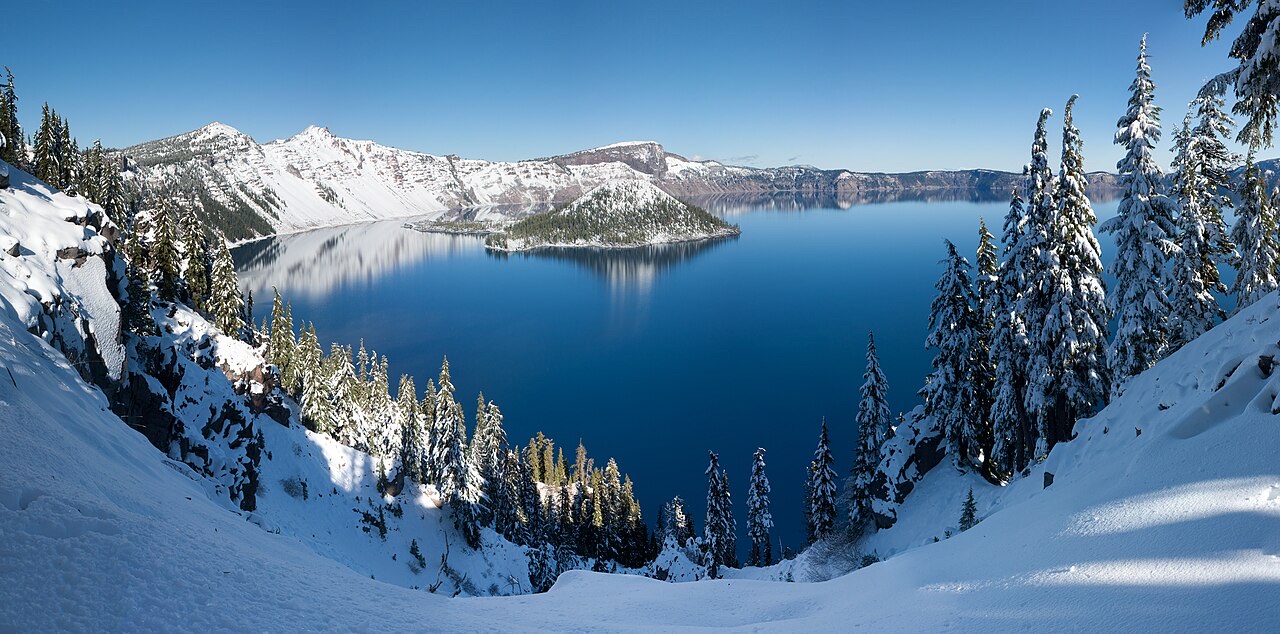
Mount Mazama's climactic eruption is one of the largest known in North America over the last ten thousand years. Around 7,700 years ago it discharged enormous volumes of pumice and ash, spreading a marker layer (Mazama ash) across much of the northwest, then collapsed to form a caldera roughly eight kilometres across. Rain and snow gradually filled it to create Crater Lake, the deepest lake in the United States.
The eruption is tightly dated by radiocarbon and by the ash layer's wide distribution, and recent volcanological work has reconstructed a complex sequence of precursory activity before the final collapse.
Crucially, people were present. Artefacts such as obsidian tools and sandals have been found sealed beneath Mazama ash. Klamath oral traditions describe a battle between the spirits of the sky and the underworld ending in the mountain's destruction and the filling of the basin, details, from red-hot rocks to the mountain's fall, that map onto the geological event. Scholars including Douglas Deur have examined how this tradition preserves a genuine eyewitness memory across some 7,600 years.
- A caldera about eight kilometres wide, formed by summit collapse after the eruption emptied the magma chamber.
- The widespread Mazama ash layer serves as a dated stratigraphic marker across the Pacific Northwest.
- Radiocarbon and tephra studies place the climactic eruption near 7700 years ago (about 5700 BC).
- Human artefacts, including sandals and tools, have been recovered buried beneath the ash.
- Klamath oral tradition describes a sky-versus-underworld battle ending in the mountain's fall and the lake's forming.
- Scholarly analyses (e.g. Douglas Deur) argue the tradition preserves a genuine eyewitness memory of the event.