Origins of Civilisation · Calico Hills, near Barstow, Mojave Desert, California, USA

Calico Early Man Site

Louis Leakey's American gamble, and the hardest test of artefact versus geofact.

Mainstream: No accepted human occupation (objects regarded as geofacts)Alternative: c. 135,000-200,000 years ago34.94°, -116.72°

At a glance

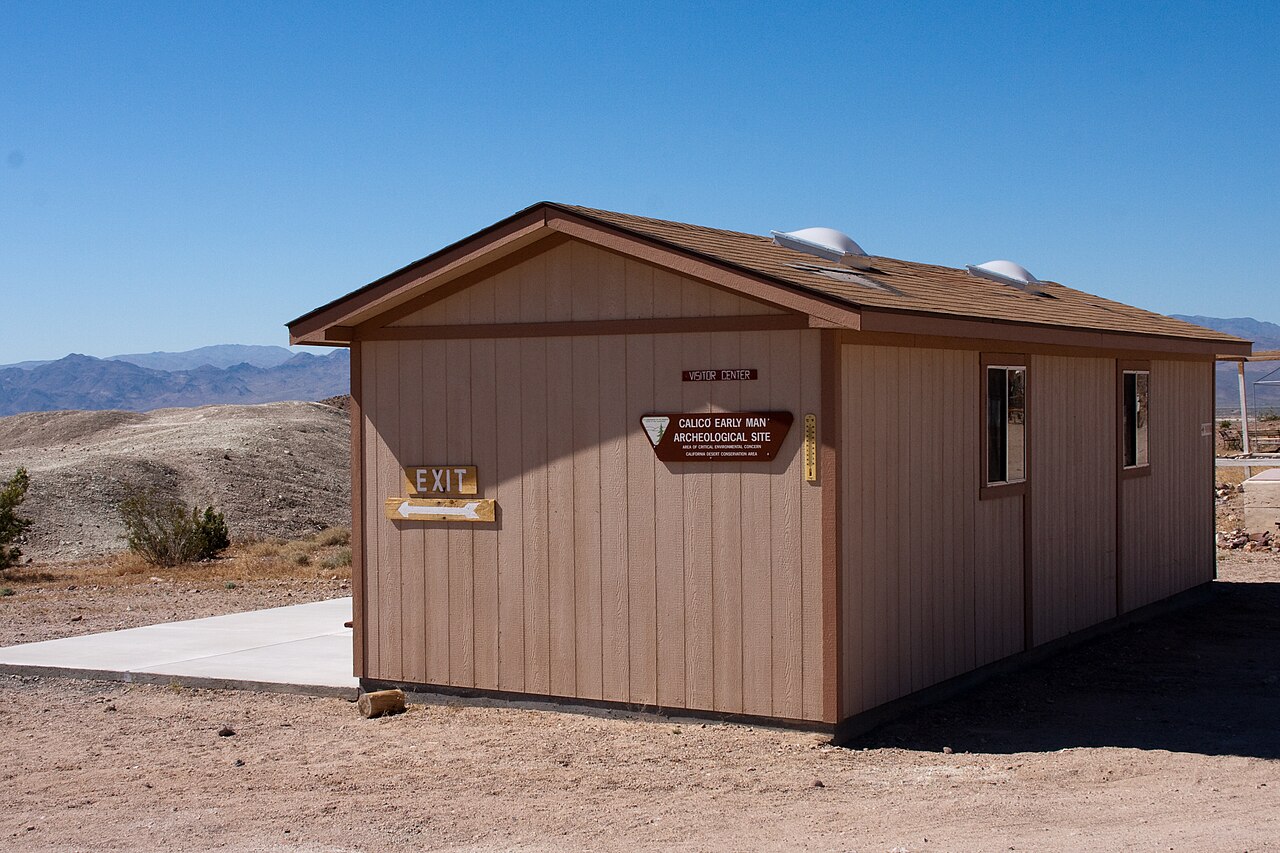
Calico Early Man Site
Photo: Ellen Levy Finch · CC BY-SA 3.0

Calico is a site on an ancient Pleistocene lakebed near Barstow where, from 1964, the celebrated palaeoanthropologist Louis Leakey directed excavations that recovered thousands of chipped stone objects from deep alluvial-fan deposits. Leakey and archaeologist Ruth DeEtte Simpson believed they had found stone tools more than 100,000 years old, which would have rewritten the peopling of the Americas. Critics countered that the objects were geofacts - stones fractured by natural forces, not human hands - and Calico became the classic case for teaching the difference.

See it on the globe →
The mainstream view

What archaeology says

The scientific consensus is that the Calico objects are geofacts, not artefacts. In a high-energy alluvial fan, rocks tumbling and colliding for millennia will chip and flake in ways that can superficially resemble deliberate flaking. Geologist Vance Haynes, after visiting the site, argued forcefully that the deposits were exactly the kind of setting that manufactures convincing pseudo-tools, and that the "assemblage" lacked the patterning - refits, consistent reduction sequences, unambiguous use-wear - expected of real toolmaking.

The dating compounds the problem. The deposits have been placed at roughly 135,000 years by thermoluminescence and around 200,000 years by uranium-series analysis, ages that would demand a human presence in North America more than ten times older than any securely dated site. There are no hearths, no bones, no unambiguous living surfaces, and nothing in the wider record to make such antiquity plausible.

Calico is now taught less as a discovery than as a cautionary tale about the seductiveness of pattern-recognition. The field's later acceptance of pre-Clovis occupation around 15,000-20,000 years came from sites with corroborating evidence Calico never produced.

Key evidence cited
  • The deposits are a high-energy alluvial fan, the classic natural setting for producing geofacts that mimic tools.
  • Geologist Vance Haynes concluded after site visits that the objects were naturally fractured stone.
  • No hearths, bones, living surfaces or unambiguous use-wear accompany the supposed tools.
  • Uranium-series and thermoluminescence dates of 135,000-200,000 years are wildly older than any securely dated American site.
  • The 'assemblage' lacks refitting flakes and consistent reduction sequences typical of genuine knapping.
The alternative view

What the skeptics propose

Defenders point out that Louis Leakey - a scientist with an unrivalled eye for early stone tools from a lifetime in East Africa - remained convinced to his death that Calico's objects were humanly made. Ruth DeEtte Simpson devoted much of her career to the site, and a persistent minority of lithic analysts have argued that some Calico pieces show flaking patterns statistically distinguishable from purely natural breakage.

The site holds a special place in fringe and alternative-history literature precisely because of the deep uranium-series and thermoluminescence dates. If even a fraction of the objects were genuine, the accepted timeline of human arrival in the Americas would collapse, and Calico is regularly cited alongside Hueyatlaco as evidence that mainstream archaeology has drawn its date line prematurely.

The current standing is unambiguous within the profession: Calico is not accepted as an archaeological site. But it retains a following, and the fact that a researcher of Leakey's stature staked his reputation on it keeps the debate alive at the edges.

Key evidence cited
  • Louis Leakey, an unrivalled judge of early stone tools, was personally convinced the objects were artefacts.
  • More than 11,000 chipped chert and chalcedony objects were recovered, including forms resembling scrapers, gravers and burins.
  • Some analysts argue a subset of pieces show flaking angles statistically distinct from random natural breakage.
  • Ruth DeEtte Simpson's decades of careful excavation lent the site methodological credibility.
  • The deep uranium-series dates keep the question of extreme antiquity technically open for proponents.

Genuinely open questions

  1. Can any objective, blind test reliably separate the Calico objects from known geofacts?
  2. Why was a naturalist of Leakey's calibre so persuaded, and does that judgement carry evidential weight?
  3. Do the statistical claims for non-random flaking survive rigorous re-analysis?
  4. What would it take - a hearth, a bone tool, a refit sequence - to reopen Calico as a genuine site?

Worth knowing

Mary Leakey wrote that her husband's obsession with Calico was 'catastrophic to his professional career' and helped end their marriage - one of the few excavations blamed for a divorce as well as a scientific feud.