What archaeology says
Egyptologists date the Unfinished Northern Pyramid to the early or mid 4th Dynasty on the strength of its architecture — the great open trench and shaft closely resemble the substructure of Djedefre's pyramid at Abu Rawash — and of red-painted quarry marks recorded by Barsanti, which include a royal name variously read as Baka, Bakare or Nebkara. Miroslav Verner and others associate it with the ephemeral king known to later Greek tradition as Bikheris, perhaps a son of Djedefre whose brief reign explains why work stopped almost as soon as the foundations were cut.
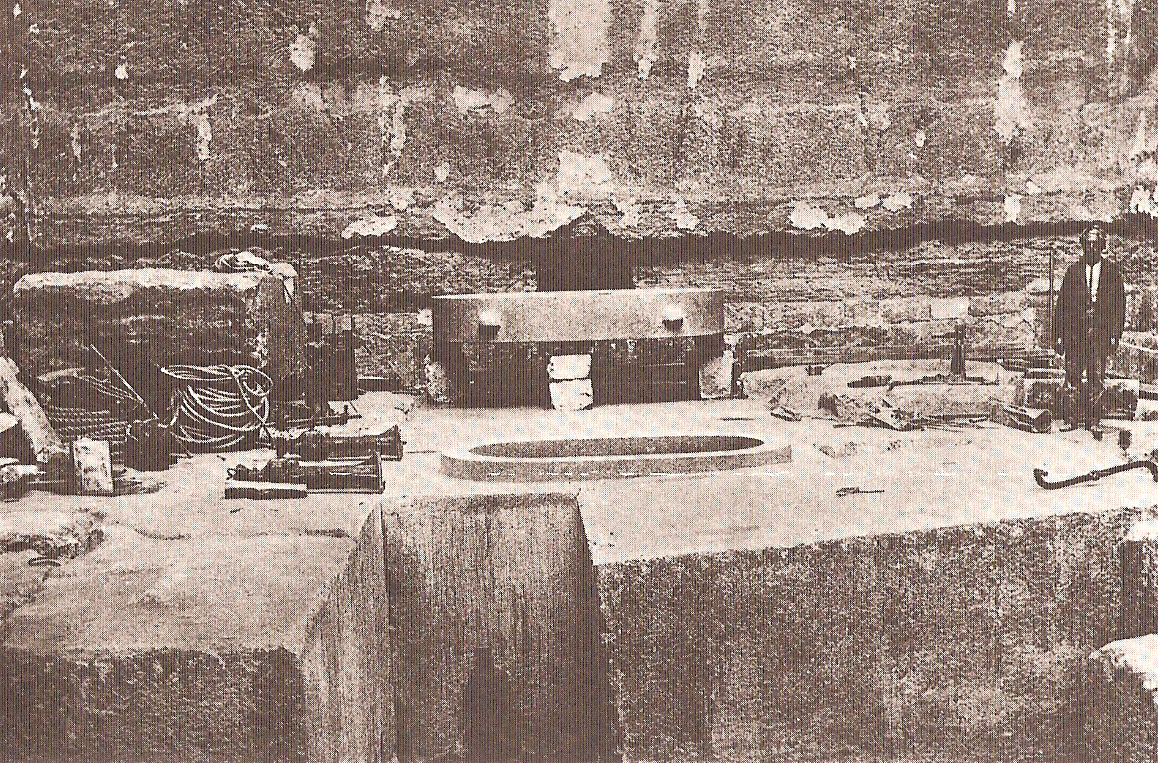
What Barsanti found remains remarkable by any standard: a shaft floor paved with granite and limestone blocks up to 4.5 metres long and weighing several tonnes apiece, and an oval granite vessel over three metres long, its polished lid still cemented in place, set into the floor like a bath. Barsanti reported it contained a dark liquid residue when opened. Most Egyptologists interpret the vessel as an innovative form of sarcophagus installed before the superstructure rose, though its shape is without close parallel.
The tragedy of Zawyet el-Aryan is access. Barsanti died in 1917 before publishing full plans, and since the site was absorbed into a military installation in 1964 no re-excavation has been possible; reports suggest the great shaft has even been used as a dump. Mainstream scholars are as frustrated by this as anyone.
- Architectural near-identity with Djedefre's substructure at Abu Rawash, anchoring a 4th Dynasty date
- Red-painted quarry marks with a royal name read as Baka/Bakare recorded by Barsanti
- An unfinished trench-and-shaft layout consistent with a project halted by a king's early death
- Barsanti's excavation reports of 1904-1912, the only systematic record of the monument
- The nearby Layer Pyramid's mudbrick and masonry match known 3rd Dynasty techniques