What archaeology says
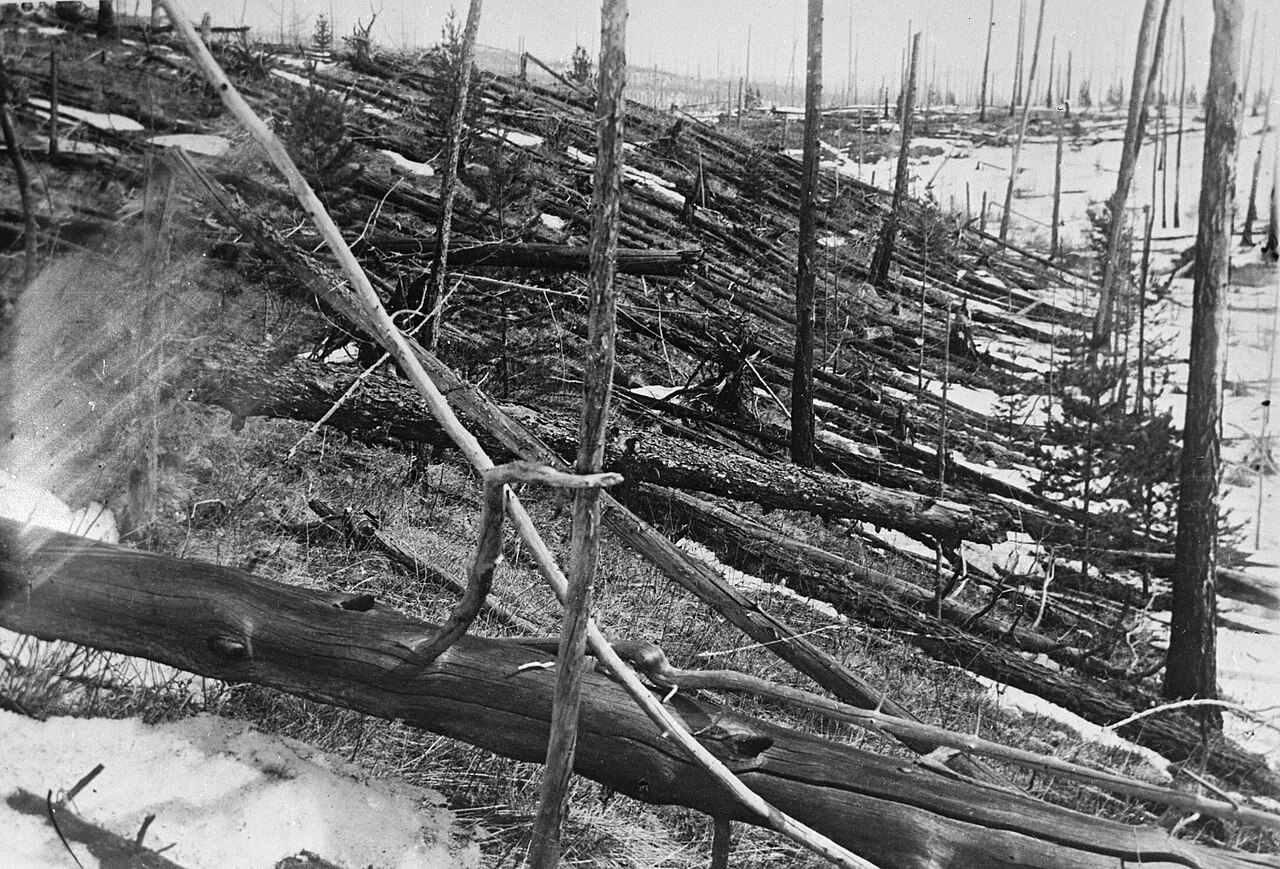
The Tunguska event is accepted as the largest airburst in recorded history. A stony (or possibly cometary) body tens of metres across entered the atmosphere and exploded, releasing energy estimated at several to a couple of dozen megatons of TNT. The blast wave felled trees radially over a huge area, yet the object was destroyed in the air, so no primary impact crater formed.
Expeditions from the 1920s onward, beginning with Leonid Kulik, documented the flattened forest and searched, largely in vain, for meteoritic remains, which fits an airburst that vaporised most of the body. Later studies have refined the energy, altitude and likely composition.
Tunguska is scientifically important precisely because it shows that a modest object can cause regional devastation with only subtle geological traces. That makes it a natural yardstick, and it is invoked in serious discussions of impact risk (planetary defence) and, more controversially, in debates over whether larger prehistoric airbursts left similarly ambiguous signatures.
- Roughly 2,000 square kilometres of forest were flattened radially, consistent with a high-altitude airburst.
- No primary impact crater exists, matching an object destroyed in the air rather than on the ground.
- Energy estimates of several to about two dozen megatons come from the blast pattern and seismic and barometric records.
- Early expeditions led by Leonid Kulik mapped the devastation and found little meteoritic material.
- Atmospheric effects, bright nights across Eurasia, were recorded far from the blast site.
- The event is a standard case study in planetary defence and impact-risk assessment.