What archaeology says
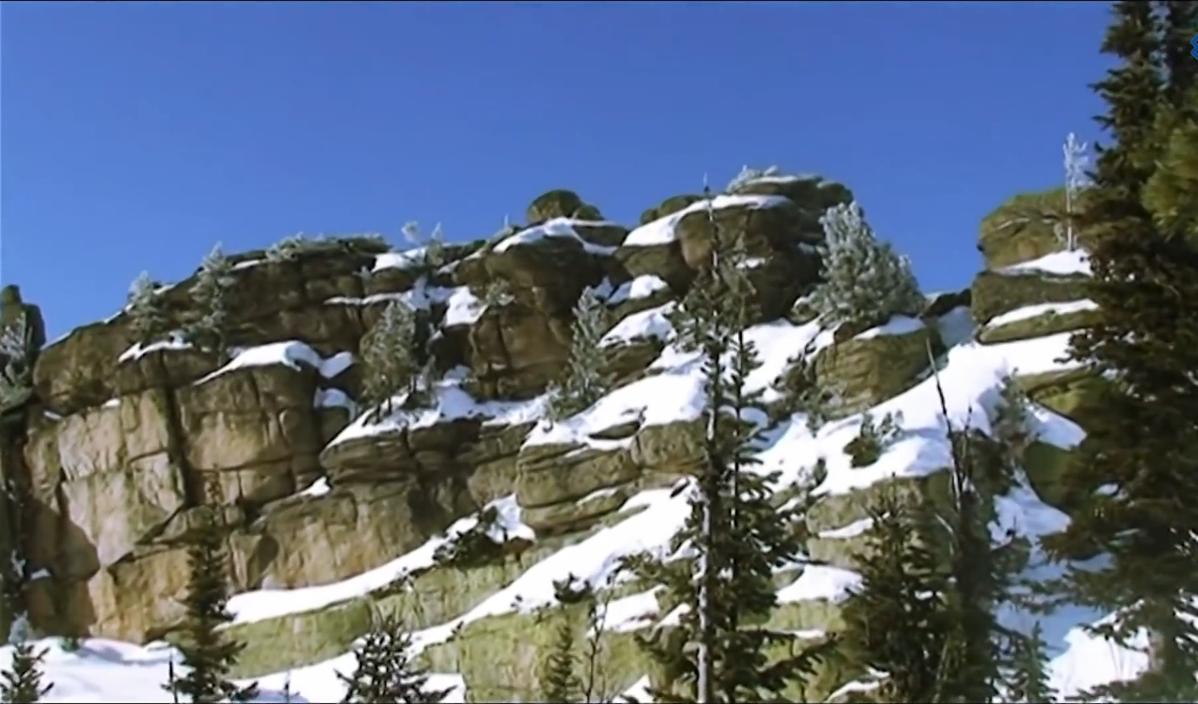
To geologists, the Kuylyum outcrops are classic tors — residual masses of fractured bedrock left upstanding as the surrounding rock weathered and eroded away, described in the technical literature as denudated ridges. Granites and syenites routinely develop orthogonal joint sets: families of natural fractures intersecting at close to 90 degrees, produced by tectonic stress and by the expansion of the rock mass as kilometres of overburden erode away. Where such joints slice a granite body, they carve it into rectangular, block-like masses that can be arbitrarily large; subsequent spheroidal weathering rounds edges and opens the joints into 'seams', completing the illusion of stacked masonry. The American geoarchaeologist Paul V. Heinrich analysed the published photographs and identified precisely these processes, noting that comparable natural 'walls' occur worldwide, and Russian geologists reached the same verdict. The often-cited magnetic anomalies at the site are unremarkable in igneous terrain, where magnetite-bearing rock commonly deflects compasses.
Just as telling is what the site lacks. Surveys of the area have produced no artefacts, no occupation layers, no quarries, no transport routes and no cultural material of any kind associated with the blocks — nothing but weathered granite and soil. Archaeology of the wider region indicates human presence only from around the end of the last Ice Age, and no known society, at any date, has moved stones in the multi-thousand-tonne class the claims require; the heaviest block humans are securely known to have transported, at Baalbek, is under a thousand tonnes. In the mainstream reading, the sheer impossibility of the logistics is itself the diagnosis: blocks this size are found only where nature made them in place.
- Orthogonal joint sets in granite naturally produce rectangular, wall-like blocks at any scale
- Geoarchaeologist Paul Heinrich identified the formations as tors and denudated ridges from published photos
- No artefacts, quarries, tool marks or occupation debris have been found in association with the blocks
- Magnetic quirks are routine in magnetite-bearing igneous rock and need no technological explanation
- The claimed block weights exceed anything any known society has ever moved, by multiples