What archaeology says
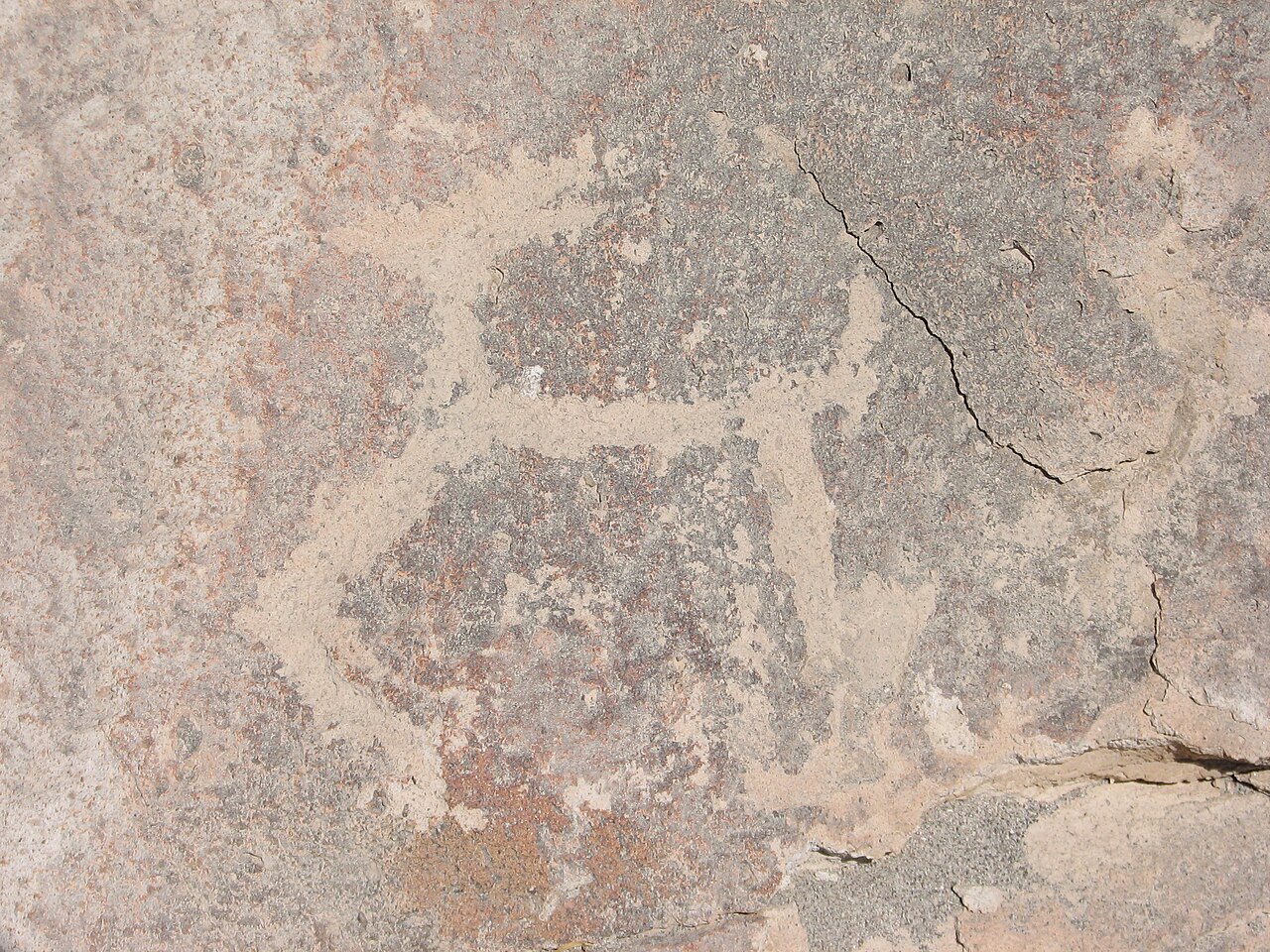
Conventional archaeology associates the bulk of Toro Muerto's petroglyphs with the Wari era, roughly AD 500 to 1000, when the Majes Valley was a corridor between highlands and coast, though carving likely began earlier and continued later. The imagery — dancers, birds, serpents, camelids, geometric bands — was long interpreted through familiar Andean lenses: fertility and water symbolism in a hyper-arid valley, territorial marking along travel routes, and ritual activity, with the ubiquitous zigzags usually read as snakes, rivers or lightning. Decades of documentation, from Linares Málaga's surveys to the modern Polish-Peruvian project's digital recording of every boulder, underpin these readings.
The 2024 paper by Rozwadowski and Wołoszyn, Dances with Zigzags in Toro Muerto, is a mainstream academic intervention, not a fringe one, but it is deliberately bold. Drawing an analogy with the Tukano peoples of Colombian Amazonia — whose geometric designs, documented by ethnographers, represent songs and visions experienced in yage (ayahuasca) ceremonies — the authors propose that the linear patterns flanking the danzantes embody sung sound, making the boulders something like frozen performances. They further suggest the largest compositions are graphic metaphors of transfer to the other world: the dancer's soul travelling along the song-lines into a cosmic realm.
The authors themselves flag the hypothesis as unprovable in the strict sense, and colleagues have responded with both enthusiasm and caution — commentary in rock art journals notes the Tukano analogy leaps a continent and perhaps two millennia. But the proposal is credited with shifting attention from what the images depict to what the carving did: turning Toro Muerto from a picture gallery into evidence of music, dance and ecstatic religion in the pre-Columbian Andes.
- Systematic documentation of roughly 2,600 carved boulders by the Polish-Peruvian project since 2015 grounds all interpretation in a full corpus
- Associated archaeology ties the main carving phases to the Wari-era occupation of the Majes Valley, c. AD 500-1000
- The danzante-plus-zigzag pairing recurs so consistently that the motifs are plainly a deliberate compositional system, not random decoration
- The Tukano ethnographic parallel documents a real society whose geometric art encodes songs and yage visions, giving the 2024 hypothesis an anchor
- The 2024 paper appeared in the peer-reviewed Cambridge Archaeological Journal with its speculative status openly declared
- Water, serpent and fertility symbolism fits the site's setting beside one of the driest valleys on Earth