Ancient Engineering · Sacred Valley, Cusco Region, Peru

Ollantaytambo

Six rose-coloured monoliths hauled from a quarry across a river valley — and a construction site frozen in mid-project.

Mainstream: c. AD 1450–1532 (royal estate of Pachacuti; still unfinished at the conquest)Alternative: Megalithic Temple Hill attributed to a far older culture — Foerster's 'House of the Dawn', destroyed by cataclysm long before the Inca-13.26°, -72.27°

At a glance

Ollantaytambo
Photo: Janikorpi · CC BY-SA 3.0

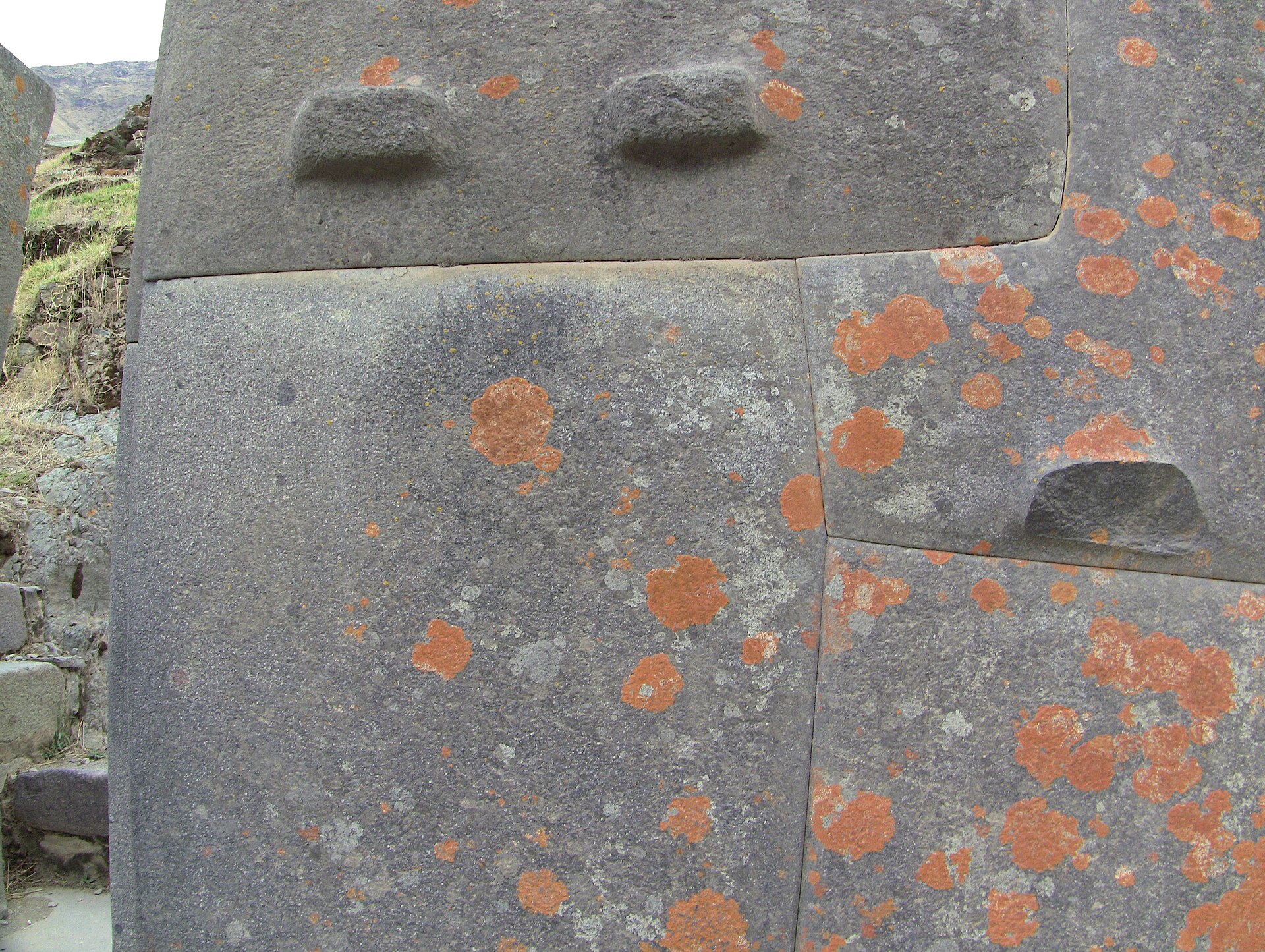
Ollantaytambo commands the northern end of the Sacred Valley, where a living Inca town — still inhabited, on its original grid of streets and water channels — sits below steep ceremonial terraces climbing to the unfinished Sun Temple. The temple's showpiece is the Wall of the Six Monoliths: six upright blocks of rose rhyolite, up to about four metres tall and roughly 50 tonnes each, separated by narrow fillet stones. The rhyolite came from the Kachiqhata quarries high on the opposite side of the Urubamba valley, several kilometres away, and dozens of abandoned blocks — the famous 'piedras cansadas' or tired stones — still litter the transport route. In 1537 the site witnessed one of the very few Inca battlefield victories over the Spanish.

See it on the globe →
The mainstream view

What archaeology says

Mainstream archaeology reads Ollantaytambo as a royal estate of the emperor Pachacuti, who conquered the region in the mid-15th century, rebuilt the town, and began the grand ceremonial complex on Temple Hill. The site's greatest scientific asset is that it was abandoned mid-construction: architect Jean-Pierre Protzen's meticulous fieldwork in the 1980s documented the entire production chain, from quarry faces at Kachiqhata with blocks in every stage of extraction, down ramps and chutes to the valley floor, across the river, and up a great construction ramp that still runs to the temple platform. Excavation beneath abandoned blocks revealed prepared roadbeds of clay and gravel, and evidence consistent with levering, dragging and possibly rollers.

The 'impossible' river crossing has a documented answer: researchers argue the Incas diverted or split the Urubamba's channel seasonally to drag stones across the bed, and the roads on both banks line up with usable crossing points. The unfinished state of the temple — blocks dressed on some faces and rough on others, protruding bosses not yet shaved off, and recycled stones from an earlier building phase — is interpreted as an ordinary construction hiatus, possibly linked to the death of Pachacuti, the civil war between Huáscar and Atahualpa, and finally the Spanish invasion.

History then intervened dramatically: in 1537 Manco Inca fortified Ollantaytambo, flooded the plain below the terraces using the valley's irrigation channels, and repelled Hernando Pizarro's cavalry — a rare Inca victory, after which Manco withdrew to the jungle redoubt of Vilcabamba and the site's construction never resumed.

Key evidence cited
  • Protzen's documentation of the full production chain from Kachiqhata quarry to temple platform
  • Dozens of 'piedras cansadas' abandoned along a surveyed route of ramps and prepared roads
  • Excavated clay-and-gravel roadbeds and construction ramp leading directly to the Wall of the Six Monoliths
  • Chronicles and colonial records tying the estate to Pachacuti and the 1537 battle to Manco Inca
  • Unfinished dressing, uncut bosses and recycled blocks showing an ordinary building project interrupted
The alternative view

What the skeptics propose

Alternative researchers see two very different sites stacked on one hill. Brien Foerster — writing extensively on Graham Hancock's platform and in his book on lost ancient technology in Peru and Bolivia — argues the megalithic Sun Temple, with its six monoliths and scattered multi-tonne wall fragments, is vastly older than the Inca: a temple he calls the 'House of the Dawn', wrecked by a cataclysm that flung blocks far from their sockets, and later tidied up and built around by the Inca in visibly inferior fieldstone. He points to local tradition of a bearded civiliser-god — the face of Viracocha said to be naturally profiled on Pinkuylluna mountain opposite — and to chronicles placing the first Inca's origins at Ollantaytambo, as hints the place mattered long before the empire.

The Gamarra school folds Ollantaytambo into its three-styles chronology, treating the moulded-looking rhyolite work as a pre-Inca era, and Hancock has used the site's contrasts to argue for inherited megalithic knowledge. Proponents also press the transport problem: 50-tonne stones brought down one mountainside, across a river, and up another — by a society without wheels, iron or draft animals — and ask why the Incas, if capable of such feats, produced no comparable new work elsewhere in the 1500s.

Mainstream researchers counter that the transport route is the best-documented megalith logistics case in the Americas precisely because the abandoned stones, ramps and prepared roads survive; that the 'inferior' masonry is standard Inca fieldstone used for secondary structures everywhere; and that recycled and re-dressed blocks in the temple indicate Inca-period remodelling of an Inca-period building, not deep antiquity. The genuinely open point they concede is why so ambitious a project was left so conspicuously unfinished.

Key evidence cited
  • Multi-tonne temple fragments scattered downslope, read by Foerster as cataclysm debris
  • The stark quality gap between the rhyolite megaliths and surrounding Inca fieldstone
  • Andean traditions of Viracocha and chronicle hints that Ollantaytambo predates Cusco's dynasty
  • The unexplained abandonment of the temple despite the Inca state's peak capacity
  • The extreme logistics of moving 50-tonne blocks across the Urubamba valley

Genuinely open questions

  1. Why exactly was the Sun Temple abandoned mid-construction — politics, plague, war, or something in the record we've lost?
  2. How was the Urubamba crossing actually engineered for the heaviest blocks?
  3. What stood on Temple Hill before Pachacuti's remodelling, and how much earlier Inca or Killke-era work survives within it?

Worth knowing

Ollantaytambo is one of the only places where an Inca army beat Spanish conquistadors in open battle: in 1537 Manco Inca's forces flooded the plain through irrigation channels, bogging down Pizarro's cavalry — then rained down slingshot and arrows from the terraces.