What archaeology says
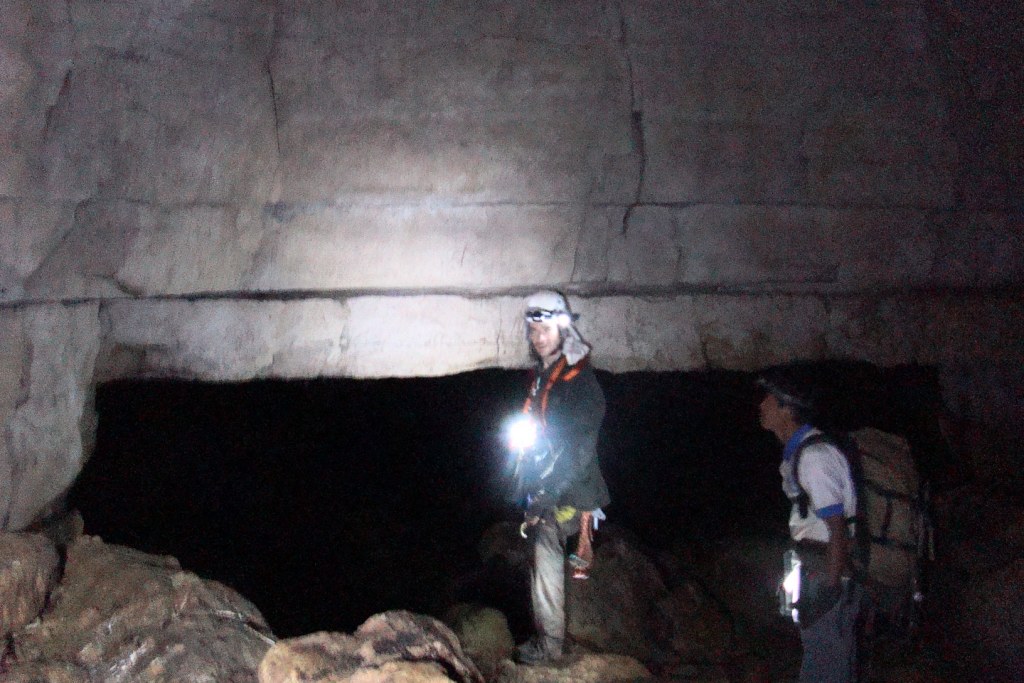
Geologists and speleologists describe Tayos as a natural cave dissolved and eroded through sandstone and limestone, its strikingly flat ceilings and angular junctions the product of bedding planes and joint-controlled collapse rather than tooling. The 1976 expedition organised by Scottish engineer Stan Hall — one of the largest cave expeditions ever mounted, with over a hundred participants including British and Ecuadorian military personnel and scientists — found no metal library and no evidence of artificial construction in the main system.
What the expedition did find was archaeologically significant: alongside zoological and botanical collections, investigators documented human use of the cave stretching back millennia, with a burial and artefacts, and Padre Pedro Porras's associated archaeological work identified ceramics linked to cultures of the Upano valley from around 1500 BC, with some material argued to be considerably older. The Shuar people have long descended into the cave on ladders to harvest oilbird chicks, and regard it as a spiritual place.
As for the famous artefacts of the Crespi collection in Cuenca — metal plaques and figures given to the Italian Salesian priest Carlo Crespi by local people, and claimed by some to come from Tayos — examinations have concluded that the metallic items are overwhelmingly modern creations in brass and tin, many of them made locally and traded to the generous priest. Neil Armstrong's presence in 1976 was real but honorary; he visited the cave, and later played down any suggestion that he had gone treasure-hunting.
- Speleological surveys describe a natural karst system; flat ceilings and right angles follow bedding planes and joints
- The 1976 Hall expedition, with over 100 participants and scientific teams, found no metal library or artificial construction
- Archaeological work associated with the expedition documented indigenous use back to c. 1500 BC, with claims of older material
- Metallurgical and iconographic examination of the Crespi collection identifies the metal items as modern brass and tin work
- Moricz refused to disclose the library's location even to his own 1969 expedition partners
- Neil Armstrong's role was honorary; he later distanced himself from the treasure narrative