Ancient Knowledge · Casma Valley, Ancash, Peru

Chankillo Thirteen Towers

A 300-metre row of towers that turned an entire ridgeline into a solar calendar

Mainstream: c. 250-200 BCAlternative: c. 500 BC or earlier (early ceremonial phases)-9.56°, -78.23°

At a glance

Chankillo Thirteen Towers
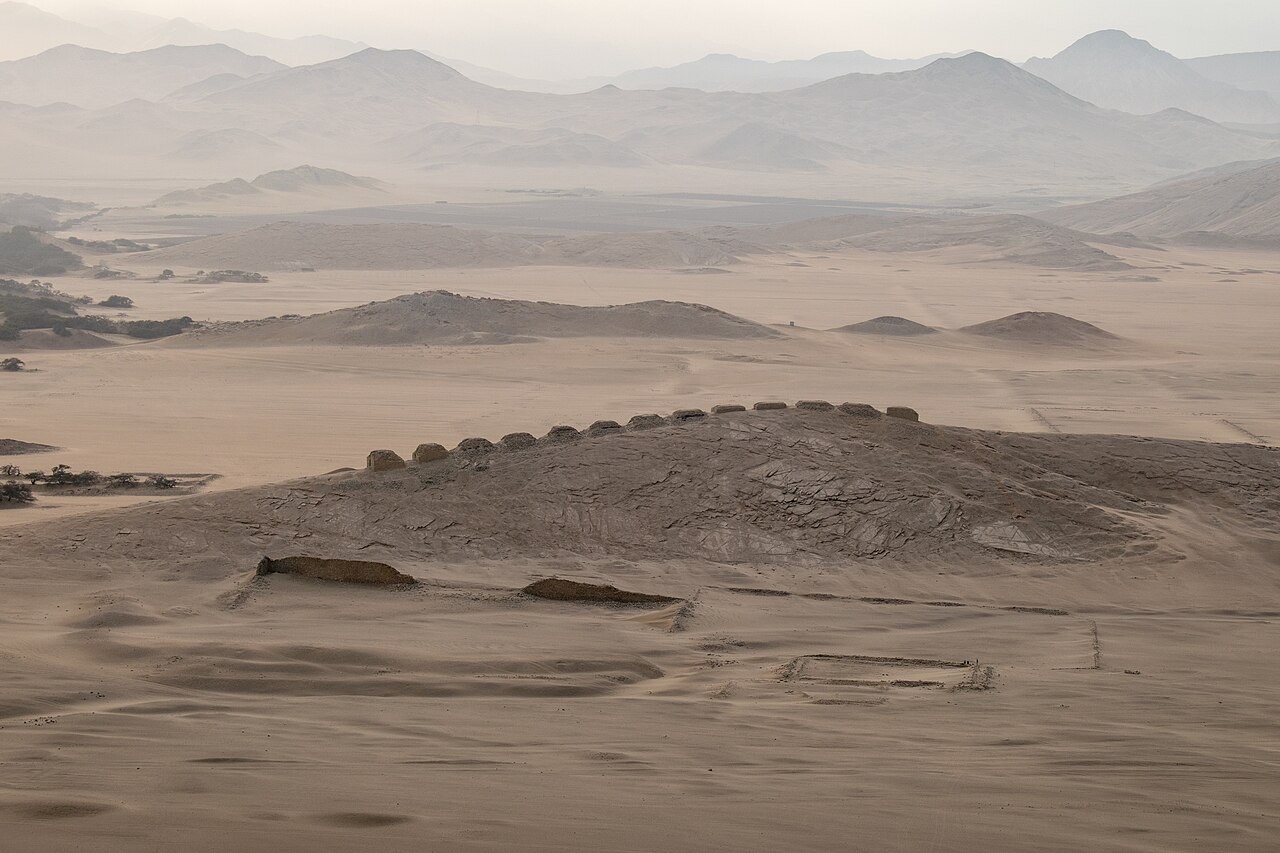
Photo: Corrispo · CC BY-SA 4.0

In the coastal desert of Peru, thirteen squat stone towers march along a ridge between two observation platforms. When Peruvian archaeologist Ivan Ghezzi and British archaeoastronomer Clive Ruggles published their analysis in Science in 2007, Chankillo was recognised as the oldest known solar observatory in the Americas: from the western observing point, the sun's rising position moves along the row of towers through the year, from the southernmost tower at the December solstice to the northernmost in June. UNESCO inscribed the complex as a World Heritage Site in 2021, calling it a masterpiece of human creative genius.

See it on the globe →
The mainstream view

What archaeology says

Ghezzi and Ruggles showed that the thirteen towers, spaced to create a toothed artificial horizon roughly 300 metres long, span the full annual range of sunrise and sunset positions when viewed from two purpose-built observation points. The gaps between towers divide the year into regular intervals of about ten days, allowing the sun's date to be read to within two or three days — an operational calendar in stone, built around 250-200 BC during Peru's Early Horizon period, more than 1,700 years before the Inca sun pillars described by Spanish chroniclers.

The wider complex includes a heavily walled hilltop building long interpreted as a fortress, but its gates, ceremonial layout and lack of water supply have led Ghezzi to argue it was a fortified temple of the sun cult. Pottery, shell offerings and warrior iconography suggest ritual combat and solar ceremony were intertwined here.

The society that built Chankillo remains poorly understood; the site was damaged and abandoned within decades, possibly in conflict, and no direct successor tradition survived. Its sophistication implies centuries of accumulated horizon astronomy in the Casma-Sechin culture area beforehand.

Key evidence cited
  • From the western observing point, sunrise sweeps the full tower row exactly between the two solstices, verified by modern survey and simulation
  • Radiocarbon dates on wooden lintels and offerings place construction and use at about 250-200 BC
  • Two dedicated observation platforms sit at the correct positions to the east and west of the ridge, with concentrations of offerings including shell trumpets
  • The tower gaps divide the solar year into near-equal intervals, consistent with a working calendar rather than symbolic display
  • UNESCO's 2021 inscription followed detailed evaluation of the astronomical case by international experts
The alternative view

What the skeptics propose

The main disputes over Chankillo are serious scholarly ones rather than fringe claims. For over a century, explorers and archaeologists read the hilltop enclosure as a purely military fortress, and some researchers still argue the defensive interpretation has been too quickly traded for a ceremonial one — the double and triple walls, baffled gates and parapets are, they note, exactly what a stronghold needs.

Others have questioned how precisely the towers really functioned as a calendar. Critics of high-precision archaeoastronomy point out that a thirteen-tower row yields solar dates only if observers stood at exactly the right spots, and that the identification of the western and eastern observing points relies partly on the alignments themselves — a whiff of circularity. Ruggles, himself a noted sceptic of overblown alignment claims, answers that the twin platforms are architecturally distinctive, artefact-rich and placed with no other evident purpose.

At the speculative margin, some writers have tried to push the solar cult at Chankillo back to earlier Casma-Sechin monuments such as Sechin Alto, arguing that the thirteen towers are the late flowering of a horizon-calendar tradition reaching back beyond 1000 BC. Firm evidence for earlier observatories of this type has yet to be excavated.

Key evidence cited
  • The fortified temple's massive walls, restricted gates and parapets support the older military-fortress interpretation still favoured by some Andeanists
  • Precision-calendar claims depend on observer positions partly inferred from the alignments they are meant to test
  • Warrior figurines and evidence of destruction suggest conflict, not just ceremony, shaped the site's history
  • Earlier Casma Valley monuments show solar and ritual orientations, hinting the tradition long pre-dates the towers themselves
  • No written or ethnographic record connects Chankillo's builders to later Andean solar practice, leaving the calendar's exact use unverifiable

Genuinely open questions

  1. Was the walled hilltop complex a fortress, a temple, or deliberately both?
  2. Who destroyed Chankillo, and why was such a functional observatory never rebuilt?
  3. Does the thirteen-tower design encode a formal calendar count, or simply frame the solstice extremes?
  4. How far back does horizon-calendar astronomy go in the Casma-Sechin culture area?

Worth knowing

The Inca were still using paired horizon pillars to mark solar dates when the Spanish arrived in the 1530s — Chankillo shows Andean astronomers had perfected the technique some 1,800 years earlier.