What archaeology says
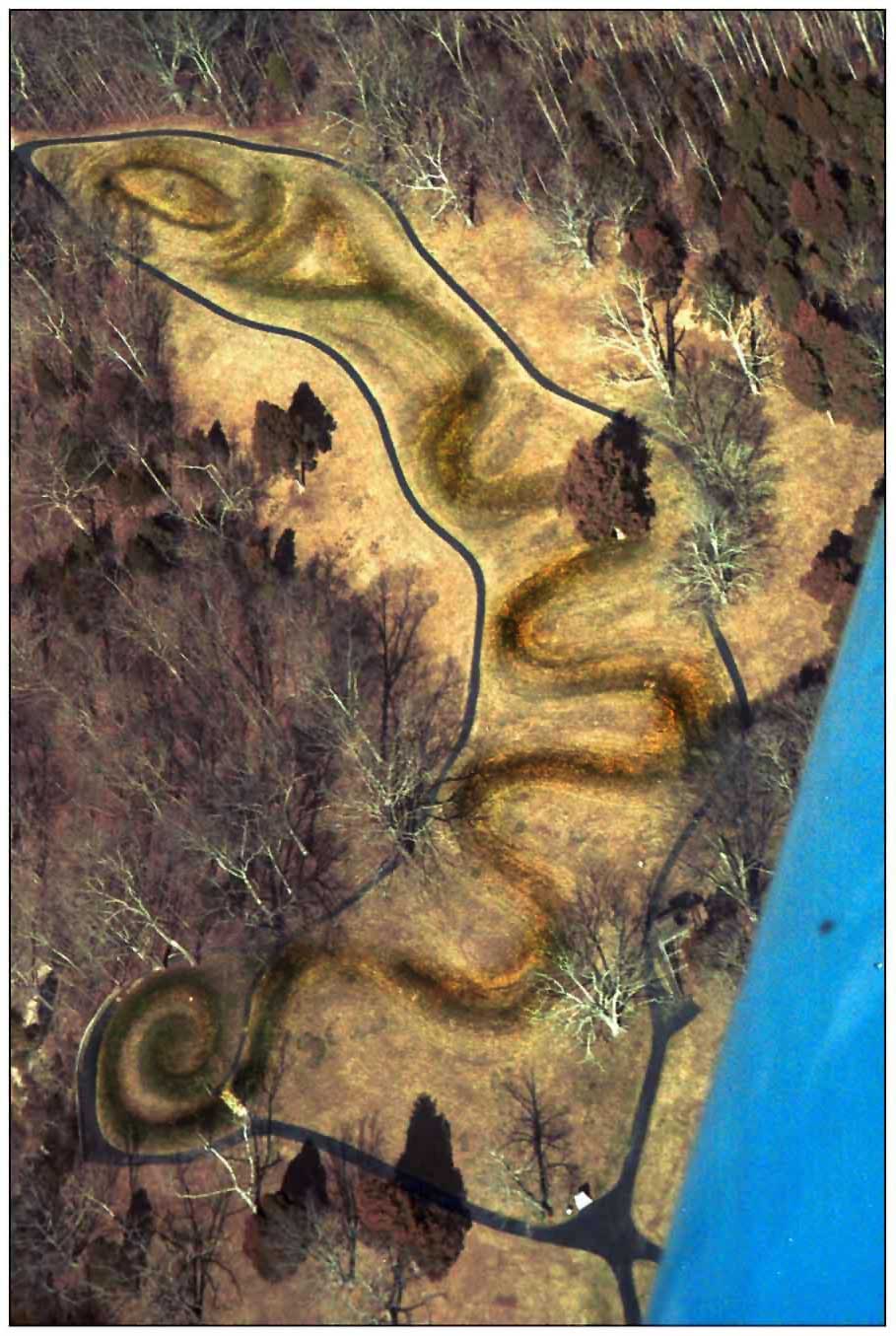
Remarkably, mainstream archaeology is split down the middle on Serpent Mound's age. Because effigy mounds contain no burials or artefact caches, dating depends on scraps of charcoal and soil chemistry. In the 1990s a team including Bradley Lepper of the Ohio History Connection obtained radiocarbon dates of around AD 1070, assigning the effigy to the Fort Ancient culture — which fits, Lepper argues, because Fort Ancient people demonstrably built Ohio's only other effigy (Alligator Mound), used serpent imagery constantly in their art, and lived in a village at the foot of the Serpent Mound bluff. The date also tantalisingly coincides with the AD 1054 supernova and the 1066 apparition of Halley's Comet.
The rival camp — William Romain, Edward Herrmann, G. William Monaghan and colleagues — cored the mound in 2011 and published radiocarbon dates in 2014 averaging around 320 BC, which would make the serpent a work of the much earlier Adena culture, whose conical burial mound stands nearby. They argue the AD 1070 charcoal reflects a later repair of an already ancient monument, and further dates published in 2019 supported the older estimate. Lepper's team counters that the old dates come from soil humates, a material notorious for returning ages older than the construction they are meant to date. The exchange has run through formal rejoinders and replies for a decade without resolution.
What is not disputed is the effigy's astronomy and artistry: the serpent's head and oval align closely with the summer solstice sunset, and Romain has argued the coils reference lunar rise and set points. Nor is the setting an accident — the builders chose a ridge inside a cryptovolcanic impact structure, though whether they recognised the ground as unusual is unknowable.
- Radiocarbon dates of c. AD 1070 from charcoal recovered in the 1990s (Lepper and colleagues)
- Radiocarbon dates of c. 320 BC from 2011 sediment cores (Herrmann, Monaghan and Romain, published 2014, supported 2019)
- A Fort Ancient village and an Adena burial mound both sit immediately adjacent, giving each camp a candidate builder
- Fort Ancient culture built Ohio's only other effigy (Alligator Mound) and used serpent imagery extensively
- Documented summer solstice sunset alignment of the serpent's head and oval embankment