What archaeology says
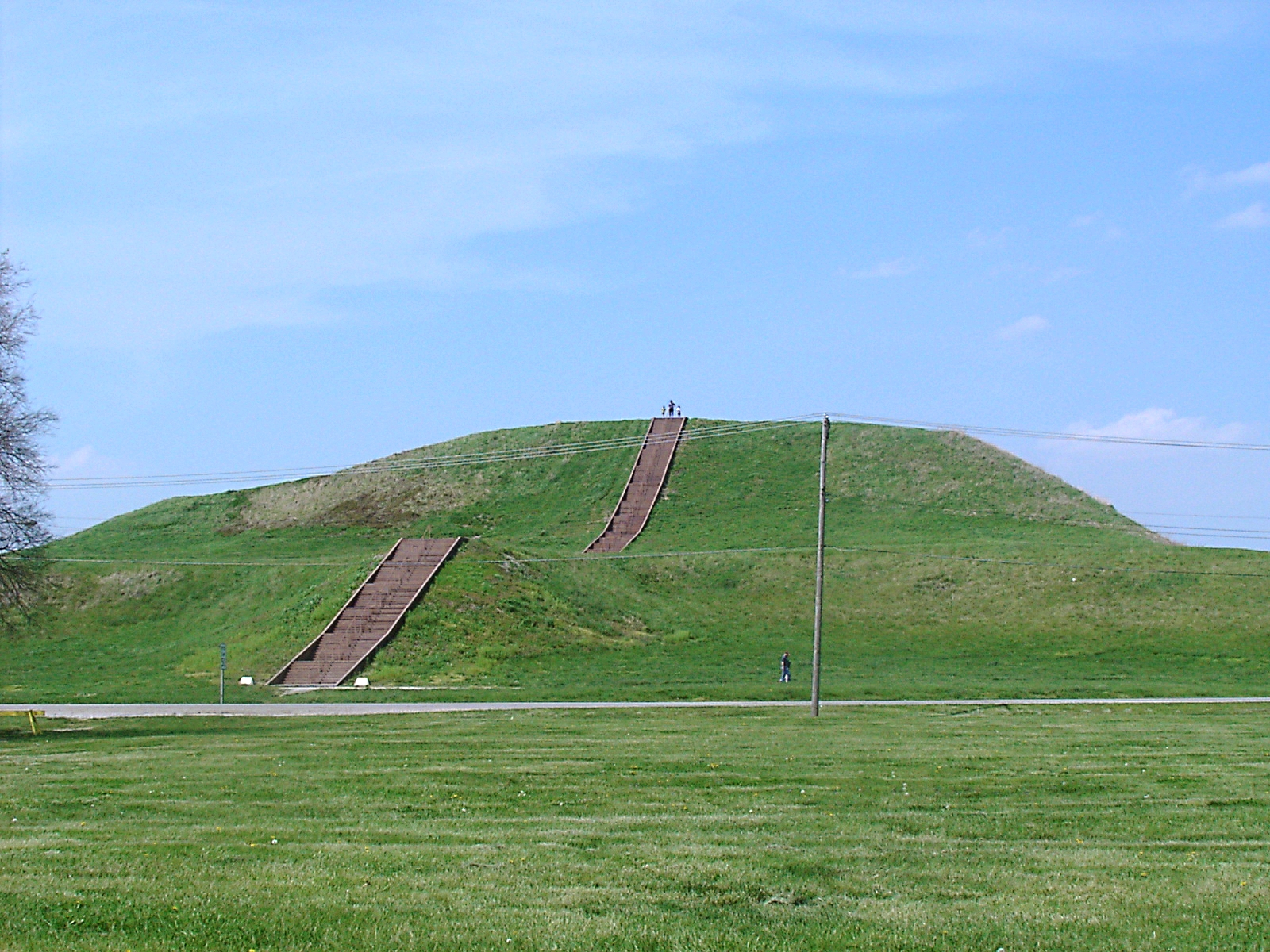
Over a century of excavation — from Warren Moorehead's trenching in the 1920s, which proved the mounds artificial, through modern work by researchers such as Timothy Pauketat, John Kelly and the teams responding to the mound's slumping problems in 2007 — has built a detailed picture of Monks Mound. It is made of carefully selected and layered soils: black clays, sods and sand buttresses engineered to manage water within the mound, an achievement in earthen engineering to rival stone architecture. Radiocarbon dating long suggested construction in many stages between about AD 900 and 1200; a recent Bayesian re-analysis of the dates and botanical remains argues instead for a startlingly rapid build — perhaps a few short bursts totalling under twenty years around the mid-1000s — implying an extraordinary mobilisation of communal labour.
The mound anchors what archaeologists call Cahokia's 'Big Bang' around AD 1050 (a term coined by Pauketat): the sudden transformation of a modest village landscape into a planned metropolis with a five-square-kilometre grid aligned roughly to the cardinal directions, the vast Grand Plaza levelled by hand, and monuments like Woodhenge — rings of red-cedar posts marking solstices and equinoxes. Mound 72 nearby yielded the famous 'beaded burial' of a man laid on a falcon-shaped platform of 20,000 shell beads, together with mass sacrificial burials that reveal the ceremonial and coercive power of Cahokia's elite. Strontium isotope studies show as much as a third of the population were immigrants, drawn from across the midcontinent. Decline set in after 1200 — sediment cores from Horseshoe Lake indicate persistent drought between 1200 and 1350, alongside flooding, political fragmentation and possibly conflict (a defensive palisade was repeatedly rebuilt) — and by 1350 the city was empty. Its builders' descendants are the historic Siouan-, Caddoan- and Muskogean-speaking peoples of the region; no mystery race is required.
- Radiocarbon dates and Bayesian modelling placing construction between c. AD 950 and 1200, possibly in rapid bursts
- Engineered internal structure of layered clays, sods and drainage buttresses revealed by borings and the 2007 excavations
- Cyrus Thomas's 1894 Bureau of American Ethnology survey demolishing the 'lost race' Mound Builder myth
- Mound 72's beaded burial and sacrifices demonstrating an indigenous Mississippian elite ideology
- Continuity of mound-building tradition in North America from Watson Brake (c. 3500 BC) onward