What archaeology says
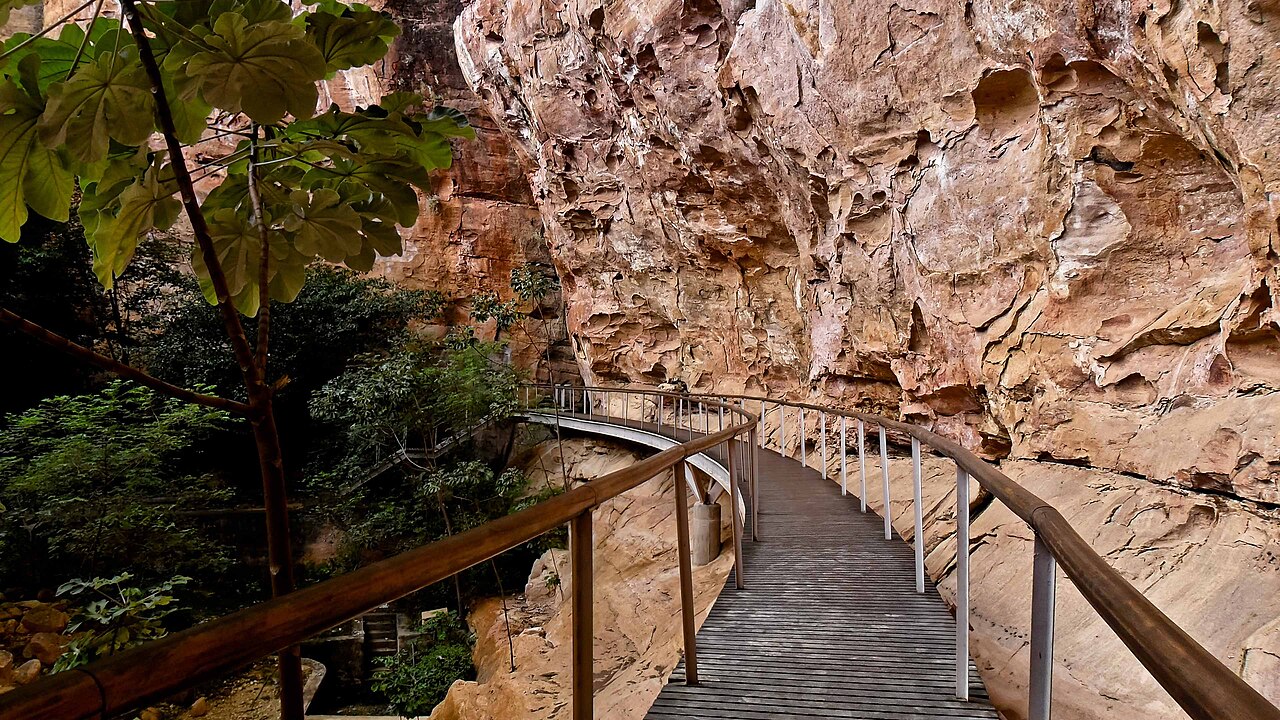
Mainstream reception of Pedra Furada has been sceptical, focusing on two problems. First, the "hearths": natural bushfires are common in the region, and charcoal can wash into a shelter or be produced by lightning strikes and burning vegetation, so old radiocarbon dates on charcoal do not by themselves prove human fire. Second, the "tools": the shelter sits beneath a tall cliff of quartzite conglomerate, and cobbles falling from that cliff onto the rocks below can spontaneously produce flaked stones that resemble crude choppers.
A widely cited 1996 critique by David Meltzer, James Adovasio and Tom Dillehay, who visited the site, argued that the early Pedra Furada material could not be distinguished from naturally fractured, naturally burnt stone, and that the case for a 50,000-year human presence was unproven. Guidon and her colleagues replied robustly, and the exchange became one of the defining methodological debates of American archaeology.
The consensus today accepts secure human occupation in the region by roughly the terminal Pleistocene, consistent with other well-dated South American sites, while treating the deepest, oldest Pedra Furada layers as unproven rather than disproven. The broader field has become far more open to pre-Clovis dates than it was in 1996, but that openness has not extended to accepting 50,000 years on the strength of ambiguous charcoal and stone.
- The shelter sits below a quartzite cliff whose falling cobbles can naturally produce flake-like 'tools'.
- Charcoal in the region is readily produced by natural bushfires and can be redeposited into the shelter.
- The 1996 Meltzer-Adovasio-Dillehay site visit found the early material indistinguishable from natural processes.
- Wild capuchin monkeys nearby produce flaked stone almost identical to simple human tools.
- No unambiguous human skeletal remains accompany the oldest claimed layers.