What archaeology says
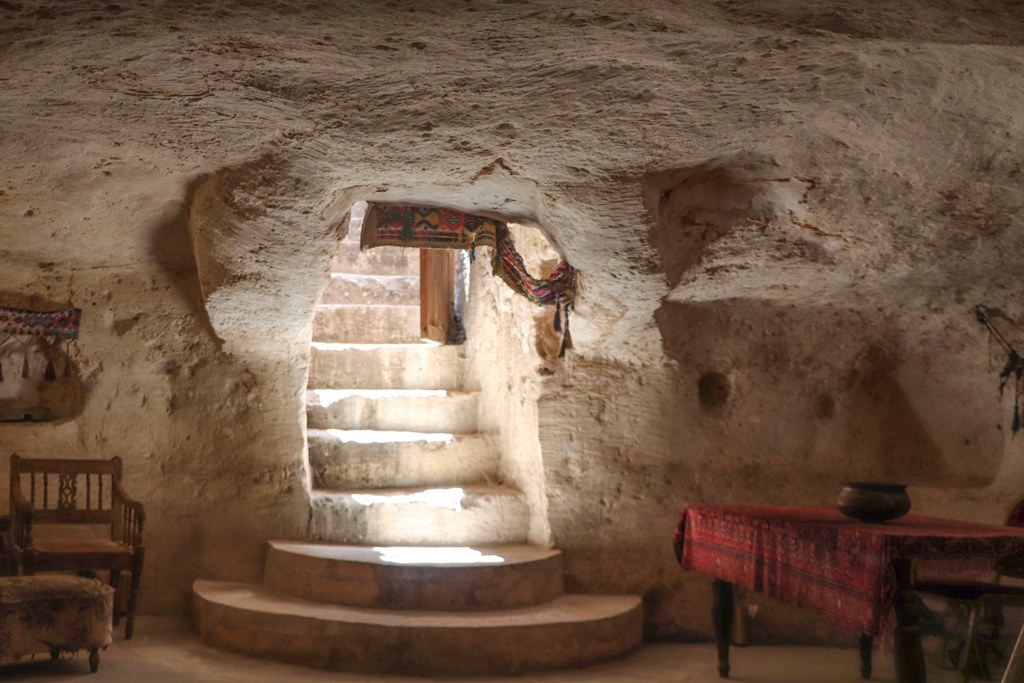
The excavation is directed by Gani Tarkan, formerly head of the Mardin Museum, working with the Midyat municipality and Turkey's Ministry of Culture and Tourism under its Heritage for the Future programme. The datable material recovered so far — oil lamps, bronze coins, glass and stone beads, spindle whorls and hand mills — points to intensive use from roughly the 2nd century AD onwards, with the complex remaining in use in some form for perhaps 1,900 years, later serving as wine cellars, stables and catacombs beneath the town.
Tarkan's working interpretation is that Matiate began as a refuge. In the 2nd and 3rd centuries AD Christianity was not yet a lawful religion in the Roman Empire, and families fleeing persecution — along with Jews and others caught in the region's upheavals — appear to have carved out concealed living space where whole communities could shelter, worship and store food. The Tur Abdin plateau around Midyat later became one of the great heartlands of Syriac Christianity, and the underground city's chapels and silos fit a pattern of communal refuge known across Anatolia. Excavation resumed in stages through 2023–2025 with the aim of opening the first sections to visitors, and archaeologists stress that conclusions remain provisional while so little of the complex has been dug.
- Oil lamps, bronze coins and beads recovered in excavation date occupation from about the 2nd century AD onwards
- Chapels, silos, wells and wine-making installations match known patterns of communal refuge settlements in Anatolia
- Excavation director Gani Tarkan links the complex to Christians and Jews sheltering from Roman persecution
- The Tur Abdin region's later history as a Syriac Christian heartland supports a refuge-and-monastic use sequence
- Continuous later reuse as cellars, stables and catacombs explains the complex's preservation beneath the living town