Origins of Civilisation · Dargeçit, Mardin Province, Turkey

Boncuklu Tarla

The 'field of beads' on the Tigris whose communal buildings are claimed to out-date Göbekli Tepe itself.

Mainstream: c. 10,500–7000 BC (Late Epipalaeolithic to Pre-Pottery Neolithic B)Alternative: Communal buildings claimed to be c. 1,000 years older than Göbekli Tepe37.53°, 41.83°

At a glance

Boncuklu Tarla
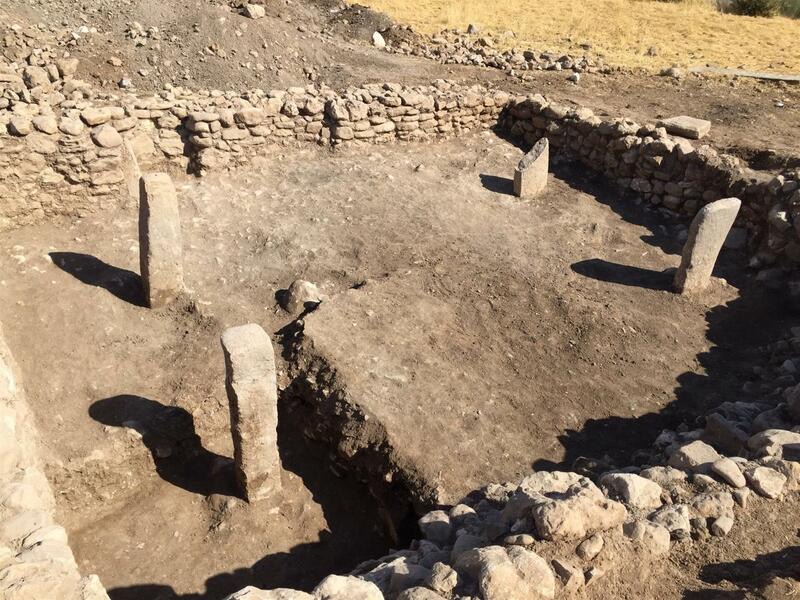
Photo: AA · CC0

Boncuklu Tarla, Turkish for 'beaded field', is a settlement mound near Dargeçit in Mardin Province, discovered in 2008 during surveys for the Ilısu Dam and excavated since 2012, latterly under Ergül Kodaş of Mardin Artuklu University. Occupied from the Late Epipalaeolithic through the Pre-Pottery Neolithic, it has yielded round huts, rectangular houses, several large communal or 'temple' buildings with stone pillars, more than 100,000 beads, early worked native copper, and even what excavators describe as one of the world's oldest drainage or sanitation systems. Turkish media seized on excavation statements that some structures are around a thousand years older than Göbekli Tepe.

See it on the globe →
The mainstream view

What archaeology says

Archaeologically, Boncuklu Tarla is important because it documents the whole run-up to the Neolithic in the Tigris basin, a region long overshadowed by the Euphrates sites. The earliest levels belong to the Late Epipalaeolithic, around 12,000 or more years ago, with occupation continuing through the Pre-Pottery Neolithic A and B. That makes the oldest layers older than the known enclosures at Göbekli Tepe, though the sites are of very different character: Boncuklu Tarla is first and foremost a living village.

Excavation director Ergül Kodaş and colleagues have reported a sequence of communal buildings with buttressed walls and stone pillars, showing that special-purpose public architecture developed alongside ordinary houses over millennia. The site belongs to the same broad world as Hasankeyf Höyük, Gusir Höyük and Çayönü on the Tigris, and to the wider Taş Tepeler phenomenon. The tens of thousands of beads in stone, shell and copper point to intensive craft production and long-distance exchange, and cold-worked native copper here is among the earliest metal use anywhere.

Mainstream researchers are careful with the 'older than Göbekli Tepe' framing: the claim rests on the earliest occupation layers, and much of the detailed dating evidence is still working its way through peer review. The consensus position is that Boncuklu Tarla confirms a mosaic of contemporaneous early communities across Upper Mesopotamia rather than a single origin point.

Key evidence cited
  • Stratified occupation from the Late Epipalaeolithic through Pre-Pottery Neolithic B, spanning several millennia
  • A sequence of large communal buildings with stone pillars and buttressed walls, paralleled at other Tigris basin sites
  • More than 100,000 beads of stone, shell and copper indicating specialised craft production
  • Cold-worked native copper objects among the earliest known metal use in the world
  • Obsidian and marine shell showing long-distance exchange networks
  • Architectural parallels with Çayönü, Hasankeyf Höyük and the wider Taş Tepeler group
The alternative view

What the skeptics propose

For the alternative-history community, Boncuklu Tarla arrived as vindication. When Turkish outlets reported in 2019 that the site contained a temple structure roughly a thousand years older than Göbekli Tepe, writers who had long argued that Göbekli Tepe could not be a one-off saw the pattern they expected: an entire developed tradition, implying an even deeper and still-undiscovered past. Graham Hancock and others have repeatedly argued that sites of this age push organised, symbolically sophisticated society back across the Younger Dryas boundary, consistent with knowledge surviving from before a global cataclysm around 10,800-9600 BC.

Attention has also focused on the site's technology. Reports of thousands of copper items, including beads made of cold-hammered native copper some 10,000 or more years ago, and of a stone-built drainage system described in Turkish press coverage as the world's oldest sewer, feed the argument that early Anatolian communities were far more technically capable than the primitive-hunter stereotype allows.

Sceptics within archaeology reply that press releases have run ahead of publications, that 'temple' is a loaded word for communal buildings, and that being older than Göbekli Tepe's known enclosures is unsurprising for a settlement whose life began in the Epipalaeolithic. The genuine controversy here is less about lost civilisations than about science by press conference, a pattern Boncuklu Tarla shares with many spectacular Turkish discoveries of the 2010s and 2020s.

Key evidence cited
  • Excavators' statements, widely reported in 2019, that some structures predate Göbekli Tepe by around 1,000 years
  • Special-purpose 'temple' buildings at a site whose origins lie before the conventional Neolithic threshold
  • A stone drainage installation described in press reports as the world's oldest sanitation system
  • Thousands of copper artefacts millennia before the textbook start of metallurgy
  • Occupation spanning the Younger Dryas, the cataclysm window central to lost-civilisation theories
  • The site's discovery only through dam-rescue work, hinting at how much remains unfound along the Tigris

Genuinely open questions

  1. How much of the 'older than Göbekli Tepe' claim will survive full radiocarbon publication and peer review?
  2. Were the pillared communal buildings temples, meeting houses, or both?
  3. How did bead and copper production on this scale fit into the local economy?
  4. What is the relationship between Boncuklu Tarla and the ceremonial centres of the Şanlıurfa region?

Worth knowing

The site's name was earned honestly: villagers had been picking ancient beads out of the ploughsoil for generations, and excavators went on to recover over 100,000 of them — the 'beaded field' was labelled by its own artefacts.