Origins of Civilisation · Raqqa Governorate, Syria (submerged beneath Lake Assad)

Abu Hureyra

The village where farming may have begun — and where impact proponents claim a comet airburst flattened homes 12,800 years ago.

Mainstream: Occupied c. 13,300–7,800 years ago; changes at the Younger Dryas onset attributed to abrupt climate shift, not an impactAlternative: c. 12,800 BP — village allegedly levelled by a fragment of a disintegrating comet at the Younger Dryas onset (Moore, Kennett et al.)35.87°, 38.40°

At a glance

Abu Hureyra
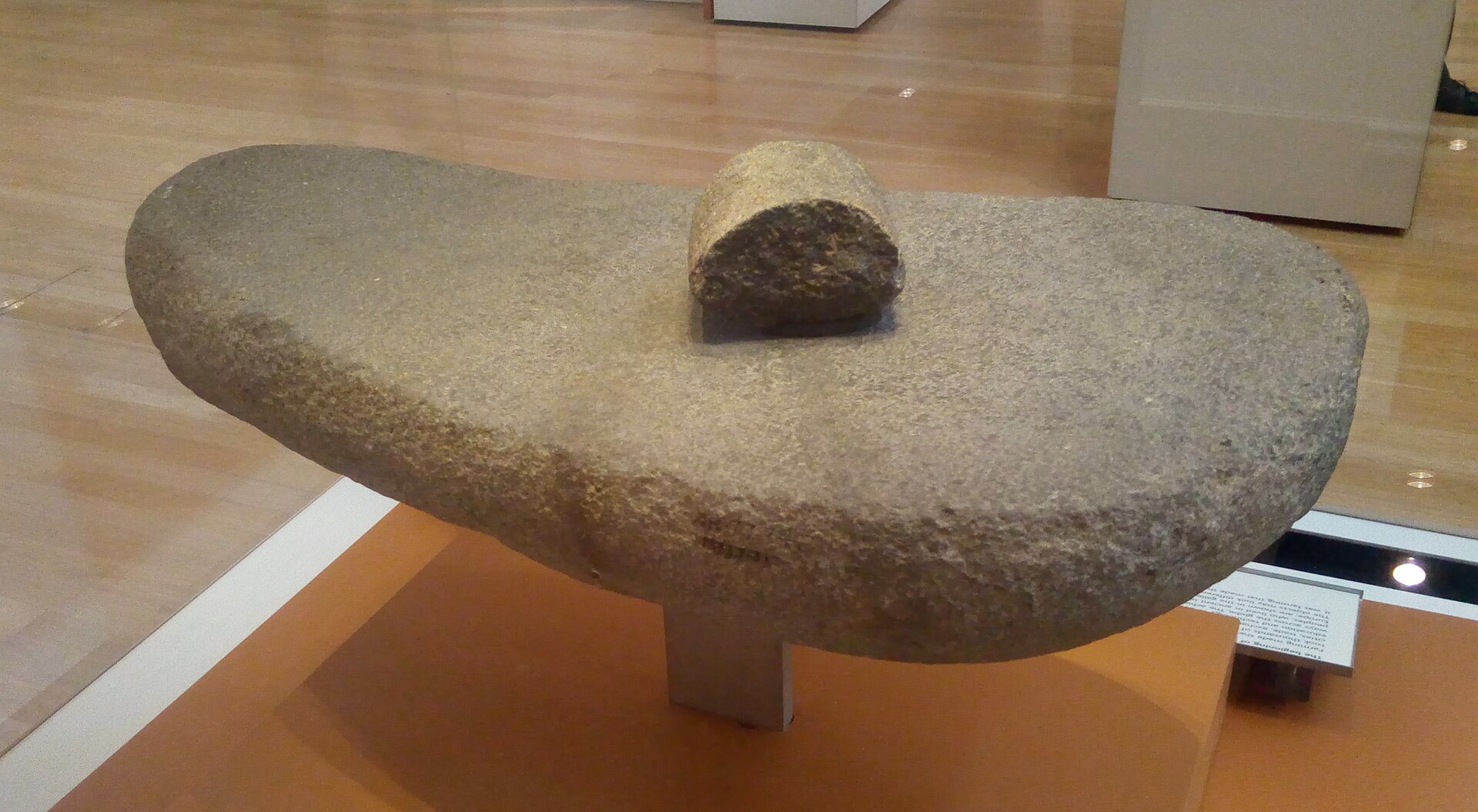
Photo: Zunkir · CC BY-SA 4.0

Abu Hureyra was a settlement mound on the south bank of the Euphrates in northern Syria, hurriedly excavated by Andrew Moore's team in 1972–73 before the Tabqa Dam drowned it beneath Lake Assad in 1974. The rescue dig proved extraordinary: the tell preserved a near-continuous record from a village of Epipalaeolithic hunter-gatherers (from about 13,300 years ago) through to a large Neolithic farming town of several thousand people. Charred grains of rye from its earliest levels have been argued to be the oldest cultivated cereal anywhere on Earth — and, controversially, the same layers have been claimed to hold meltglass from a cosmic airburst at the onset of the Younger Dryas cold snap. Abu Hureyra thus sits at the crossroads of two great debates: the origins of agriculture and the Younger Dryas impact hypothesis.

See it on the globe →
The mainstream view

What archaeology says

For most archaeologists, Abu Hureyra's importance lies in what it reveals about the transition from foraging to farming. Gordon Hillman's analysis of its plant remains suggested that as the Younger Dryas dried the local woodland-steppe and wild food staples vanished, the villagers responded by cultivating rye — with a handful of charred, plump grains AMS-dated to around 13,000 years ago cited as the earliest evidence of deliberate cereal cultivation anywhere. Some archaeobotanists, including Sue Colledge and James Conolly in a 2010 reassessment, doubt the grains prove true domestication that early, but virtually everyone agrees the site documents people adapting to abrupt climate change by intensifying their use of plants, culminating in fully agricultural life in the Neolithic town.

On the impact question, mainstream reviewers are unpersuaded. Peter Thy and colleagues showed in 2015 that visually similar siliceous scoria from northern Syrian sites (including Abu Hureyra material) can form in ordinary burning buildings of earth and thatch, and that the dated glasses span thousands of years rather than clustering at 12,800 BP. The exhaustive 2023 Earth-Science Reviews critique by Vance Holliday, Tyrone Daulton, Mark Boslough and colleagues — a self-described comprehensive refutation of the Younger Dryas impact hypothesis — argued that the Abu Hureyra 'impact layer' is poorly dated (the radiocarbon record sits on a calibration plateau), that the trench samples were collected decades ago from disturbed contexts, and that none of the claimed markers uniquely requires an extraterrestrial event. Kelton Jorgeson, Ryan Breslawski and colleagues have separately shown by Bayesian modelling that supposed impact layers across continents fail the test of being the same age.

Key evidence cited
  • Hillman's charred rye grains AMS-dated to c. 13,000 years ago, tracking cultivation as a response to Younger Dryas drying
  • Thy et al. (2015): similar Syrian 'meltglass' forms in ordinary building fires and spans millennia in age
  • Holliday et al. (2023) comprehensive refutation: the claimed impact layer is poorly dated and stratigraphically insecure
  • Radiocarbon modelling (Jorgeson et al.) showing claimed impact layers worldwide are not demonstrably synchronous
  • A continuous occupation sequence with no site-wide destruction horizon recognised by the original excavation team in the 1970s
The alternative view

What the skeptics propose

The impact case was set out in a 2020 Scientific Reports paper by Andrew Moore himself, with James Kennett, Allen West and co-authors: the layer marking the Younger Dryas onset at Abu Hureyra contains abundant meltglass whose melted quartz, chromferide and magnetite imply temperatures from about 1,720 to over 2,200 degrees Celsius — far hotter, they argue, than thatch fires, lightning or volcanism can achieve. Glass was found splashed onto building material, animal bones and tools, alongside nanodiamonds, carbon spherules and platinum enrichment. Their scenario: a fragment of a disintegrating comet detonated near the village around 12,800 years ago, incinerating it as part of the wider Younger Dryas impact event blamed for megafaunal extinctions and the abrupt cold snap.

In 2023 the team published a trio of follow-up papers — in a new journal, Airbursts and Cratering Impacts, edited by hypothesis proponents — reporting shock-fractured quartz in the critical layer and modelling a low-altitude 'touchdown' airburst. They cast Abu Hureyra as the only known site where humans demonstrably lived through, and perhaps died in, a cosmic impact, and note the poignant twist that the village's survivors would have been among the very people who then invented agriculture. Proponents such as Martin Sweatman argue the sceptics systematically misrepresent this evidence, and published a point-by-point rebuttal of the Holliday critique in 2024. Because the tell now lies under Lake Assad, however, no one can return to re-sample the layer — the argument must be fought over archived material.

Key evidence cited
  • Meltglass in the Younger Dryas boundary layer recording temperatures of 1,720 to over 2,200 degrees Celsius (Moore et al. 2020)
  • Glass splashed onto bone, flint and building daub, suggesting a sudden high-energy event rather than slow burning
  • Nanodiamonds, carbon spherules and a platinum anomaly in the same thin layer
  • Shock-fractured quartz reported in 2023 follow-up studies of the boundary layer
  • The layer's coincidence with the Younger Dryas onset, matching claimed impact markers at dozens of sites worldwide

Genuinely open questions

  1. Can archived Abu Hureyra samples be independently re-analysed now that the site itself is unreachable beneath Lake Assad?
  2. Were the earliest rye grains truly cultivated crops, or gathered wild grain from a shrinking landscape?
  3. If an airburst did strike the village, why is an unambiguous destruction horizon absent from the excavation records?

Worth knowing

Abu Hureyra's skeletons record the price of early farming: several women had deformed toes and knees from kneeling for hours each day grinding grain — arthritis inflicted by the world's first bread.