Origins of Civilisation · Nebelivka, Kirovohrad Oblast, Ukraine

Nebelivka & the Trypillia Mega-sites

Copper Age Ukraine built settlements bigger than the first Mesopotamian cities — then burned every house down.

Mainstream: c. 4100–3600 BC (Trypillia B2; mega-site phenomenon c. 4200–3600 BC)Alternative: Claimed by some as 'Aratta', the world's first civilisation, centuries before Uruk48.64°, 30.58°

At a glance

Nebelivka & the Trypillia Mega-sites
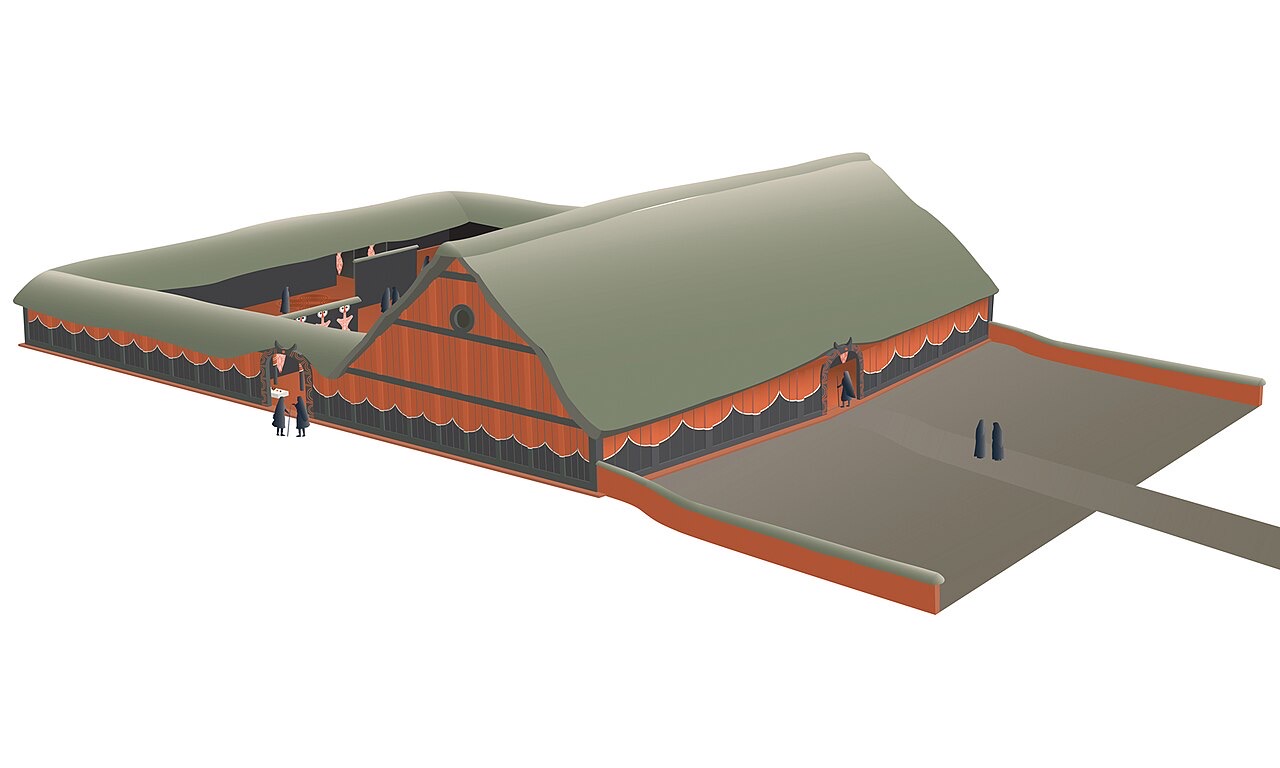
Photo: C. Unwin · CC BY-SA 4.0

Around 4000 BC, the forest-steppe between the Dnieper and the Carpathians filled with the largest settlements on Earth. The Trypillia (Cucuteni-Trypillia) mega-sites — Nebelivka at about 260 hectares, Maidanetske around 200, Taljanky over 300 — dwarfed contemporary Uruk. Nebelivka, mapped in its entirety by an Anglo-Ukrainian project led by John Chapman and Bisserka Gaydarska with Mykhailo Videiko, revealed nearly 1,500 buildings arranged in two great concentric rings with radial streets, a 60-hectare open central space, a 5.9-kilometre perimeter ditch and a 1,200-square-metre 'mega-structure' assembly building. Strangest of all: virtually every house was deliberately burned, and each mega-site was abandoned after a few generations.

See it on the globe →
The mainstream view

What archaeology says

The mega-sites were doubted for decades — Soviet aerial photography and geophysics seemed too good to be true — but magnetometry surveys in the 2000s and 2010s, by the Durham-Kyiv team at Nebelivka and a Kiel University team under Johannes Müller at Maidanetske, confirmed thousands of burnt-house anomalies in planned concentric layouts. Radiocarbon dating places Nebelivka's main occupation around 4000-3950 BC, before urban Uruk. The core debate is what these places were. Videiko and the Kyiv school have argued for proto-cities with populations in the tens of thousands; Müller's team estimated up to 17,000 at Maidanetske; Chapman and Gaydarska counter with a 'low-density' model in which only part of the plan was occupied at once, perhaps functioning as seasonal assembly places or pilgrimage centres.

Because the mega-sites lack palaces, temples, rich graves, writing and any visible ruling class, they pose a direct challenge to the classic checklist of urbanism. David Graeber and David Wengrow made them a centrepiece of The Dawn of Everything, arguing they show that thousands of people could self-organise city-scale life without kings or bureaucrats — a claim that is heterodox but grounded in the excavated evidence.

The deliberate house-burning, demonstrated experimentally to require huge quantities of added fuel, is generally read as ritual 'killing' of houses at the end of their lives, and the abandonment of the whole phenomenon by c. 3600 BC is attributed to some blend of ecological strain, social fission and climate shift — with no consensus yet.

Key evidence cited
  • Complete magnetometry plans of Nebelivka and Maidanetske showing thousands of structures in planned concentric rings
  • Radiocarbon dating placing Nebelivka's main phase c. 4000-3950 BC, earlier than urban Uruk
  • The 1,200-square-metre Nebelivka mega-structure, the largest known Trypillia public building
  • A 5.9-kilometre perimeter ditch too slight for defence, implying a symbolic boundary
  • Experimental house-burnings showing the fires required deliberate, fuel-intensive effort
  • Absence of palaces, elite burials and administrative tools despite city-scale settlement plans
The alternative view

What the skeptics propose

The wilder fringe belongs to the Ukrainian author Yuri Shilov, who identifies the Trypillia world with Aratta, a legendary land known from Sumerian poems, and presents it as the world's first civilisation and ancestral homeland of the Aryans — claims embraced by nationalist currents in Ukraine but rejected by academic archaeology, including most Ukrainian archaeologists. In Shilov's telling, the mega-sites are the state the textbooks refused to see, and Mesopotamia merely its heir.

A more respectable heterodoxy comes from within the discipline. Graeber and Wengrow's argument — cities without rulers — is itself a frontal assault on the standard model of how civilisation works, and it leans directly on Nebelivka. If they are right, hierarchy is a choice rather than a necessity of scale, which is as radical a claim about the human past as anything in alternative literature, made with footnotes.

The house-burning also invites exotic readings: catastrophists have suggested warfare or cosmic disaster, though the excavated evidence — houses emptied of valuables, then fired at extraordinary temperatures with added fuel, one at a time over decades — points to deliberate ceremony. And the disappearance of the mega-sites remains genuinely unexplained: the largest communities on the planet simply stopped, leaving no successor cities, no dynasties, and no written trace, a vanishing act that keeps every school of interpretation in business.

Key evidence cited
  • Mega-sites two to three times the area of contemporary Uruk, yet absent from most 'birth of civilisation' narratives
  • Yuri Shilov's identification of Trypillia with Sumerian Aratta and claims of a lost primary civilisation
  • Graeber and Wengrow's argument that Nebelivka proves cities can exist without rulers or bureaucracy
  • The unexplained ritual burning of virtually every house across the whole culture
  • Sophisticated two-storey houses and painted pottery centuries before comparable Mesopotamian craft
  • Total, unexplained abandonment of the phenomenon around 3600 BC

Genuinely open questions

  1. Were the mega-sites permanent cities, seasonal assemblies, or something in between?
  2. Why was every house deliberately burned?
  3. How were communities of thousands coordinated without any visible hierarchy?
  4. What ended the mega-site world around 3600 BC?

Worth knowing

Experimental archaeologists who built and torched a full-scale Trypillia house found it would not burn to the excavated state without roughly a house-worth of extra timber stacked inside — each of Nebelivka's 1,445 burnt houses was a planned, fuel-hungry funeral pyre for a building.