What archaeology says
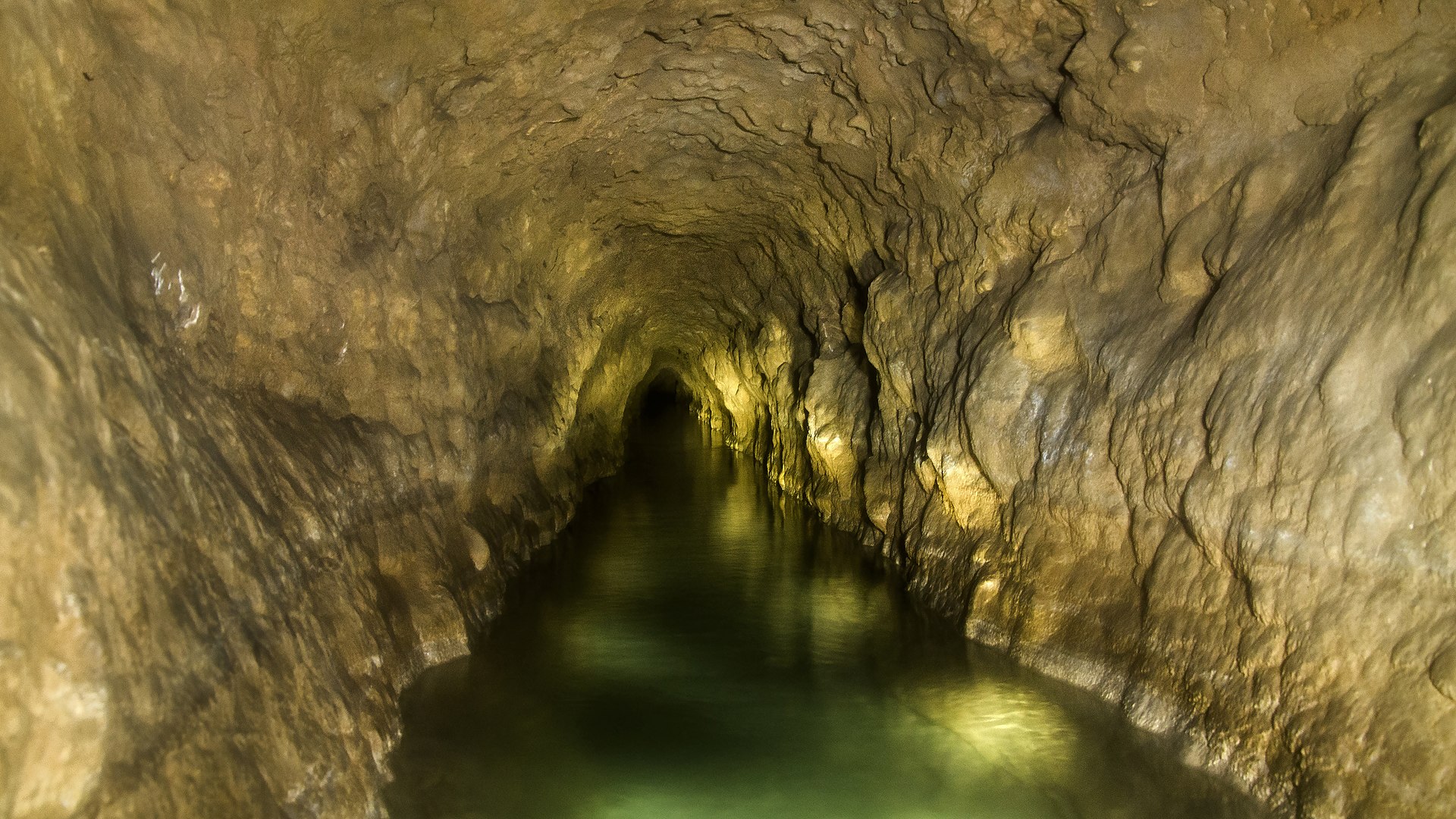
Historians of technology, following the French engineer-scholar Henri Goblot's classic studies of the qanat, place Qasabeh's origins in the Achaemenid period, around 700–500 BC — an era when, according to the Greek historian Polybius, Persian kings encouraged qanat-building by granting five generations of water rights to anyone who brought new land under irrigation. The scale of the work is staggering but well understood: specialist hereditary well-diggers called muqanni sank the shaft line first, then tunnelled between shaft bottoms, hauling spoil up by windlass in leather buckets and lining unstable sections with oval baked-clay hoops.
The surveying problem — keeping a gradient of roughly one metre per kilometre over 33 kilometres, steep enough to flow but gentle enough not to erode the tunnel — was solved with instruments the medieval Persian mathematician al-Karaji describes in detail in his treatise The Extraction of Hidden Waters (c. AD 1010), the world's oldest known textbook of hydrogeology: plumb lines, levelling boards, sighting tubes and calibrated ropes lowered down successive shafts to compute relative depths. Underground, the muqanni aligned the heading using pairs of oil lamps sighted along the tunnel axis; the lamp flame doubled as a gas and oxygen alarm. Fieldwork by Iranian scholars such as Mohammad Ajam, and Iran's International Center on Qanats in Yazd, has documented the system's continuous maintenance, its ancient water-sharing rota, and the argument for Achaemenid attribution — while acknowledging that a working qanat is continuously rebuilt, so no single tunnel section can be radiocarbon dated to the foundation era.
- Polybius records Achaemenid-era incentives for qanat construction, matching a foundation around 700–500 BC
- Al-Karaji's treatise of c. AD 1010 documents the surveying instruments and methods, requiring no unknown technology
- Henri Goblot's foundational scholarship traces qanat technology's origin and spread from Iron Age Persia
- The muqanni craft tradition, windlasses, clay tunnel hoops and lamp-sighting techniques are ethnographically documented at Gonabad itself
- UNESCO's 2016 Persian Qanat inscription accepted Qasabeh as the oldest and deepest of the eleven listed systems