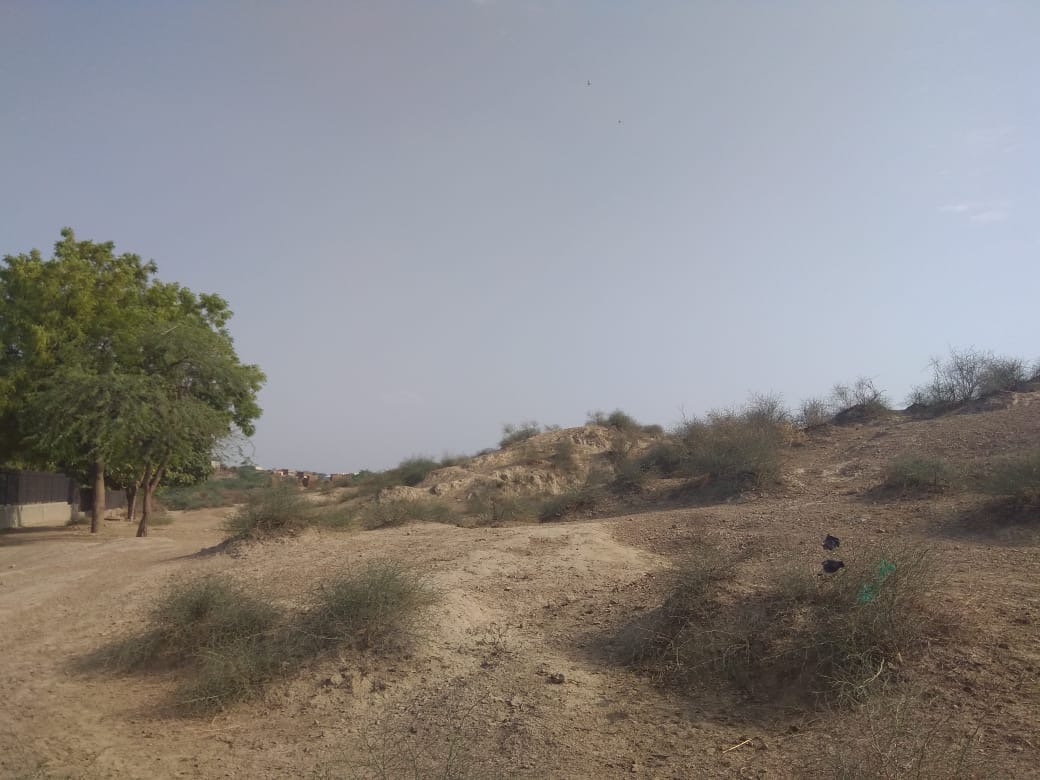
What archaeology says
Archaeologically, Rakhigarhi anchors the eastern, Ghaggar-basin domain of the Indus world and demonstrates that the civilisation had multiple great centres, not just the famous cities of Pakistan. Its early levels reach back before 4000 BC, showing regional roots for urbanism, and its mature-phase remains display the standard Harappan package: grid planning, standardised bricks, drainage, craft industries in shell, carnelian and copper, and formal burials studied for diet and health.
The 2019 Cell paper — lead authors Vasant Shinde, Vagheesh Narasimhan, Niraj Rai, Nick Patterson and David Reich — reported the genome of individual I6113. Her ancestry combined a lineage related to ancient Iranian populations, which had separated from actual Iranian-plateau farmers before 10,000 BC, with ancestry related to Southeast Asian hunter-gatherers. Crucially she carried no Steppe pastoralist ancestry, the component associated with Indo-European speakers, and no ancestry from Anatolian farmers. The companion Science paper by Narasimhan and colleagues showed that Steppe ancestry entered South Asia later, roughly 2000-1500 BC, after the Indus decline — consistent with the long-standing model of Indo-Aryan languages arriving through post-Harappan migrations. The genetics also showed Harappans are major ancestors of most modern South Asians, and that farming in the region did not require mass migration from the Iranian plateau.
For most historians and geneticists, then, Rakhigarhi's DNA refined rather than overturned the standard picture: the Indus civilisation was indigenous in development, and Indo-European languages arrived afterwards.
- Occupation from c. 4600 BC with full Mature Harappan urbanism: planned streets, drains, platforms and craft quarters
- Site-size estimates of 350-550 hectares across eleven mounds, likely exceeding Mohenjo-daro
- The 2019 Cell genome of individual I6113 lacking Steppe and Anatolian farmer ancestry
- The companion 2019 Science study dating Steppe ancestry's arrival in South Asia to c. 2000-1500 BC
- Genetic continuity showing Harappans as primary ancestors of most modern South Asians
- Independent evidence that regional farming developed locally rather than by mass migration from Iran