What archaeology says
The excavation was directed by Bob Carr of the Miami-Dade County Historic Preservation Division with John Ricisak, after surveyor Ted Riggs helped recognise the pattern in the exposed bedrock. Archaeologists interpret the circle as the footprint of a substantial circular structure — most plausibly a council house or chief's dwelling — whose posts were seated in basins hewn into the soft limestone, at the heart of the principal Tequesta town commanding the river mouth. The artefact assemblage supports both the date and the site's importance: shark-tooth tools, shell celts and quantities of animal bone, plus exotica far outside local range, including galena from Missouri and two basalt axes sourced to the Macon, Georgia region — evidence of exchange networks reaching a thousand kilometres. Unusual deposits, including a complete sea turtle carapace and other animal remains placed in the circle area, hint at dedication offerings.
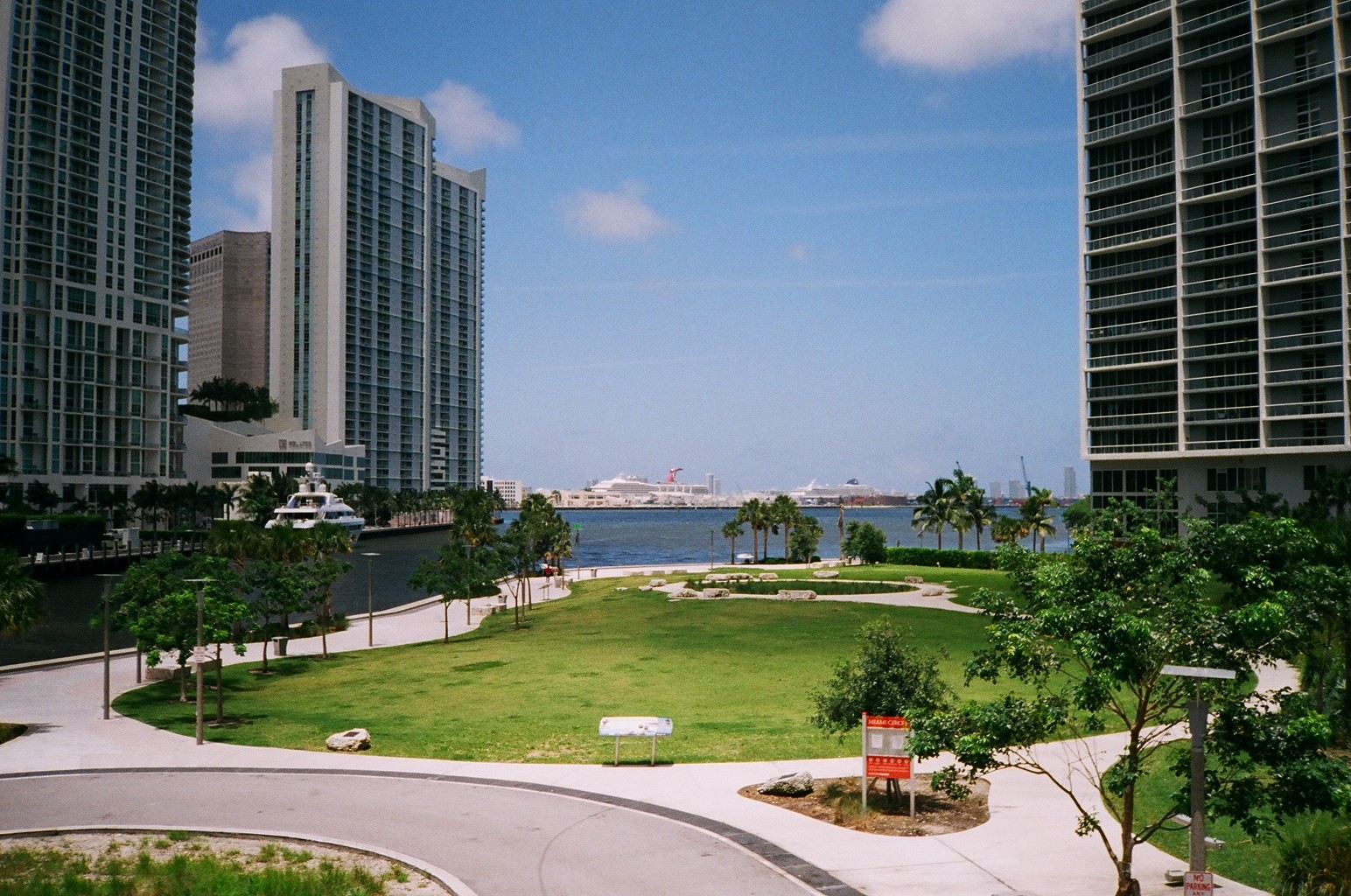
The find was equally a landmark in preservation politics. With Baumann's tower approved and construction imminent, Miami-Dade County sued and, in 1999, took the 0.9-hectare parcel by eminent domain for 26.7 million dollars — an extraordinary sum driven by a coalition of archaeologists, Native American groups and an impassioned public. The circle was listed on the National Register in 2002, declared a National Historic Landmark in 2009, and reburied under engineered fill in 2003 after exposure began degrading the limestone; critics note the promised interpretive park long languished as a poorly signposted lawn.
Vindication came from further work: excavations across the river at the Met Square site in 2013–14 exposed thousands more postmoulds outlining multiple Tequesta structures, and from 2021 Carr's teams at nearby Brickell parcels uncovered occupation reaching back as much as 7,000 years — confirming the river mouth as one of the most significant, and most contested, urban archaeological zones in the United States.
- Radiocarbon dates on charcoal from the basins and midden of roughly 1,800–2,000 years before present
- An artefact assemblage wholly of local Glades/Tequesta tradition — shark-tooth tools, shell celts, bone — with no Mesoamerican material
- Exotic imports (Missouri galena, Georgia basalt axes) demonstrating long-distance exchange befitting a major town
- 1950 plumbing plans and sealed midden deposits refuting the septic-drainfield explanation (Ricisak)
- Met Square and Brickell excavations since 2013 revealing extensive Tequesta structures and occupation up to 7,000 years old around the river mouth