Ancient Engineering · Gympie, Queensland, Australia

Gympie Pyramid (Djaki Kundu)

A terraced hillside in Queensland claimed as an Egyptian pyramid, a settler vineyard — and a sacred Kabi Kabi site.

Mainstream: Terraces c. 1875-1890 (vineyard); ridge itself naturalAlternative: c. 3000 BC Egyptian outpost (Gilroy); Kabi Kabi tradition of far older sacred use-26.17°, 152.69°

At a glance

Gympie Pyramid (Djaki Kundu)
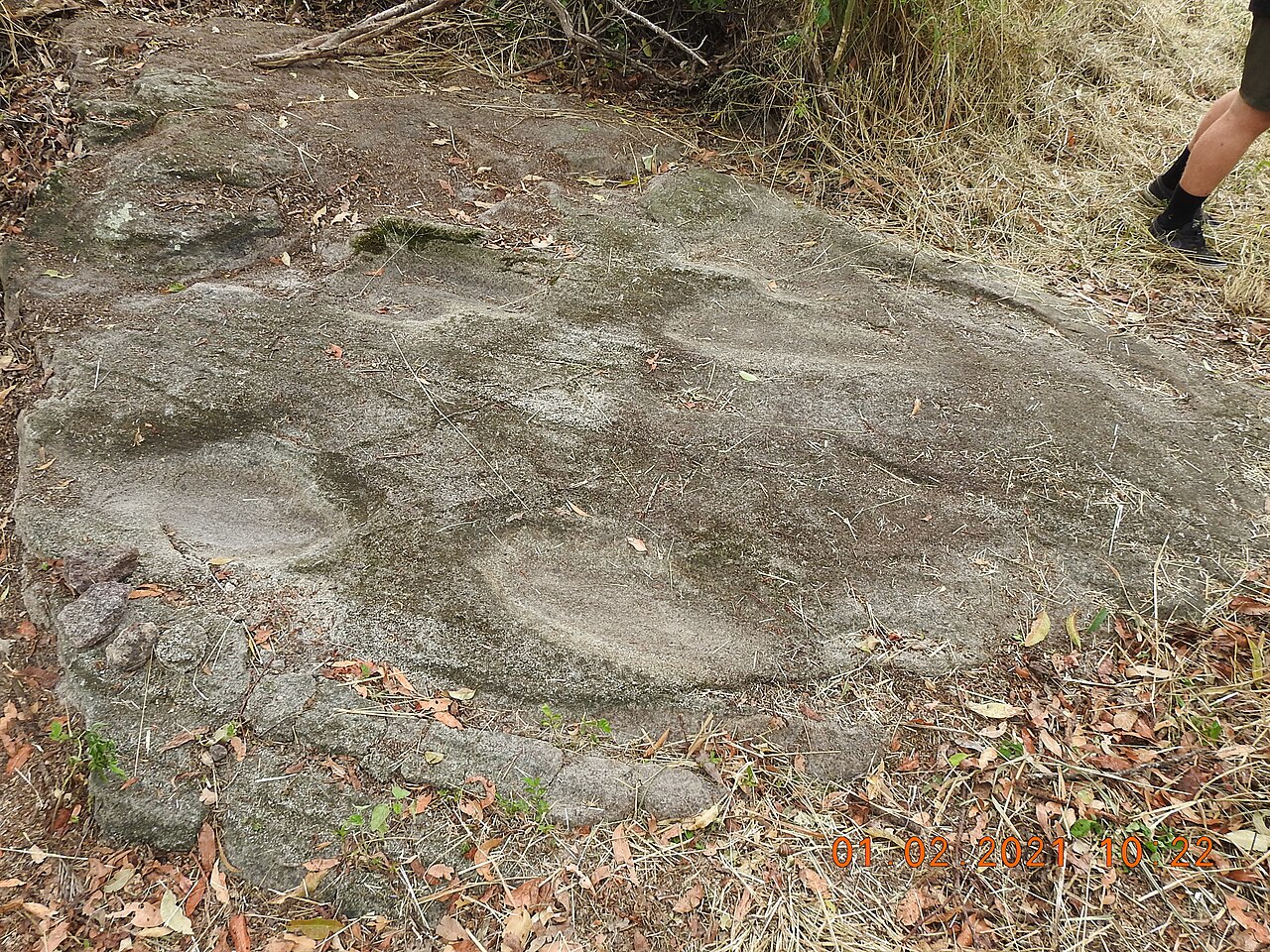
Photo: Wikigetsme123 · CC BY-SA 4.0

On a low sandstone ridge beside the old Tin Can Bay road about five kilometres north-east of Gympie, Queensland, rows of rough stone terracing climb a hill that fringe writers have called the Gympie Pyramid since the 1970s. To archaeologists it is Rocky Ridge, a natural landform bearing the remains of nineteenth-century agricultural terraces; to the Kabi Kabi (Gubbi Gubbi) traditional owners it is Djaki Kundu, a sacred place tied to star and water dreamings. The three identities collided publicly in the 2020s, when the Bruce Highway bypass was routed through the ridge's flank, sparking protests, arrests and federal heritage applications.

See it on the globe →
The mainstream view

What archaeology says

Professional assessment of the site has been consistent. The geologist and sceptical investigator Anthony G. Wheeler examined the claims in a 2004 report and concluded that the evidence for exotic origins was misquoted, falsified or fabricated; a 2008 study commissioned from Archaeo Cultural Heritage Services likewise found no evidence that the terraces were part of a pyramid built by ancient Egyptian, Phoenician, extraterrestrial, Mayan or Chinese visitors. The ridge is natural; the terracing is dry-stone agricultural work.

The documentary trail supports a settler explanation. The terraces are attributed to horticulturalist miner John William Cauper, who worked the slope as a vineyard between about 1875 and 1890 — he wrote knowledgeably in the Gympie Times of 1884 about vine growing and grafting, and by 1905 the paper was calling the place the old vineyard. The famous Gympie Ape, a crude stone statue unearthed nearby in 1966, is generally thought to be a carving left by Chinese gold-rush prospectors, whose presence in the district is well documented.

Separately from the pyramid claims, the Kabi Kabi hold Djaki Kundu to be significant, and heritage processes have grappled with that claim: after protests halted bypass works in late 2020, an independent assessment was commissioned, federal section 9 and 10 applications were considered and rejected in 2021 by the environment minister as not demonstrating the required significance, a further section 10 application was gazetted in 2023, and the bypass was completed in 2024. State authorities fenced part of the ridge for protection during construction while maintaining that no archaeological evidence of the claimed structures was found.

Key evidence cited
  • Wheeler's 2004 investigation finding origin claims misquoted, falsified or fabricated
  • 2008 Archaeo Cultural Heritage Services report finding no evidence of ancient construction
  • Documented vineyard on the slope, worked by John William Cauper c. 1875-1890
  • 1905 Gympie Times reference to the site as the old vineyard
  • The Gympie Ape statue consistent with Chinese gold-rush era carving
  • No Egyptian artefact ever recovered from a stratified, dated context
The alternative view

What the skeptics propose

The Egyptian theory belongs chiefly to Rex Gilroy, the self-styled father of Australian cryptozoology and archaeology anomalies, who announced in 1975 that the terraced hill was a ruined pyramid built by Egyptian mariners mining gold in Australia around 3000 BC. He cited the unusual dry-stone walling, local legends and taboos about the hill, exotic cacti growing nearby, the 1966 Gympie Ape statue — which he declared a 3,000-year-old image of the god Thoth — and assorted inscribed stones. The campaigner Marilyn Pye took the claims further in the early 1980s, promoting the site internationally as proof of Egyptian colonisation, and the idea still circulates through New Dawn magazine, tourism folklore and online communities, sometimes braided with the separate legend of Gosford Glyphs in New South Wales.

Critics note that every physical exhibit has a plausible mundane origin, and even sympathetic researchers concede the Egyptian case rests on association rather than excavation. No Egyptian artefact from a dated context has ever been produced.

The more consequential counter-narrative is Indigenous. Kabi Kabi custodians, including elders associated with the Sovereign Native Tribes of the Kabi First Nation, hold Djaki Kundu to be a sacred site connected with the Seven Sisters songline, water spirit and fish dreamings, and campaigned from 2020 to have the Bruce Highway bypass rerouted around it — a campaign involving a long protest camp, arrests in February 2021, and repeated applications under federal heritage law. Their claim owes nothing to Egypt; indeed, custodians have objected to the pyramid label as a settler fantasy overwriting an Aboriginal place. The dispute became a test case, cited alongside Juukan Gorge, in debates over how Australian law weighs intangible Indigenous heritage against infrastructure.

Key evidence cited
  • Rex Gilroy's 1975 claims of a pyramid linked to Egyptian gold mining voyages
  • The Gympie Ape statue, claimed by Gilroy to represent the god Thoth
  • Unusual dry-stone terracing and reported inscribed stones cited by proponents
  • Kabi Kabi testimony that Djaki Kundu is an ancient sacred site with star and water dreamings
  • Local legends and taboos about the hill predating the pyramid controversy
  • The 2023 federal section 10 application asserting ongoing cultural significance

Genuinely open questions

  1. How much of the terracing is Cauper's vineyard, and could any element be earlier?
  2. Who carved the Gympie Ape, and when?
  3. How should intangible sacred significance be weighed when physical archaeology finds nothing?
  4. What was the ridge's role in Kabi Kabi tradition before European settlement?

Worth knowing

The Gympie Ape — hailed as a statue of the Egyptian god Thoth — is thought by investigators to be the handiwork of homesick Chinese gold prospectors.