What archaeology says
The consensus now accepts Homo floresiensis as a genuine, distinct species of small-bodied, small-brained human, an example of island dwarfing in an isolated hominin lineage. The anatomy is not that of any known modern human population: the wrist bones, shoulder, foot and jaw are primitive in ways that pathological modern humans do not replicate, and the brain, though tiny, shows organisation inconsistent with the microcephaly that critics proposed. Related, even older small hominin remains found elsewhere on Flores at Mata Menge support a long local lineage rather than a one-off deformity.
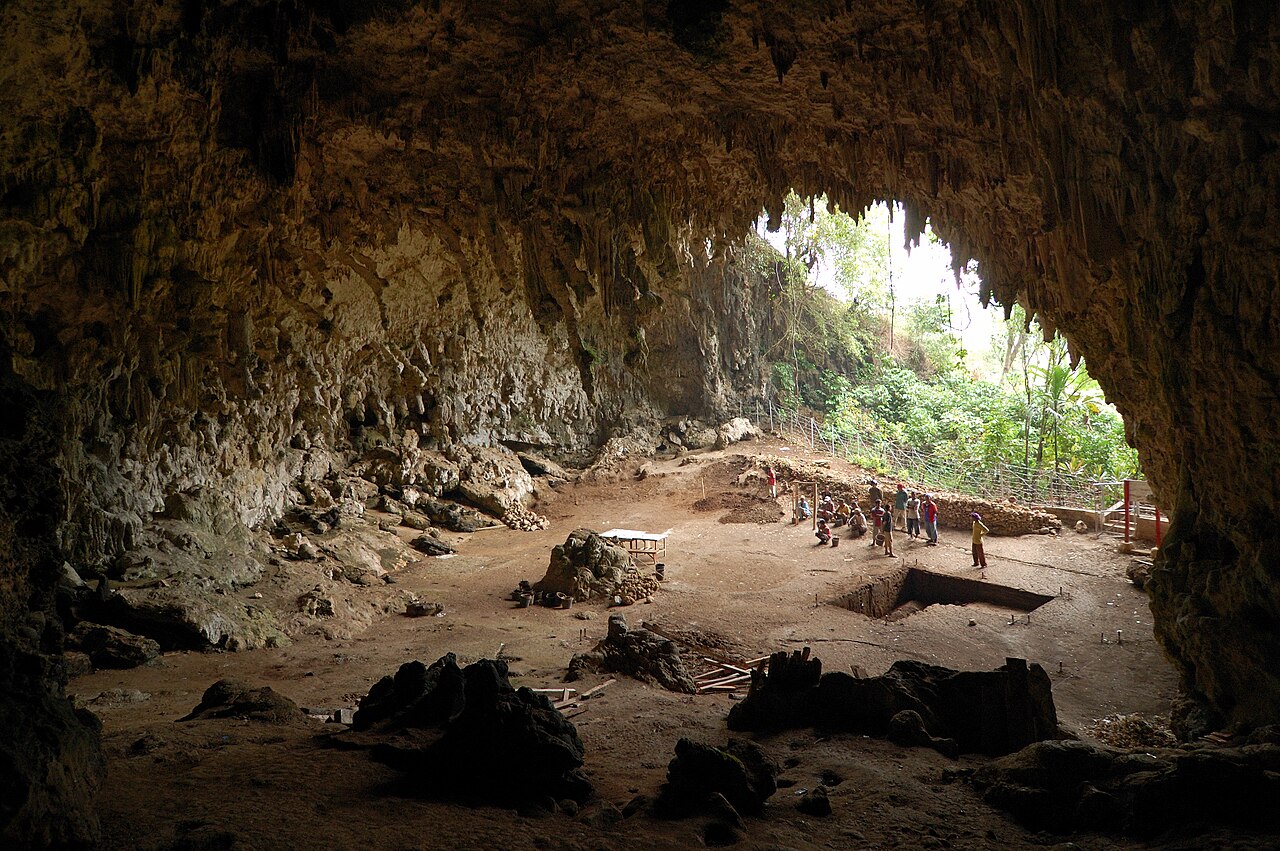
The dating has been substantially revised. Early reports suggested H. floresiensis survived until around 12,000 years ago, but restudied stratigraphy published in 2016 showed the skeletal remains actually date to roughly 100,000-60,000 years, with associated stone tools in the cave ranging back toward 190,000 years. The species therefore did not overlap with modern humans in the cave as late as first thought.
Flores itself makes the story plausible: the island hosted dwarf elephants (Stegodon), giant rats and Komodo dragons, a classic insular fauna in which a dwarfed human would not be out of place.
- Wrist, shoulder, foot and jaw anatomy is primitive in ways pathological modern humans do not replicate.
- The tiny brain shows organisation inconsistent with proposed microcephaly.
- Older small-hominin remains at Mata Menge indicate a long Flores lineage, not a one-off.
- Restudied stratigraphy dates the skeletons to roughly 100,000-60,000 years, tools back toward 190,000.
- Flores hosted a classic dwarfed island fauna, making a dwarfed hominin ecologically plausible.