Ancient Knowledge · Finniss Springs, near Marree, South Australia

Marree Man

A 4.2-kilometre hunter carved into the outback that appeared overnight in 1998 — and no one has ever proven who made it.

Mainstream: June 1998 (first sighted by air on 26 June 1998)Alternative: Date not disputed — the mystery is authorship: no person or group has ever been credibly identified, making it the world's largest anonymous artwork-29.53°, 137.47°

At a glance

Marree Man
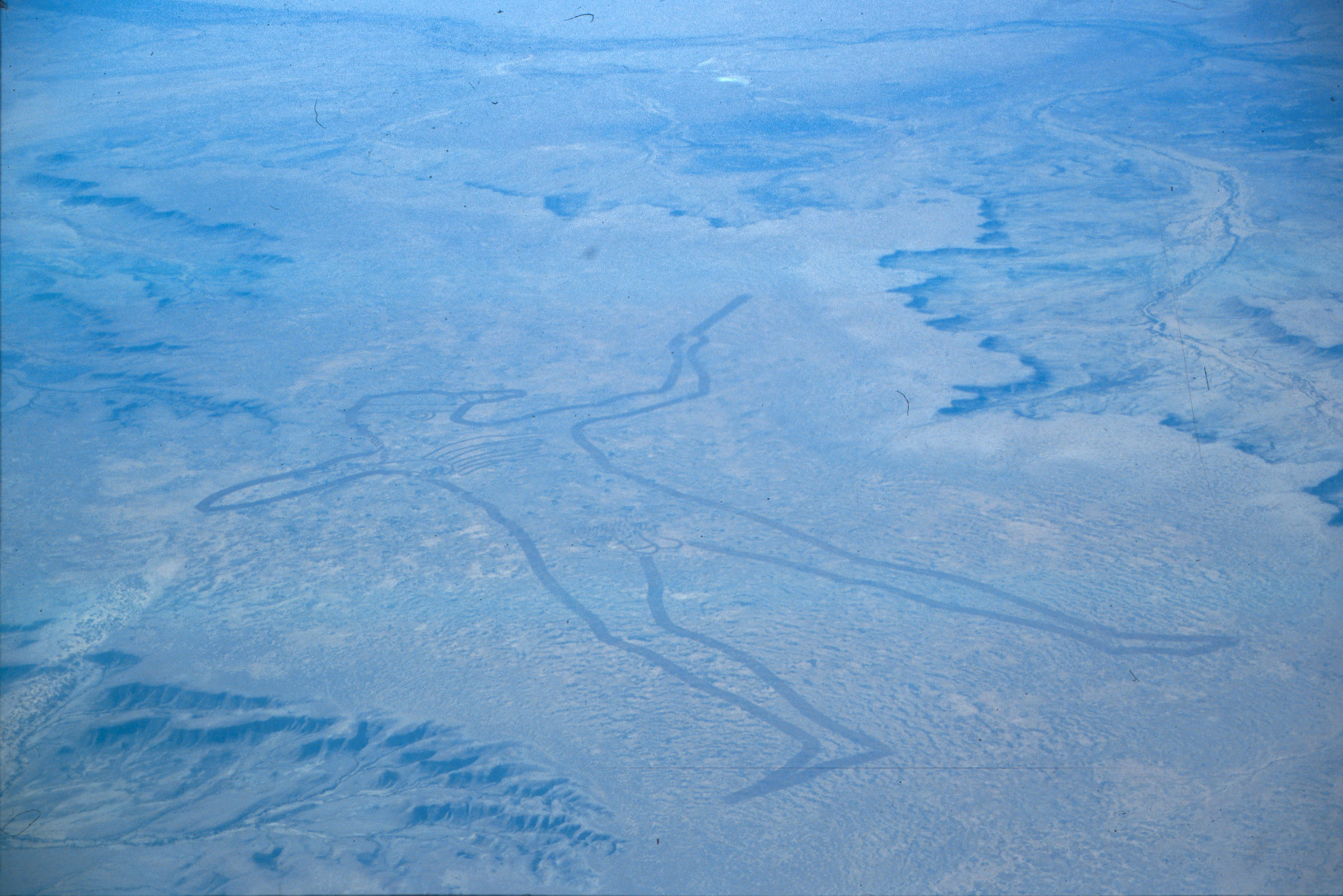
Photo: Peter Campbell · CC BY-SA 3.0

Marree Man is a colossal figure of an Aboriginal hunter holding a throwing stick, etched into the arid plateau of Finniss Springs station about 60 kilometres west of the tiny town of Marree. At 4.2 kilometres tall, with an outline some 28 kilometres around, it is among the largest figures ever drawn on the Earth's surface — so large it can only be appreciated from the air. A charter pilot spotted it on 26 June 1998; within weeks it was world news. Its lines, originally ploughed 20–30 centimetres deep and up to 35 metres wide, were cut with surveying precision across trackless gibber country, yet no witness, no vehicle tracks to the site's access points, and no confessed artist have ever surfaced.

See it on the globe →
The mainstream view

What archaeology says

Investigators treat Marree Man as a modern work — a monumental piece of land art or an elaborate stunt — created by someone with professional surveying skills, GPS equipment and access to a grader or plough. The execution would have required weeks of planning: analysts calculated the figure was plotted from digitised coordinates, and small survey pegs and a buried plaque bearing a United States flag and Olympic rings were found at the site. A series of anonymous faxes sent to media outlets used American spellings and phrases, leading some to suspect US servicemen from bases in the region, though many consider the American flavour a deliberate false trail.

The most persistent suspect is the late Alice Springs artist Bardius Goldberg, who was known to be interested in creating a work visible from space, reportedly received an unexplained ten thousand dollars around the time, and refused to confirm or deny authorship before his death in 2002. Entrepreneur Dick Smith, who investigated the case with a team in 2016–2018 and offered a reward, concluded the authorship remains genuinely unsolved. The figure itself has faded and been restored: in August 2016 Marree locals used a grader guided by GPS to re-cut the lines, hoping to preserve the outback's strangest tourist drawcard.

Key evidence cited
  • Survey pegs, plotted coordinates and plough lines showing professional GPS-guided execution
  • A buried plaque with a US flag and anonymous faxes using American spellings, indicating a planned campaign
  • Bardius Goldberg's known ambition, unexplained payment and refusal to deny authorship
  • Dick Smith's 2016–2018 investigation documenting the evidence trail and concluding it was a modern, human work
  • The 2016 GPS-guided re-grading, which reproduced the original lines with the same ordinary machinery
The alternative view

What the skeptics propose

Marree Man sits in this atlas not because anyone claims it is ancient — it demonstrably is not — but because it is a perfect natural experiment in how geoglyphs and their mysteries work. A handful of people with a plough and late-1990s GPS drew a figure of Nazca scale in a matter of days or weeks, invisible from the ground, without being caught. Alternative writers on both sides of the geoglyph debates cite it constantly: sceptics use it to show that giant desert figures need no advanced or alien technology, while others note the reverse lesson — that if this could be done secretly in 1998, the ancient world's capacity for large, organised, low-tech land art should not be underestimated.

The case also carries a genuine controversy. The figure was cut without permission on land subject to the Arabana people's native title claim, and Aboriginal elders condemned it as a desecration; the South Australian government briefly banned access and flights over the site. The 2016 restoration was itself contested for the same reason. And the unanswered core question — who spent that much money, skill and effort to draw a picture no one on the ground would ever see, and then stayed silent for decades — keeps Marree Man on every list of the world's unsolved modern mysteries.

Key evidence cited
  • No witness, confession or vehicle trail has ever been produced despite decades of attention and a reward
  • The figure's scale — 4.2 km tall, ~28 km of outline — exceeds any single Nazca figure
  • Execution in remote, waterless country implies significant logistics that were never detected
  • The anonymous faxes' references and buried tokens suggest a deliberate, still-unread symbolic program
  • Its overnight appearance shows how quickly large geoglyphs can be made — and how easily their makers can vanish from the record

Genuinely open questions

  1. Who made Marree Man, and why has no one credibly claimed it in over 25 years?
  2. What do the buried plaque, Olympic references and American-flavoured faxes actually signify?
  3. Should the figure be preserved, re-cut and promoted, or allowed to fade, given it was made without the traditional owners' consent?

Worth knowing

Marree Man is so large that pilots use it as a visual landmark — yet it is invisible from the ground, and when the lines faded early in the 2000s there were years when nobody could say exactly where the giant had gone.