What archaeology says
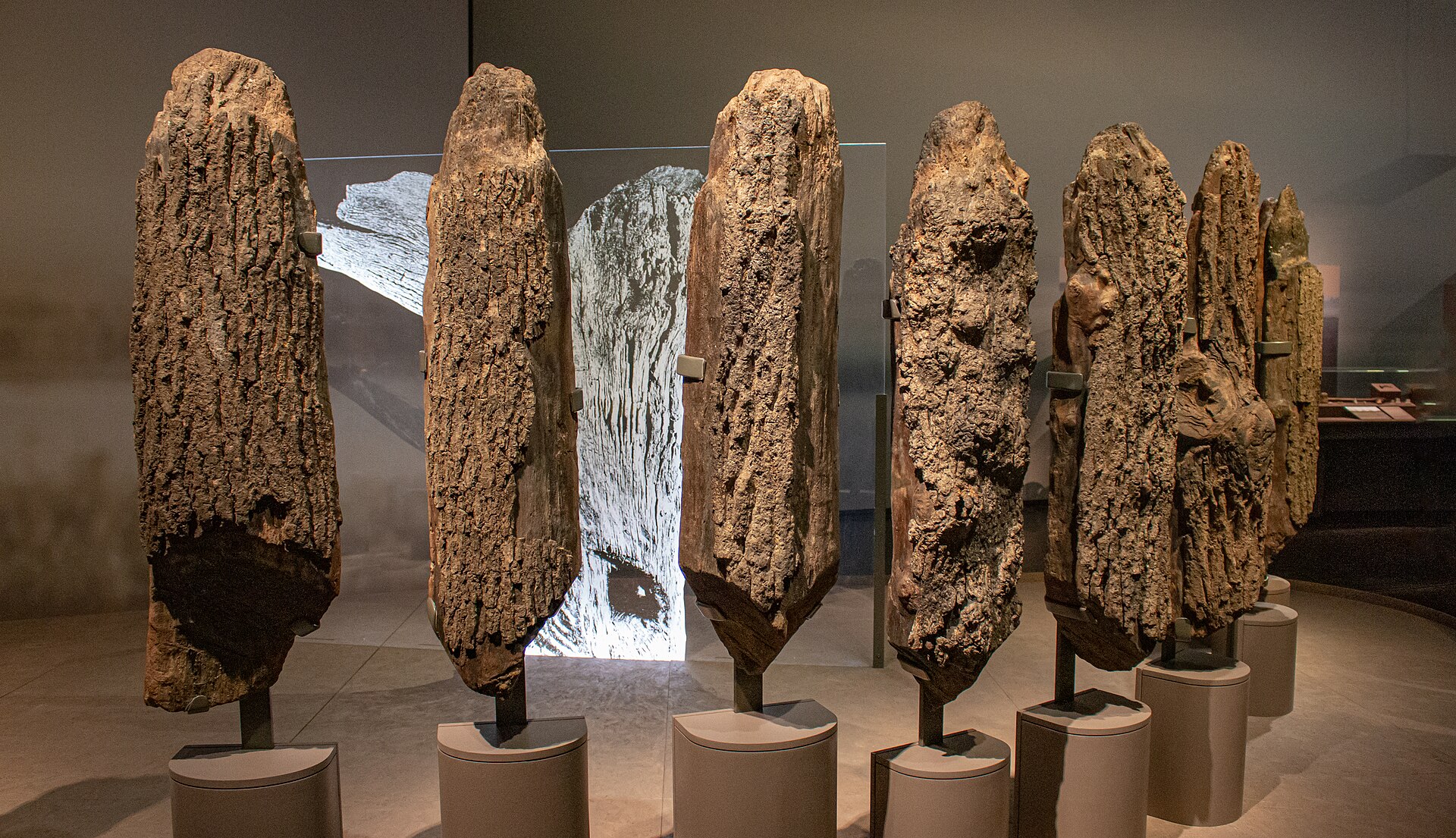
Seahenge is one of the most tightly dated prehistoric monuments in Britain. Because the oak survived waterlogged, dendrochronologists could read its tree rings directly. An English Heritage team including Alex Bayliss combined ring-width dating with radiocarbon measurements in a Bayesian model and concluded the timbers were felled in the spring or early summer of 2049 BC — a single building season in the Early Bronze Age. Tool-mark analysis identified the signatures of at least 50 or so different bronze axes on the wood, implying a sizeable community worked together to raise it. A second, larger timber circle nearby, Holme II, was dated to the same year.
The central inverted oak is the interpretive key. Francis Pryor and others have read the monument as mortuary: the upturned stump may have served as a platform on which a body was laid for excarnation — exposure to the elements and to birds — as part of a funerary rite, with the ring of posts screening the sacred space. The inversion itself, roots skyward, is widely taken as deliberate symbolism, perhaps evoking an inverted or Otherworld tree.
The excavation was among the most contentious in recent British archaeology. When Norfolk Archaeological Unit, under Mark Brennand, moved to lift the timbers in 1999 rather than let the tide destroy them, they were opposed by local residents who wanted the circle left in place and by Neopagans and self-described druids for whom removing it was a desecration. Protesters physically obstructed the dig. The timbers were eventually taken to Flag Fen for conservation and are now displayed at the Lynn Museum in King's Lynn.
- Dendrochronology plus Bayesian radiocarbon modelling fixing the felling to spring–summer 2049 BC
- Tool marks from around 50 distinct bronze axes, implying a large cooperating workforce
- A nearby second circle, Holme II, dated to the identical year
- The deliberately inverted central oak stump, consistent with a mortuary or excarnation platform
- Exceptional waterlogged preservation of the oak, allowing direct ring-by-ring analysis