Origins of Civilisation · near Puerto Montt, Los Lagos Region, Chile

Monte Verde

The waterlogged Chilean creek bank that broke Clovis-first orthodoxy — after its excavator spent twenty years being told it was impossible.

Mainstream: c. 14,500–14,800 years ago (MV-II occupation — now the accepted benchmark)Alternative: 18,500+ years ago (MV-I episodic layers, 2015 dating) and a still-disputed c. 33,000 BP horizon-41.51°, -73.20°

At a glance

Monte Verde
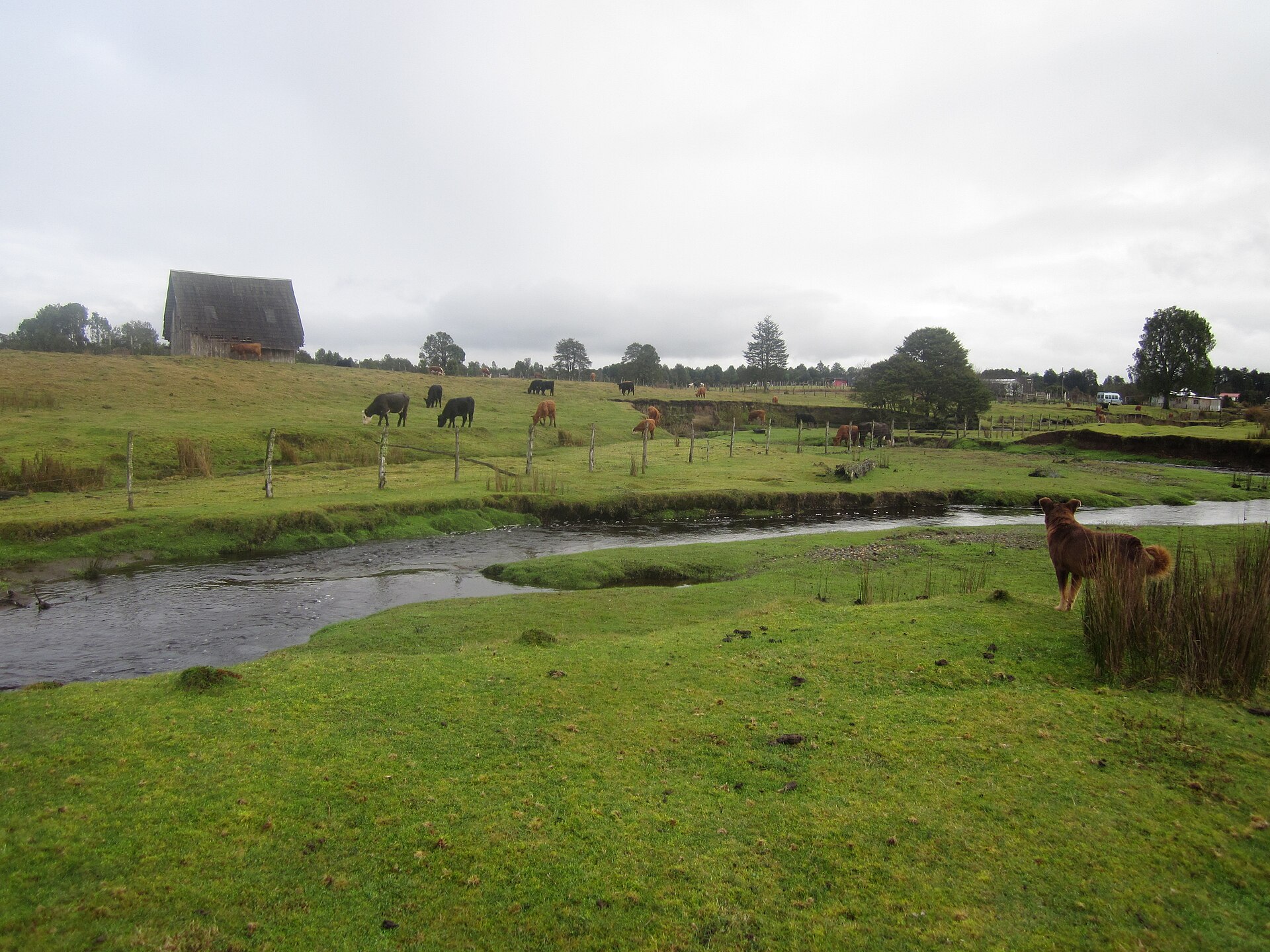
Photo: Geología Valdivia · CC BY 2.0

Monte Verde is not a cataclysm site in stone and fire; it is the site that detonated a paradigm. Beside Chinchihuapi Creek in southern Chile, a peat bog sealed the remains of a camp occupied around 14,500 years ago: the wooden frame of a long tent-like structure, planks and stakes, hearths, mastodon-family (gomphothere) meat and hide, knotted cordage, chewed quids of seaweed, medicinal plants and even a child's footprint. When Tom Dillehay began excavating in 1977, the ruling Clovis-first model held that no humans reached the Americas before about 13,000 years ago, via an ice-free corridor from Beringia. Monte Verde said otherwise — from the wrong end of the hemisphere — and it took two decades of hostile scrutiny before the field conceded. Deeper, older layers at the site remain contested to this day.

See it on the globe →
The mainstream view

What archaeology says

Today Monte Verde is mainstream — but it earned that status the hard way, and the story is a case study in how science does, eventually, correct itself. Dillehay and Chilean colleagues, including geologist Mario Pino, documented an open-air camp with organic preservation almost unheard of in Pleistocene archaeology: architecture of wood and hide, plant foods from coast and mountains, and radiocarbon dates around 14,500–14,800 calibrated years — at least a millennium before Clovis. For twenty years the response was corrosive scepticism; pre-Clovis claims had a long history of collapse, and critics reasonably demanded extraordinary rigour. The turning point came in January 1997, when a panel of leading specialists — including arch-sceptic C. Vance Haynes, Dena Dincauze, David Meltzer and others — spent days examining the collections in Kentucky and the site itself. Their published verdict accepted Monte Verde as a genuine pre-Clovis human occupation. The Clovis barrier was broken, and the field reorganised around coastal migration models in which people skirted the Pacific rim well before the interior corridor opened.

Acceptance was not unanimous or instant. Stuart Fiedel published a detailed 1999 critique alleging confusion in artefact proveniences across the site reports; Dillehay and colleagues answered point by point, and while the exchange left scars, it did not overturn the panel's conclusion. Subsequent discoveries — Paisley Caves, the Gault and Debra L. Friedkin sites, Huaca Prieta, and the c. 21,000–23,000-year-old White Sands footprints — have progressively vindicated the deeper-antiquity view Monte Verde opened.

Mainstream caution now attaches mainly to the older layers. In 2015 Dillehay's team reported stone tools, burned areas and animal remains from MV-I contexts dated to 18,500 and perhaps 19,000 years ago, interpreted as ephemeral, episodic visits. Many colleagues accept these dates as plausible; others reserve judgement, noting the sparse artefact counts. The c. 33,000 BP horizon, based on a handful of possible artefacts and clay-lined burned features, is regarded even by Dillehay with explicit caution and by most of the field as unproven.

Key evidence cited
  • Radiocarbon dates on the MV-II occupation clustering at c. 14,500–14,800 calibrated years BP
  • Extraordinary organic preservation: wooden structural remains, cordage, hide, and food plants sealed under peat
  • Gomphothere meat, bone and tusk artefacts directly associated with hearths and worked wood
  • The 1997 blue-ribbon site visit, including Clovis-first champion C. Vance Haynes, formally accepting the site
  • Independent corroboration from later pre-Clovis sites such as Paisley Caves and the White Sands footprints
The alternative view

What the skeptics propose

Monte Verde is the rare case where the alternative view won — which makes it the essential calibration story for every other contested site on this website. For two decades Dillehay was treated less as a colleague with anomalous data than as a problem: grant reviewers, journal referees and conference audiences dismissed the site because it could not be true under the reigning model. Critics did not merely test the evidence; some declined to engage with it. The lesson alternative historians draw is fair as far as it goes: consensus can function as a filter that rejects valid anomalies for years, and the confidence with which Clovis-first was defended — right up until 1997 — was misplaced.

The honest version of the story, though, cuts both ways. Dillehay prevailed not by rhetoric but by exceeding the evidentiary standards of his critics: exhaustive multi-volume site reports, independent dating, and ultimately a site visit by his fiercest opponents, whose intellectual integrity in publicly changing their minds deserves as much credit as his persistence. Monte Verde vindicates outsiders who do the work; it does not vindicate every outsider.

The live frontier is the deep chronology. If the 18,500-year MV-I dates hold — and Dillehay's 2015 work in PLOS ONE argues they do — humans were in Patagonia during the Last Glacial Maximum, which sits intriguingly alongside White Sands and with claims from Pedra Furada in Brazil and Chiquihuite Cave in Mexico. The 33,000 BP layer, if ever confirmed, would rewrite the peopling of the Americas again. Sceptics such as Fiedel maintain that even the accepted components contain unresolved ambiguities; supporters reply that the same was once said of the layers now in every textbook. Both camps, for once, argue from the same hard-won lesson: dig deeper, date everything, and let the site visit settle it.

Key evidence cited
  • 2015 dating of MV-I stone tools and burned features to c. 18,500–19,000 years ago (Dillehay et al., PLOS ONE)
  • The deeper MV-I horizon with possible artefacts and clay-lined burned areas dated c. 33,000 BP
  • Twenty years of institutional rejection of data later proven correct — evidence that consensus can suppress valid anomalies
  • Chewed seaweed quids and coastal resources implying early mastery of Pacific shoreline economies, supporting coastal-entry models
  • A hemisphere-wide pattern of pre-Clovis claims (White Sands, Chiquihuite, Pedra Furada) trending older, not younger

Genuinely open questions

  1. Are the 18,500-year-old MV-I traces a real Last Glacial Maximum presence, and could the 33,000 BP layer ever be substantiated?
  2. How did people reach southern Chile so early — how fast did the coastal migration actually move?
  3. How many other valid pre-Clovis sites were dismissed or never published during the decades Clovis-first was enforced?

Worth knowing

Among Monte Verde's finds were chewed wads of seaweed carried from the coast — several species of which are still used as medicine by local Mapuche healers 14,500 years later.